Strasbourg Christmas, an Augmented Reality
December 19th, 2009
Strasbourgers in the Alsace region of France claim that they are the “Christmas Capital” of Europe so as a good muslim I went there to check.
Well, they keep saying it everywhere:
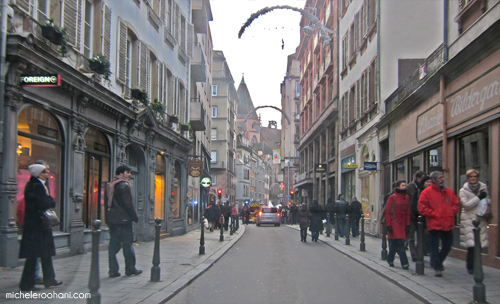
It was a very cold day but thousands of poeple were swarming the streets of this beautiful Alsatian city:
walking up and down narrow streets,
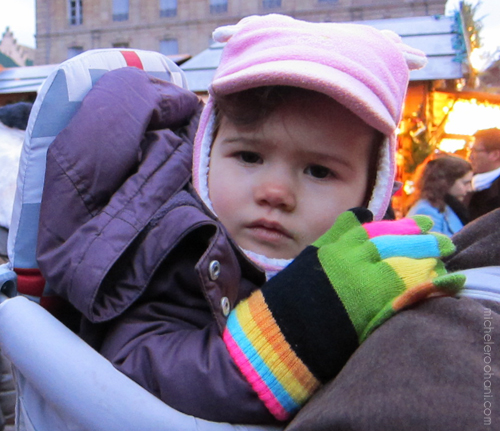
They have no pity for their babies fighting the cold,
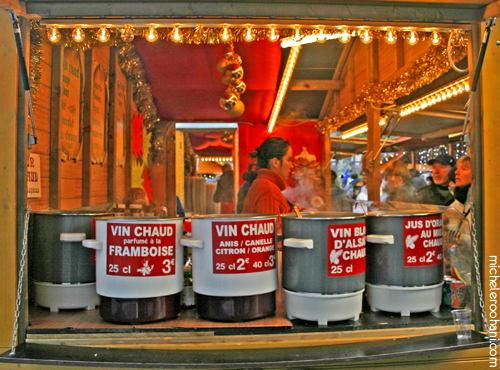
maybe because they drink this mulled wine called “Vin Chaud” (hot wine) or “Gluehwein” (in german): a concoction usually prepared from red wine, heated and spiced with cinnamon sticks, vanilla pods, cloves, citrus and sugar. They sell it in every other stand on the big Christmas market in Strasbourg:
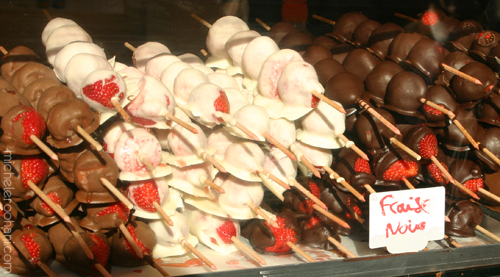
I saw my first chocolate covered “strawberry kababs”:
Strasbourg is home to one of the most beautiful cathedrals in Europe:
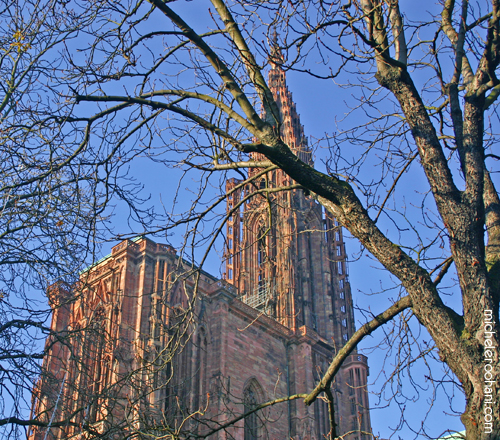
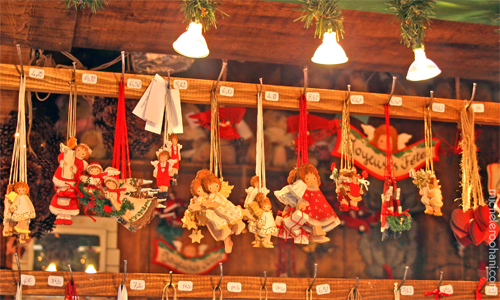
where Jesus’ birth will be celebrated this year with pomp and thousands of little ornaments made in Alsace (read China):
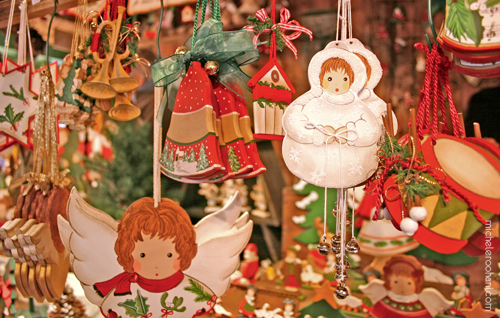
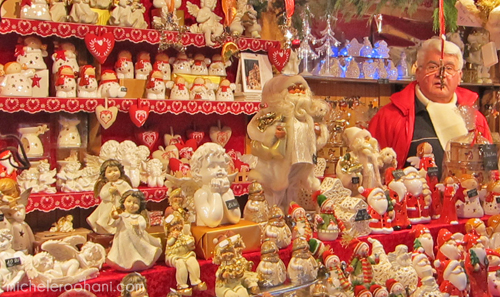
The market is not close to the big church but right at its feet with Santa Claus himself selling some of the stuff:
Here is Alsace in all its glory (albeit in miniature):
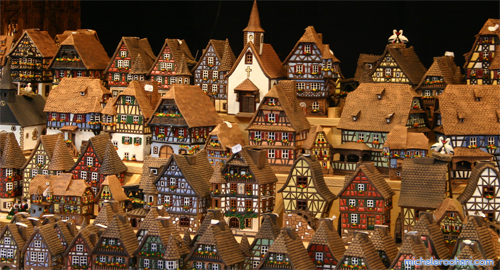
and colors,
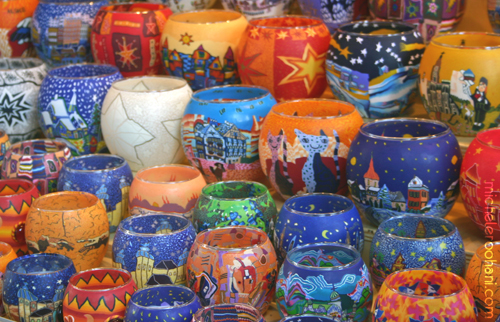
with little chefs baking for the big birthday (Jesus’, remember?)
and big chefs of course making macaroons:
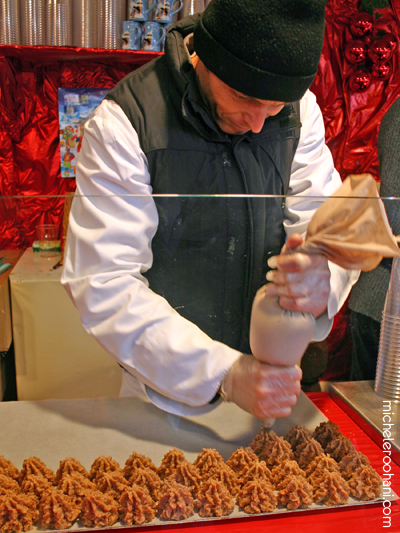
but for people with a weakness for great pastry I have a better treat:
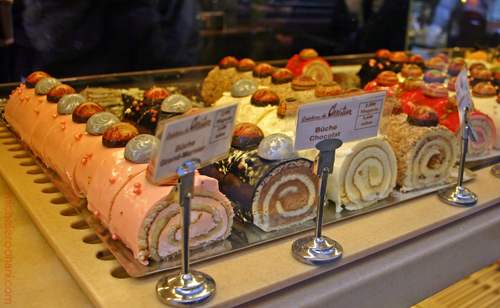
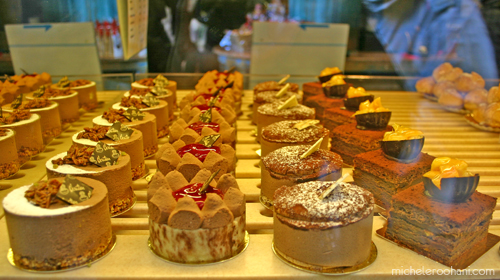
The above are Christmas Buches but Christian Patisserie—that I discovered a couple of years ago on my first trip to Alsace—is known for its chocolate:
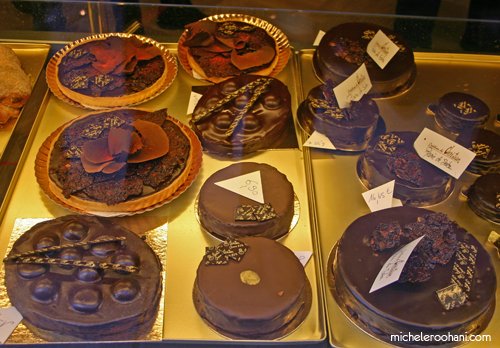
and anything related to it:
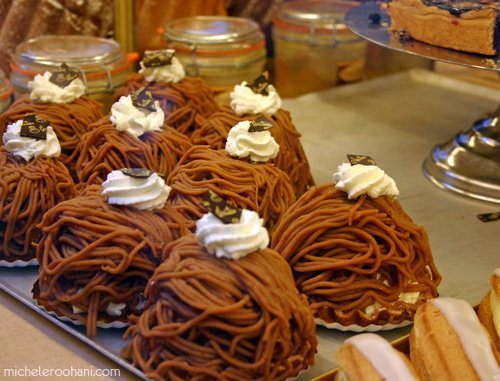
Chocolate not being on my repertoire much, I opted for the fabulous chestnut cream “Mont Blanc”:
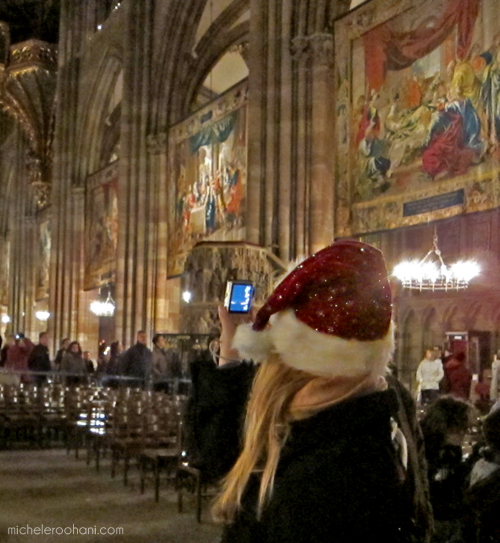
I went to the cathedral where a thousand Santas were busy clicking away on their cameras,
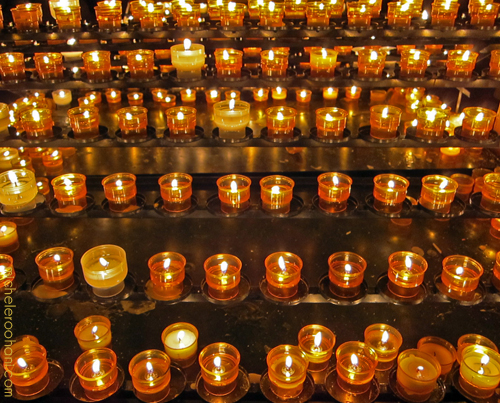
and a thousand candles promised to fulfill wishes…
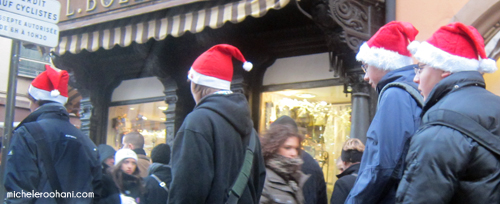
By the end of the day, I was one of the few without a red hat,
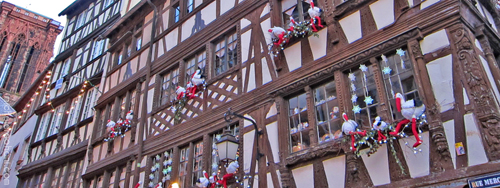
Alsace’s emblem is a stork—you see them everywhere:
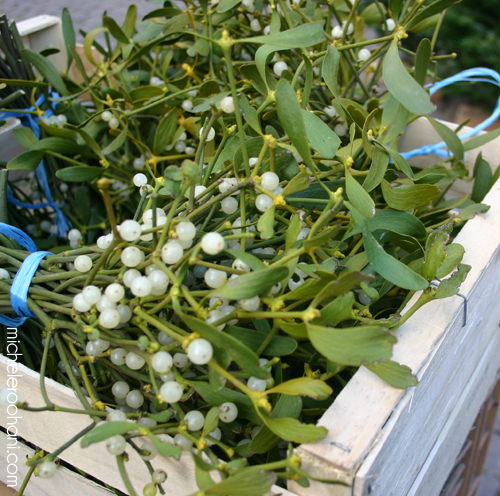
I couldn’t resist buying my first real mistletoe:
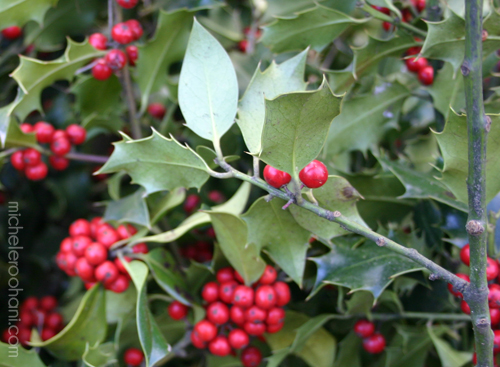
and looking at the holly,
I went to see the Fine Arts Museum:
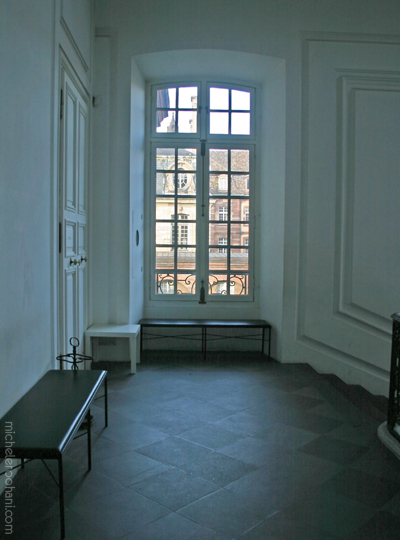
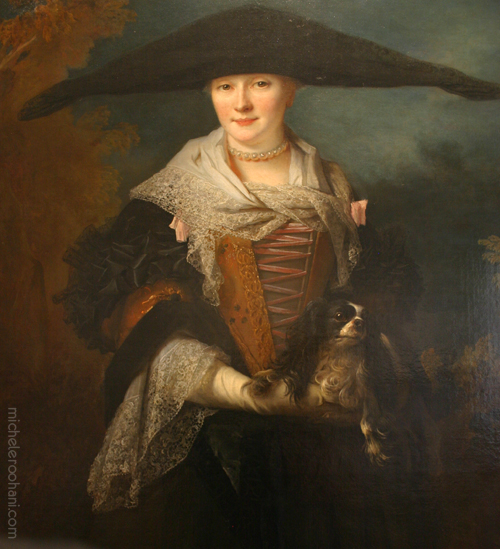
where I revisited “the beautiful woman from Strasbourg”:
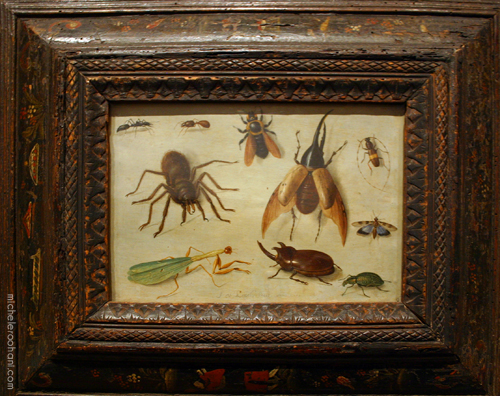
and the fabulous dutch still life paintings and my favorite Kessel insects of course:
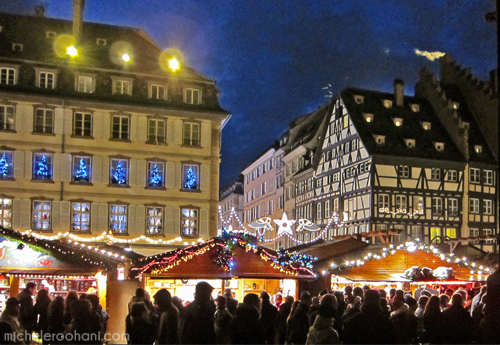
By the time I got out it was getting dark but the market was still hustling and bustling,
This whole trip almost made me forget Copenhagen’s climate summit, the American Health Bill disaster and the Swiss minarets…
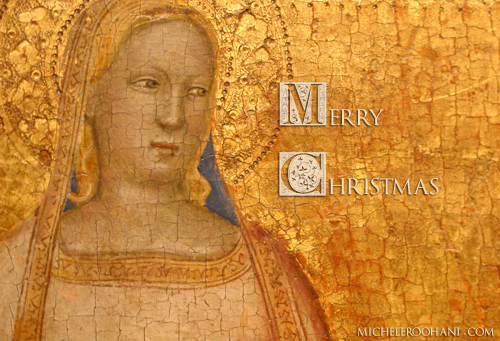
Have a golden Christmas everybody!
Noble Rot, the liquid gold of Sauternes
October 25th, 2009
Drive forty minutes from Bordeaux, and you will get to the most amazing wine country of the region, Sauternais, or the only area around Bordeaux where the noble rot grows.
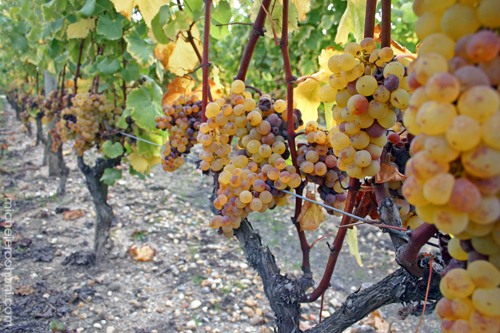
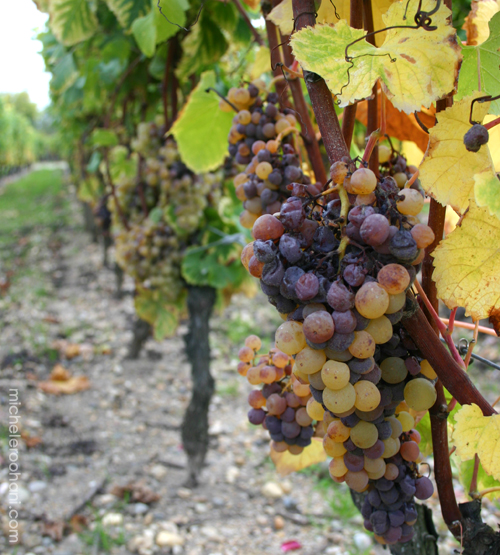
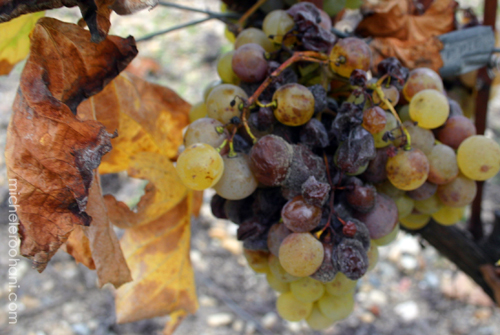
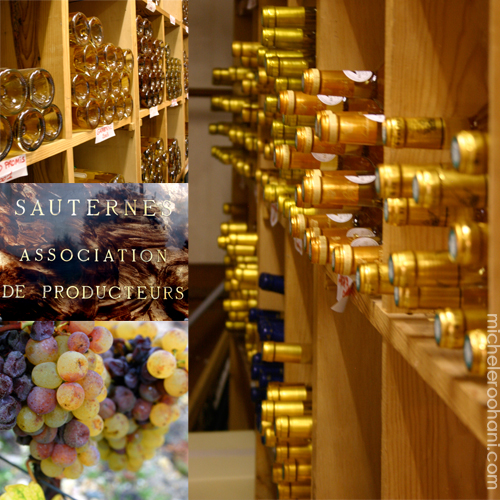
A most peculiar wine is produced here that has not much to do with the red Bordeaux wines that we all know (red or white). Sauternes is made from grapes that have been affected by a gray fungus, Botrytis Cinerea, which causes the grapes to shrivel, leaving a sugary fruit with concentrated flavors resulting in distinctively flavored wines. 
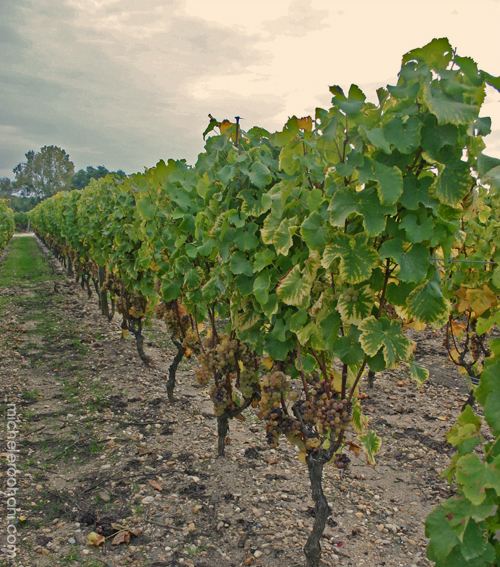
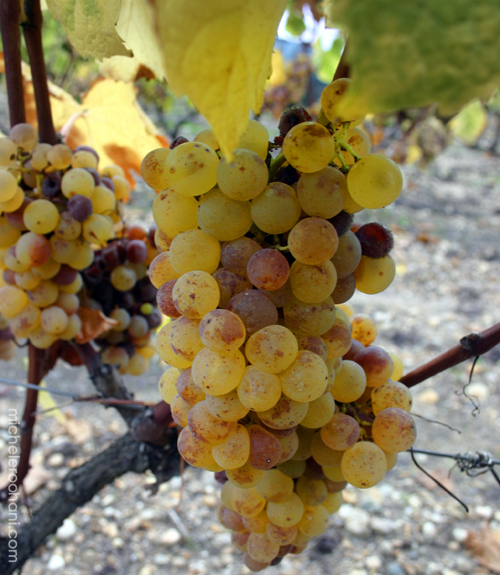
I had heard about the Noble Rot (an oxymoron of a name) but I was still amazed to see these grapes on the vine stocks:
The grapes are definitely getting ripe here, all semi rotten! The best Sauternes come from vines that have been hand-picked—up to 12 separate times—to ensure that the grapes are not removed from the vines before reaching the perfect degree of ripeness required for these wines.
The eminent Château d’Yqem, the most expensive Sauternes wine, is the only estate in France who has received a class of its own, one step above Premier Crus. Each grape is picked individually, and only when it is rotten enough. Thanks to the noble rot and a lot of hard work, the result is an exquisitely flavored wine that is acidic enough to avoid falling into the trap of being a mere dessert wine.
The Sauternes region is located 40 km (25 miles) southeast of the city of Bordeaux along the Garonne river and its tributary, the Ciron, which demarcates Barsac (Orange on the map) and Sauternes (yellow on the map). Barsac lies within Sauternes, and is entitled to use either name. Somewhat similar but less expensive and typically less-distinguished wines are produced in the neighboring regions of Monbazillac (which I tasted a couple of years ago when visiting Bergerac) , Cérons, Loupiac and Cadillac (not the car)!
The moisture the Ciron brings, and the morning mists it causes, are favorable to the development of the fungus Botrytis cinereangus. This contributes to the high quality and renown of Sauternes wines.My guide explained that vines produce one to two bottles of wine everywhere else, but in Sauternes, you can only get one to two glasses per year! No wonder this wine is so revered (and expensive)…
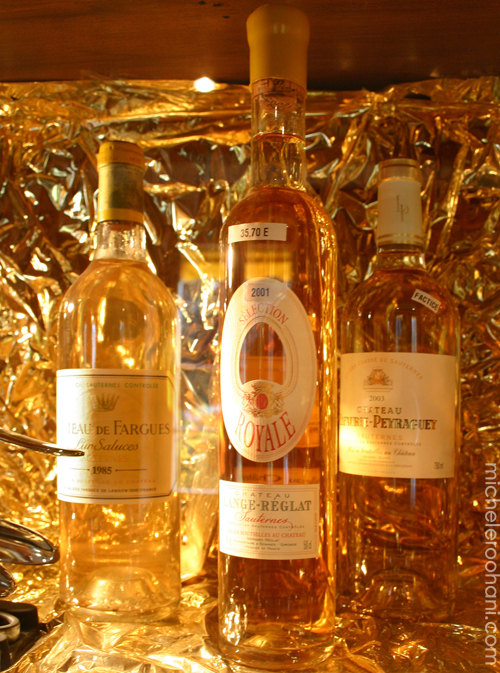
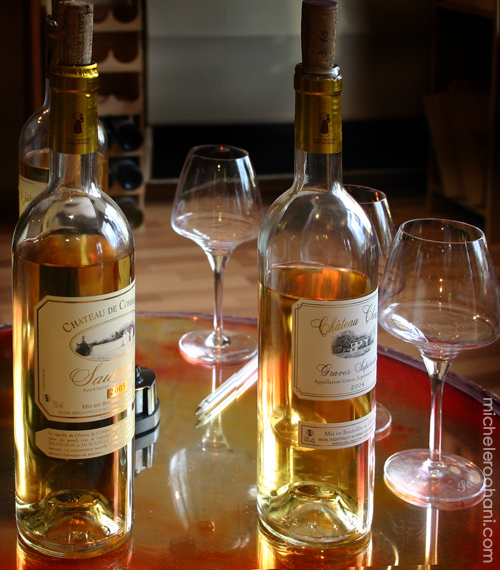
Not having money to burn, I only bought some of the more modest bottles after the tasting:
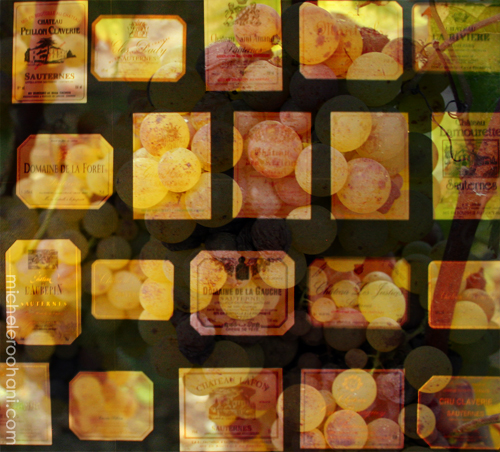
Of course, there are myriads of labels to choose from:
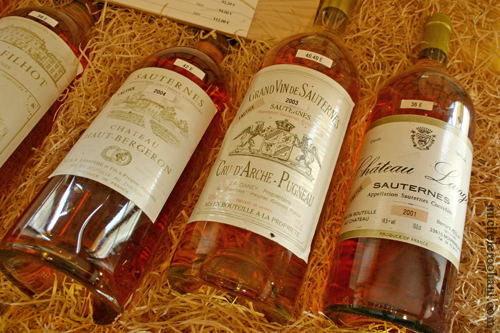
like these bottles with ample and intense golden liquid inside…
You wonder how on earth with amazing wines like these in the region,
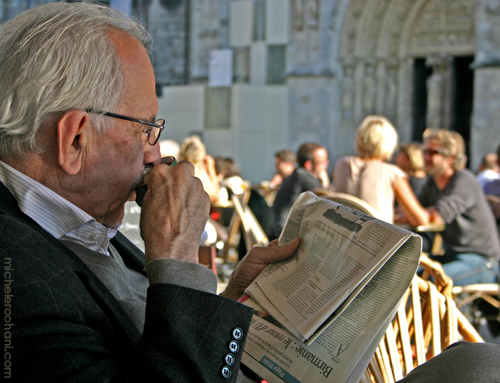
some of the locals drink coffee…
My other post about wine:
A night with some dry drunk Persians here
Subscribe
Main
Home
About me
Contact
Art, ...


compositions
cities
flowers
objects
portraits
sepia tones
best sellers