Marbella, the beautiful woman by the sea
July 21st, 2010
I just got back from Marbella, Spain, where the weather is hot, the sun’s always shining and the colors are intense (at least in July).
For me, the South of Spain—Andalusia—conjures up my beloved Velasquez, García Lorca and of course the native son of Malaga, Picasso. It was my first time in this part of the country so I did the usual tourist things. The great hotels of Marbella looked empty under the sizzling sun; I loved all the local decors like Plaza Romano in Hotel Puente Romao:
Andalusia is the land of Flamenco (not to be confused with the pink bird flamingo) and these paintings by Fabian Perez, translate the passion of this dance into beautiful images:
But the real ladies of Spain were painted by my beloved Velasquez: the Infantas (daughters of a king of Spain, in this case Philip IV)— infanta Margarita who stared at me for years from a poster in my kitchen and infanta Maria Theresa who became the wife of Louis XIV and lived way longer than her poor sister, Margarita.
I will make a post about Velasquez and one about Goya, once I visit the Prado in Madrid, but for now this post should do. These ladies with these extremely wide panniers inspired me to do a little Velasquez of my own:
I even drew one on the walls of the majestic Villa Padierna…
Las Meninas are everywhere in Spain even on a couple of Spanish fans I bought!
I wrote this post listening for the nth time to the superb Miles Davies’ Sketches of Spain, one of his best works.
Now let me take you to old town Marbella. It is a maze of narrow streets with white houses, restaurants and Bougainvillea galore! For good food check out Da Bruno.
Lots of small shops offering completely unnecessary but fun stuff:
The blue hour (the sun sets at 10 pm in summer) is accompanied by a dizzying fragrance of flowers.
I especially liked the 300-year-old statue of the Virgin—Virgen de los dolores— surrounded by dazzling plants:
A fun thing to do was to go to the open air market, bustling with life and colors; my mother (below in the middle) and my cousins were busy making good deals:
Southern Spain is a polka dotted country and they start dancing flamenco early:
Seeing all the beautiful vegetables, the Southern Californian (read Mexican) in me couldn’t resist treating everybody to a homemade quesadilla:
I went south of the border in every detail even the beer:
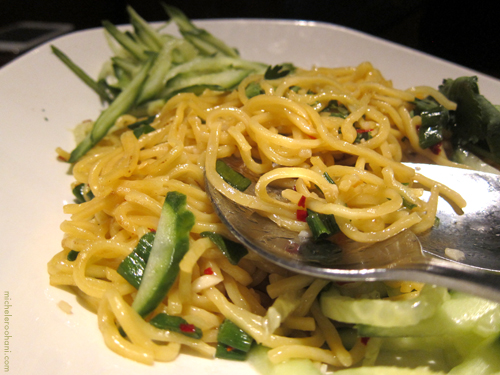
The trick is lots of green onions!
A good meal with family and friends is one of the blessings we usually take for granted.
Now back in Spain again, I shouldn’t be impressed with flowers but these hibiscuses were a red that only Goya would have understood…
The Villa had a swimming pool, a shallow spanish tile pool, a lion head fountain and Sepideh, my cousin, did her best to model for me by all three!
She looks so authentically Spanish that she’s had gotten into fights with some people in Malaga who accused her of lying when she claims to be Persian; the fact that she speaks Spanish well has not helped!
Can’t resist a poem of Garcia Lorca (english first and then spanish):
Green, how I want you green.
Green wind. Green branches.
The ship out on the sea
and the horse on the mountain.
With the shade around her waist
she dreams on her balcony,
green flesh, her hair green,
with eyes of cold silver.
Green, how I want you green.
Under the gypsy moon,
all things are watching her
and she cannot see them.
Verde que te quiero verde.
Verde viento. Verdes ramas.
El barco sobre la mar
y el caballo en la montaña.
Con la sombra en la cintura
ella sueña en su baranda,
verde carne, pelo verde,
con ojos de fría plata.
Verde que te quiero verde.
Bajo la luna gitana,
las cosas la están mirando
y ella no puede mirarlas.
Spain is a beautiful woman…
Check out this clip for a passionate and seductive flamenco dance by Belen Maya and its vocal version, Cante Jondo or deep song.
Watch the legendary Antonio Gades dancing it to perfection here.
Listen to Miles’ Sketches of Spain here.
Watch Carlos Saura’s Iberia trailer here.
For the beautiful poem (in Spanish and English) I used in my infanta image, read Dave Bonta’s post here.
Ms. Foodie goes to Hollywood
April 11th, 2010
After living for a few months in Switzerland, I couldn’t wait to get to my favorite Cuban restaurant in Los Angeles, Versailles; everything tastes more delicious and was way cheaper in the good old U.S. of A.
The most famous item in the menu is the garlic chicken and even for somebody who is not a “beer person”, this Corona was just too good to miss:
I tried to go back and rediscover all the inexpensive great restaurant of my hometown like the King and I where they still serve the best Thai food since the first glass noodles I had there 25 years ago.
To have the best restaurant cheeseburger in Los Angeles (Tommy’s is still great), I went back to the Westside Tavern—they have a gorgeous bar,
and they serve a rare cheeseburger to die for:
I love old diners (my first impression of America remains diners with bad coffee in New Jersey and New York) and I miss Bob’s Big Boy in Santa Monica; Coogie’s who replaced it has a super fresh simple chopped salad:
Nothing says more southern California than a killer burrito like this world famous border burrito from Eduardo’s Border Grill in Westwood (surviving the attack of Persian restaurants in the area):
The dudes are preparing them with tender loving care,
worth every cent of its 8 dollar price!
So I am not very beer, or burrito or hamburger but Switzerland does this to the poor Californian foodie who comes back: I wanted to eat everything in every menu of every restaurant!
Lemons and limes are always fresh at Eduardo’s,
so are different kinds of salsas:
It takes mediocre expensive food to change Ms. life is too short for bad food and cheap wine’s opinion about inexpensive modest restaurants of L.A.
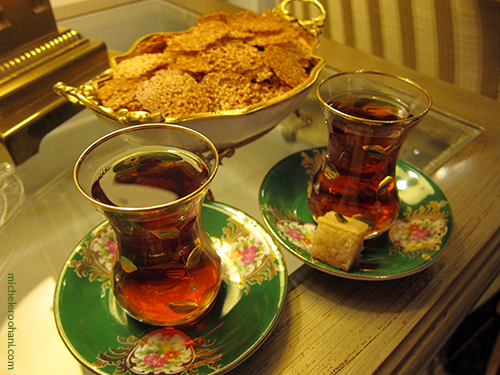
All of the above places were great and gave me a lot of pleasure (and poundage!) but the tea at André’s was as usual priceless…
Easter run over by chocolate rabbits
April 6th, 2010
Maundy Thursday followed by Good Friday (Black Friday) and Easter Sunday are, according to Christian scripture, the days during which Jesus was resurrected from the dead after his crucifixion.
What does all this have to do with chocolate bunnies?
I guess these cute rabbits are happy about Jesus’ resurrection!
I wonder if they sell chocolate in Via Dolorosa in Jerusalem? These rabbits don’t look like they are going anywhere close to the Way of Grief...
“The Easter Bunny is very similar in trait to its Christmas holiday counterpart, Santa Claus, as they both bring gifts to children on the night before their respective holiday.”
Sprungli, one of Switzerland’s most important confectionery producers, drive kids crazy with their chocolate eggs and rabbits.
An army of rabbits…
Eggs, like rabbits are fertility symbols. Since birds lay eggs and rabbits give birth to large litters in the early spring, these became symbols of the rising fertility of the earth at the Vernal Equinox (Nowruz).
Eggs were forbidden to Catholics during the fast of Lent, which was the reason for the abundance of eggs at Easter time. I took these pictures from my favorite florist, Marsano.
This big rabbit sets you back $190!
Happy Spring everybody.
Different shades of white
January 10th, 2010
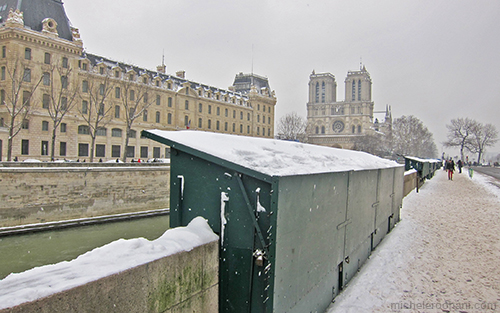
White is the color of purity, cleanliness, and innocence…or is it? I am surrounded and inspired by it lately and these are my white (ivory, ecru, eggshell, etc…) images:
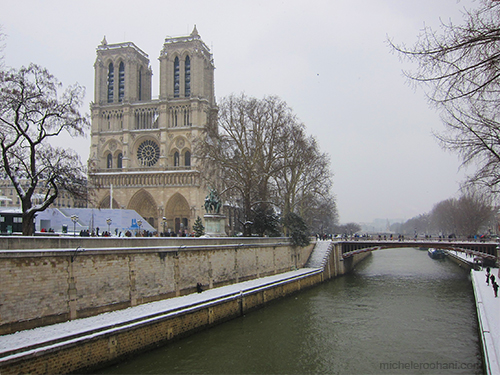
I went out to take pictures yesterday; I love the quiet that sits with the snow,
even when it gets dark early.
These are my shoes,
and this is not,
these are LeNôtre’s shoes:
on more recent creations, this is a white interior,
and a very expensive exterior,
and people who can’t afford it:
Four white dogs,
and some not so white ones,
a white wedding gown,
a much simpler one,
and some pretty pearls to go with it,
and a white church to complete it!
Some punctual white statues,

and some timeless ones:
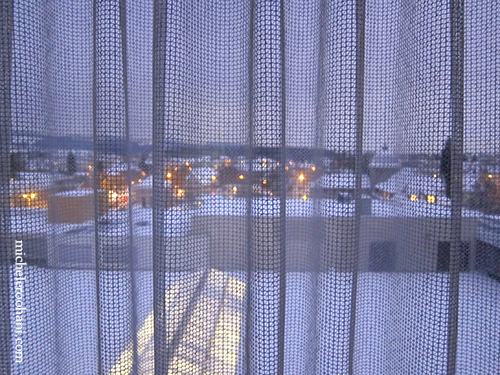
Sunlight flirting with a quiet white curtain,
in need of music:
to dance the “Swan Lake”,
or some other dance in white pants:
back in good old California, some white table at the Huntley’s:
with some great coffee in white cups,
white on white:
and San Vicente’s majestic magnolias…

see “my green movement” here
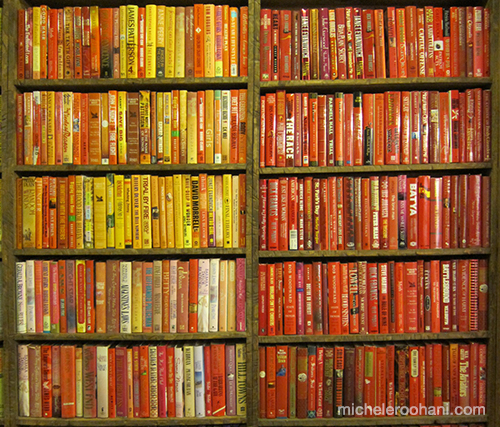
my “red post” here
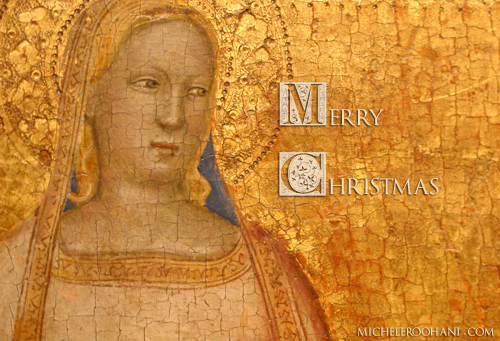
Tis the season…
December 25th, 2009
To be jolly…in Zurich?
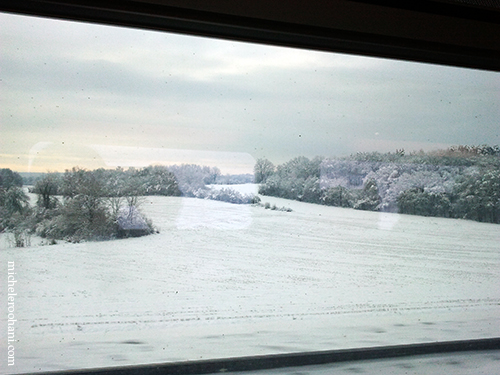
It snowed last week here and I was giddy like all the snow-starved Californians until the -13 C (10 F) hit me…
The above image is Zurich’s Grossmunster, a beautiful church that I went to last night, on Christmas eve, to see how the Swiss celebrate Jesus’ birthday:
Before I got there I stopped at Lindenhof and I was surprised by this lovely bird (or a winged rat as some people call it) who was not afraid of me and kept drinking from the fountain in spite of me and my big camera…
I am so close here,
Frohe Weihnachten!
Strasbourg Christmas, an Augmented Reality
December 19th, 2009
Strasbourgers in the Alsace region of France claim that they are the “Christmas Capital” of Europe so as a good muslim I went there to check.
Well, they keep saying it everywhere:
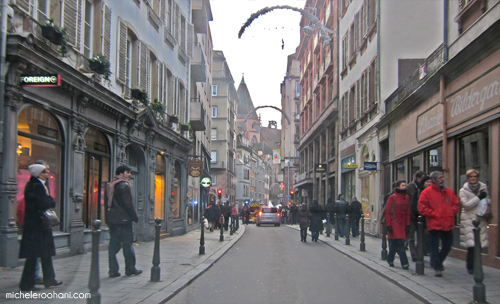
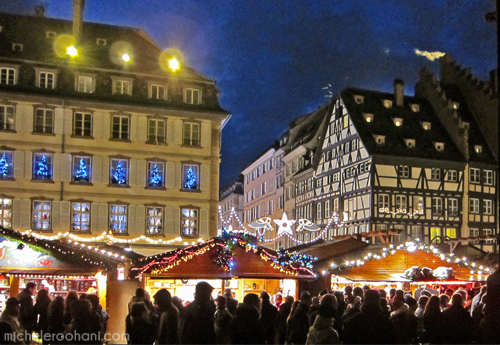
It was a very cold day but thousands of poeple were swarming the streets of this beautiful Alsatian city:
walking up and down narrow streets,
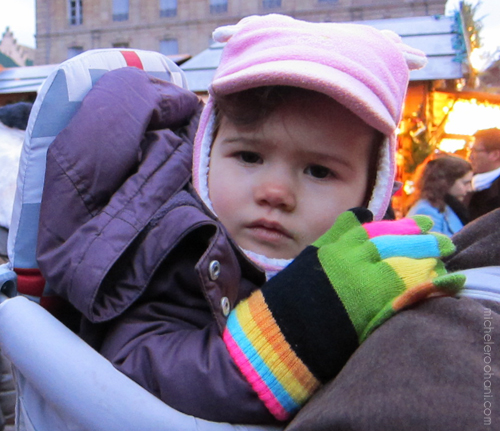
They have no pity for their babies fighting the cold,
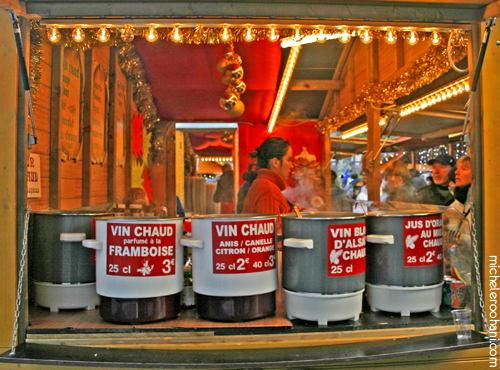
maybe because they drink this mulled wine called “Vin Chaud” (hot wine) or “Gluehwein” (in german): a concoction usually prepared from red wine, heated and spiced with cinnamon sticks, vanilla pods, cloves, citrus and sugar. They sell it in every other stand on the big Christmas market in Strasbourg:
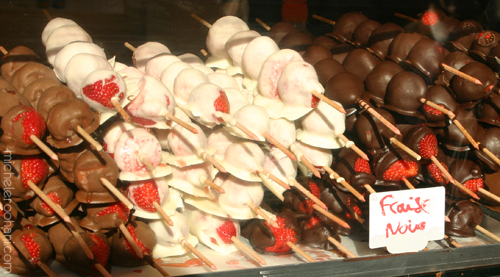
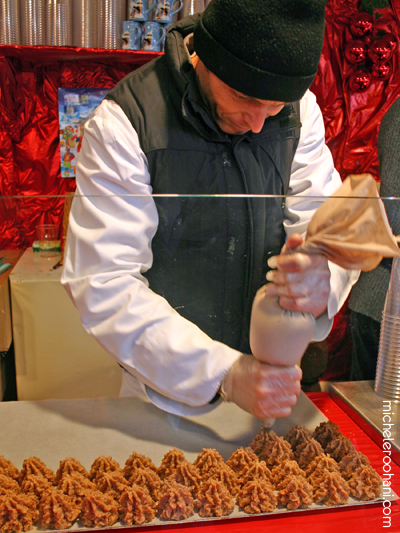
I saw my first chocolate covered “strawberry kababs”:
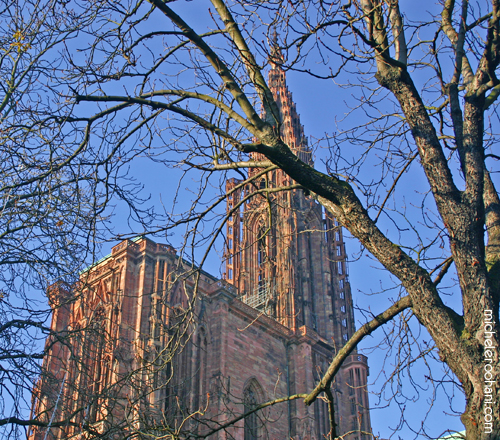
Strasbourg is home to one of the most beautiful cathedrals in Europe:
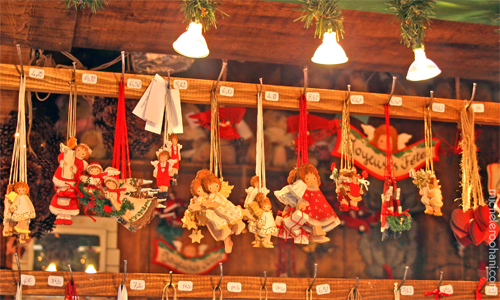
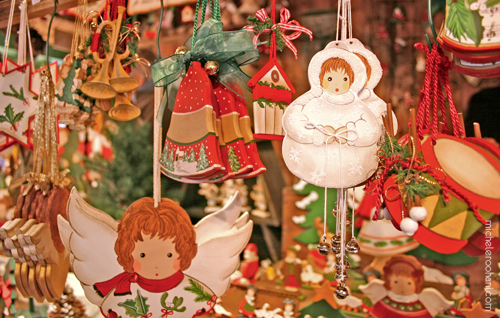
where Jesus’ birth will be celebrated this year with pomp and thousands of little ornaments made in Alsace (read China):
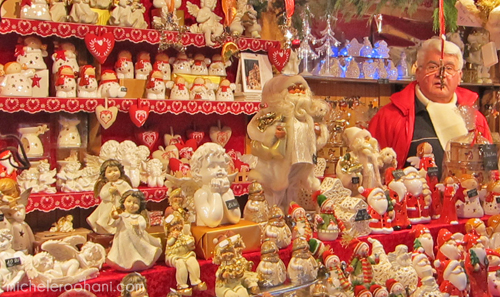
The market is not close to the big church but right at its feet with Santa Claus himself selling some of the stuff:
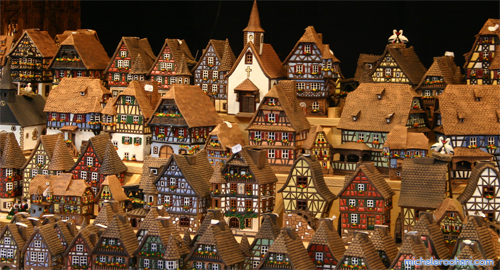
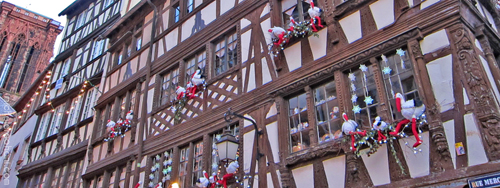
Here is Alsace in all its glory (albeit in miniature):
and colors,
with little chefs baking for the big birthday (Jesus’, remember?)
and big chefs of course making macaroons:
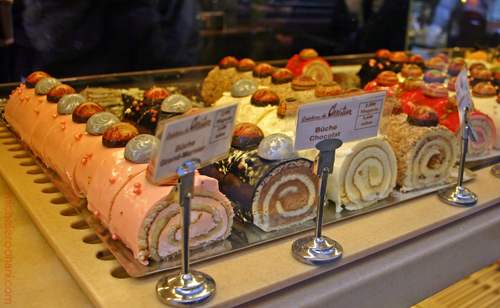
but for people with a weakness for great pastry I have a better treat:
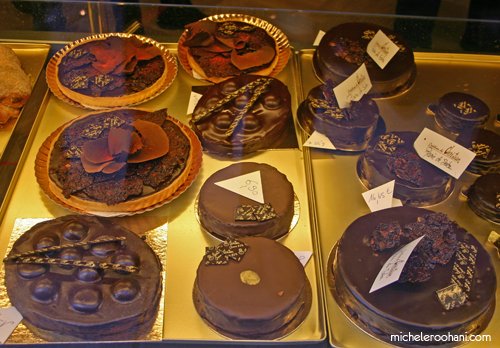
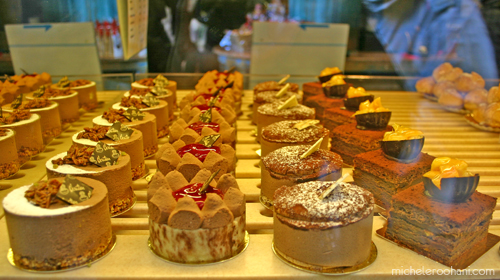
The above are Christmas Buches but Christian Patisserie—that I discovered a couple of years ago on my first trip to Alsace—is known for its chocolate:
and anything related to it:
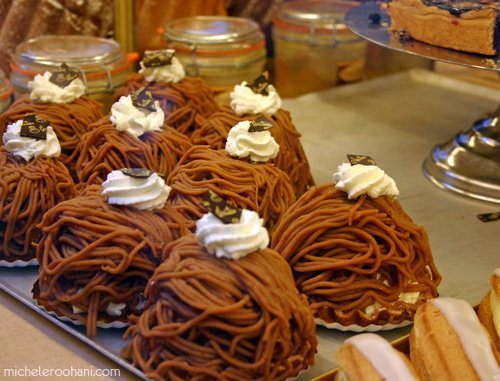
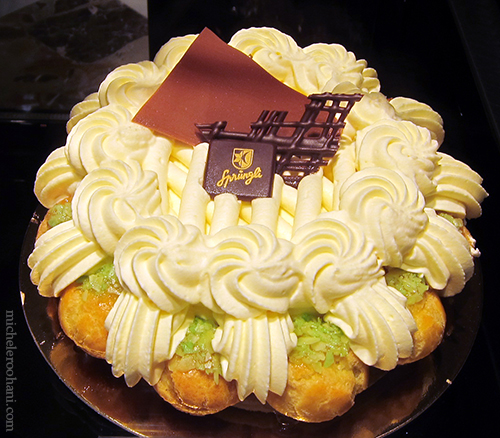
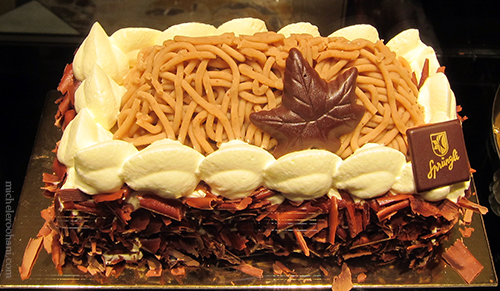
Chocolate not being on my repertoire much, I opted for the fabulous chestnut cream “Mont Blanc”:
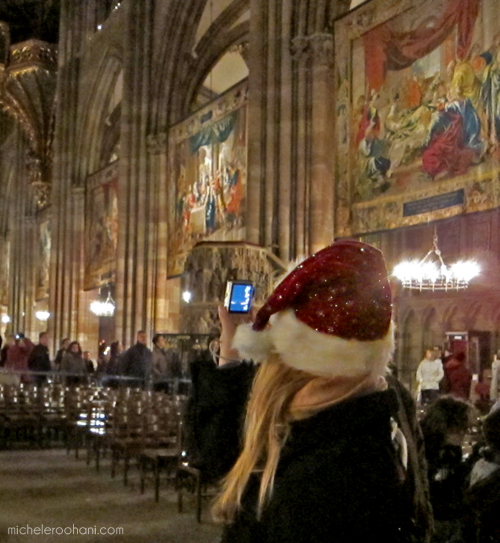
I went to the cathedral where a thousand Santas were busy clicking away on their cameras,
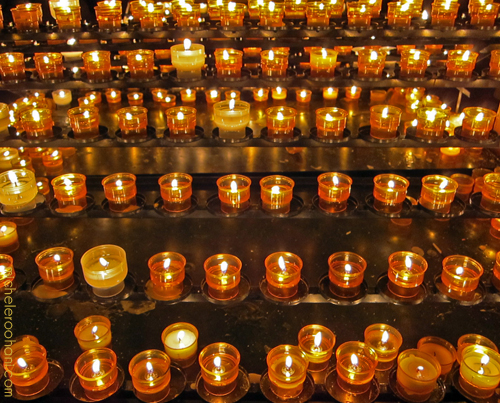
and a thousand candles promised to fulfill wishes…
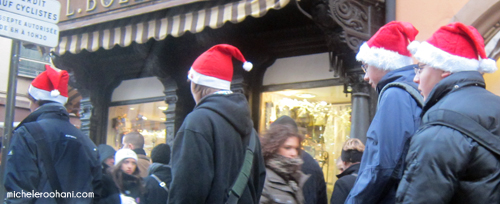
By the end of the day, I was one of the few without a red hat,
Alsace’s emblem is a stork—you see them everywhere:
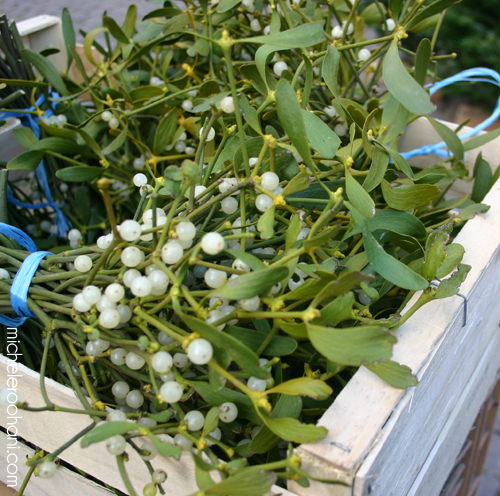
I couldn’t resist buying my first real mistletoe:
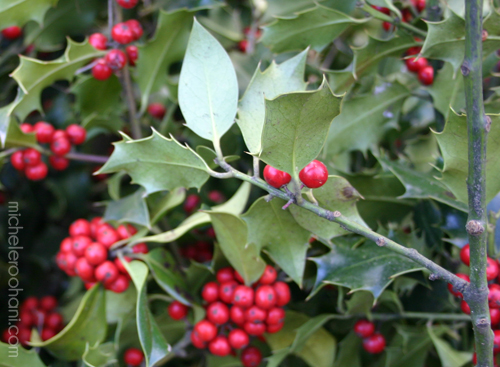
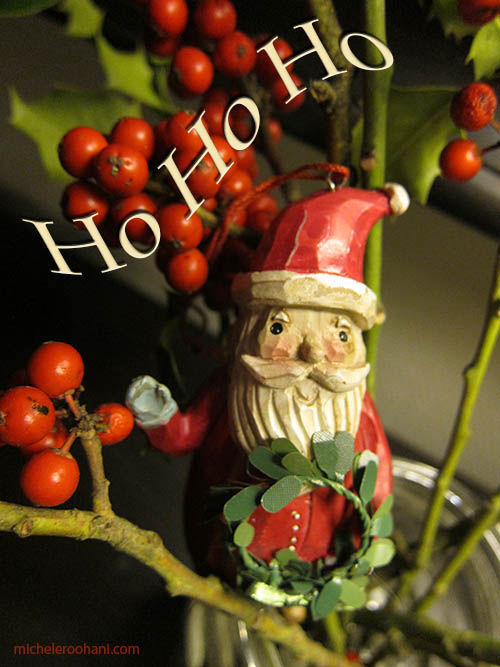
and looking at the holly,
I went to see the Fine Arts Museum:
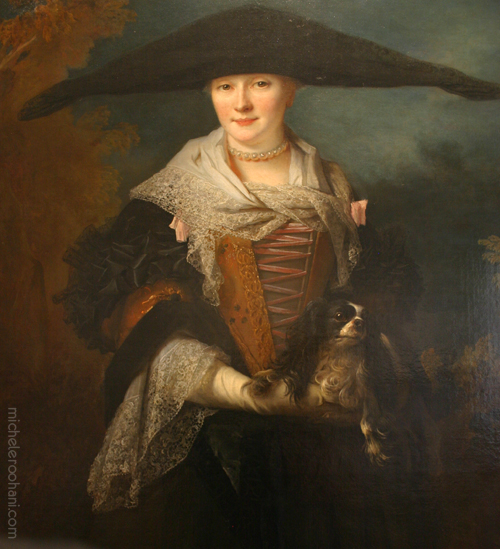
where I revisited “the beautiful woman from Strasbourg”:
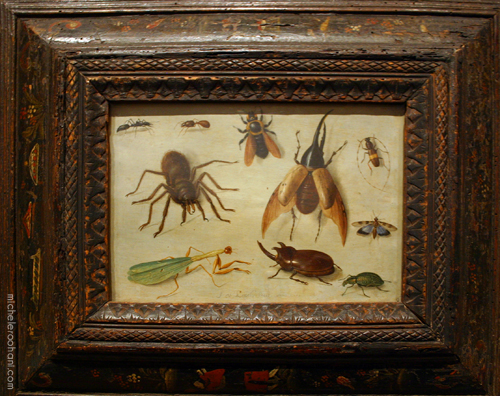
and the fabulous dutch still life paintings and my favorite Kessel insects of course:
By the time I got out it was getting dark but the market was still hustling and bustling,
This whole trip almost made me forget Copenhagen’s climate summit, the American Health Bill disaster and the Swiss minarets…
Have a golden Christmas everybody!
Noble Rot, the liquid gold of Sauternes
October 25th, 2009
Drive forty minutes from Bordeaux, and you will get to the most amazing wine country of the region, Sauternais, or the only area around Bordeaux where the noble rot grows.
A most peculiar wine is produced here that has not much to do with the red Bordeaux wines that we all know (red or white). Sauternes is made from grapes that have been affected by a gray fungus, Botrytis Cinerea, which causes the grapes to shrivel, leaving a sugary fruit with concentrated flavors resulting in distinctively flavored wines. 
I had heard about the Noble Rot (an oxymoron of a name) but I was still amazed to see these grapes on the vine stocks:
The grapes are definitely getting ripe here, all semi rotten! The best Sauternes come from vines that have been hand-picked—up to 12 separate times—to ensure that the grapes are not removed from the vines before reaching the perfect degree of ripeness required for these wines.
The eminent Château d’Yqem, the most expensive Sauternes wine, is the only estate in France who has received a class of its own, one step above Premier Crus. Each grape is picked individually, and only when it is rotten enough. Thanks to the noble rot and a lot of hard work, the result is an exquisitely flavored wine that is acidic enough to avoid falling into the trap of being a mere dessert wine.
The Sauternes region is located 40 km (25 miles) southeast of the city of Bordeaux along the Garonne river and its tributary, the Ciron, which demarcates Barsac (Orange on the map) and Sauternes (yellow on the map). Barsac lies within Sauternes, and is entitled to use either name. Somewhat similar but less expensive and typically less-distinguished wines are produced in the neighboring regions of Monbazillac (which I tasted a couple of years ago when visiting Bergerac) , Cérons, Loupiac and Cadillac (not the car)!
The moisture the Ciron brings, and the morning mists it causes, are favorable to the development of the fungus Botrytis cinereangus. This contributes to the high quality and renown of Sauternes wines.My guide explained that vines produce one to two bottles of wine everywhere else, but in Sauternes, you can only get one to two glasses per year! No wonder this wine is so revered (and expensive)…
Not having money to burn, I only bought some of the more modest bottles after the tasting:
Of course, there are myriads of labels to choose from:
like these bottles with ample and intense golden liquid inside…
You wonder how on earth with amazing wines like these in the region,
some of the locals drink coffee…
My other post about wine:
A night with some dry drunk Persians here
Budapest, the neglected beauty on the Danube
October 5th, 2009
Budapest, the neglected beauty on the Danube, is a city of friendly people, opulent buildings, golden domes, thermal baths and opera.
Budapest became a single city occupying both banks of the river with a unification on 1873 of right-bank Buda and with left-bank Pest.
A foreign city robs you of your prejudices about different neighborhoods—you look at everything with fresh virgin eyes.
Let’s start by my posh, but relatively inexpensive, hotel room and its great view:
grand cafés everywhere,
like the Callas :
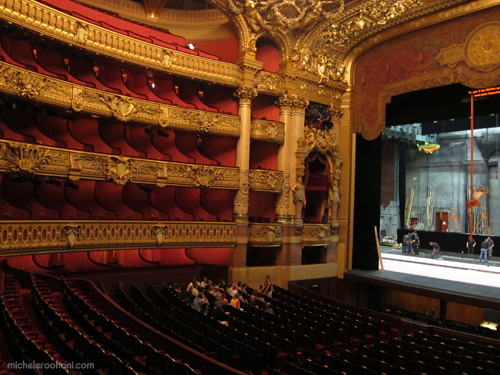
The Hungarians are Opera-crazy and they have their elegant Opera Houses to show it:
There are plenty of beautiful Hungarian girls,
and boys:
and very proud ones at that: The Heroes’ Square welcomes you with seven Magyar chieftains (Magyar: Hungary) who led the Hungarian people in their proud history; I highlighted a couple that I liked best:
Now we’ll take the Budapest metro—super efficient and easy to use— to go places.
Like a good muslim, I first went to visit the great Saint Stephen Basilica:
the madonna looks friendlier in orthodox churches—somehow less aloof, more human…
In spite of all the gold in the public places, Budapest has its share of run-down buildings,
this huge metropolis is not as pretty as her smaller sister city, Prague,
but is as rich in history and as breathtaking in sights:
the sunset on the Danube is majestic:
Again as a good Shiite who does believe in Holocaust, I went to visit the Dohany street Synagogue of Budapest, the world’s second largest that caters to a mix of Orthodox and Reformed Judaism unique to Hungary:
in spite of its Byzantine Moorish style, the similarities between this synagogue and a grand church are striking: there is an organ (Franz Liszt played on it once),
and even pulpits!
In the Jewish quarter, you are constantly reminded of the Nazis’ atrocities:
Budapest is known for its 80 geothermal springs but I didn’t have the courage to accompany my friends to these pools in Szechenyi bath:
the Fine Art Museum was more pressing but that should wait for another post; the Hungarian parliament deserves a post all to itself as well.
If you want to stay in great affordable hotels in a great cosmopolitan European city, go to Budapest (or ask my friend, Reyhaneh, who is a champion in finding great deals!)
I leave you with this quote: “The stupid neither forgive nor forget; the naive forgive and forget; the wise forgive but do not forget” and “Clear thinking requires courage rather than intelligence” by Thomas Szasz.
p.s. I am not writing about food because the only good meal I had worth writing home about was with my favorite Hungarian, Professor Ungvari, at Remiz.
September morning in paris, an early stroll
September 17th, 2009
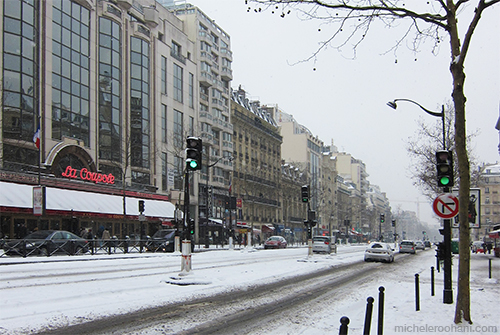
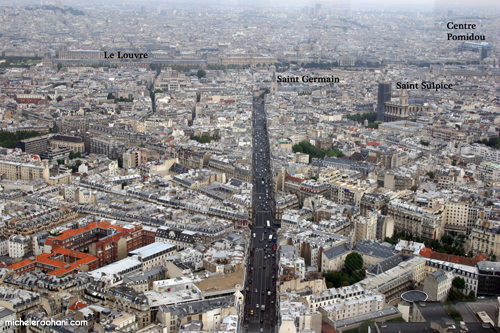
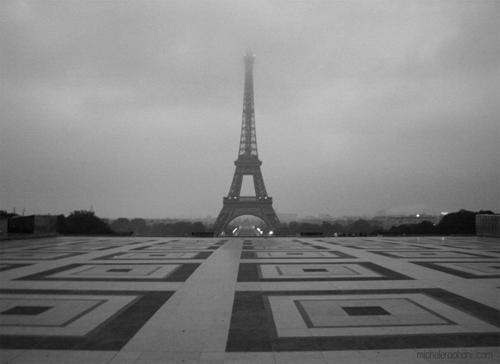
It’s one of those great (and gray) September mornings in Paris and I take my poor jet lagged body out to take pictures of a city that looks more majestic without its occupants or tourists like me!
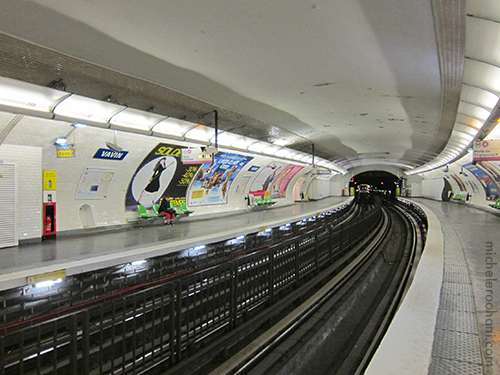
I would like to take you with me; first we take the bus:

the streets are all empty—one of the oldest surviving buildings in Paris from the 16th century:

even the marché is not open yet,

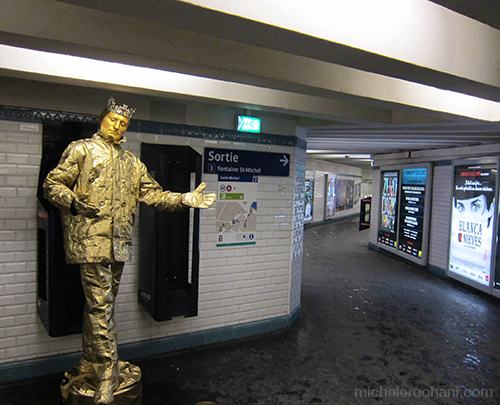
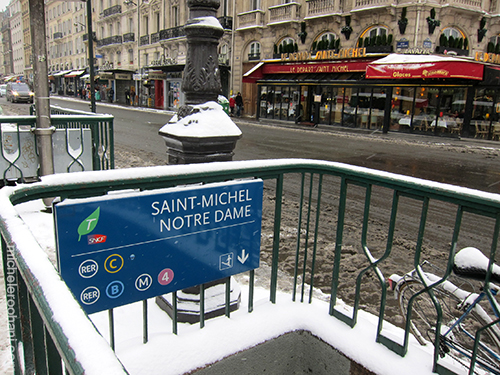
Saint Michel is unrecognizable at 7 am:

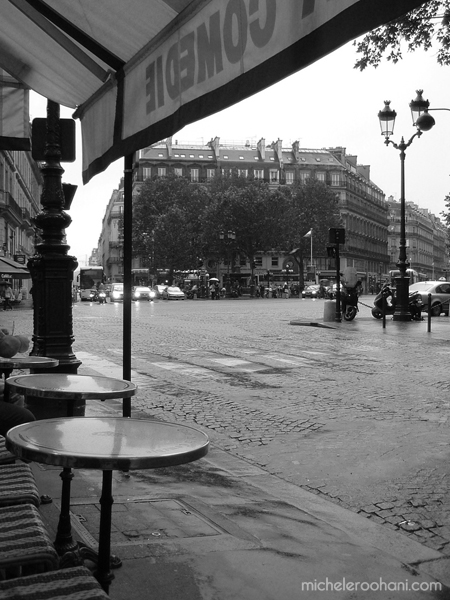
the cafés are just opening,

walking along the river bank in Isle Saint Louis,

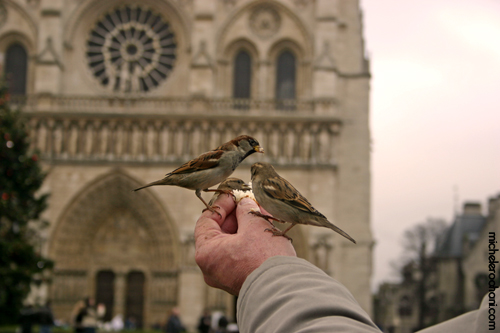
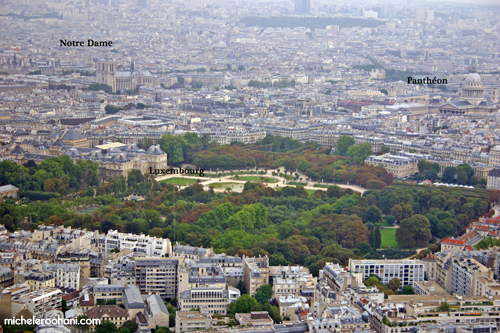
Notre Dame is majestically melancholic,

but pretty soon, life starts in the city:

I decide to go towards the Marais; I am surprised to see a Pain Quotidien on my way—so far from Brentwood and Westwood but exactly the same menu:

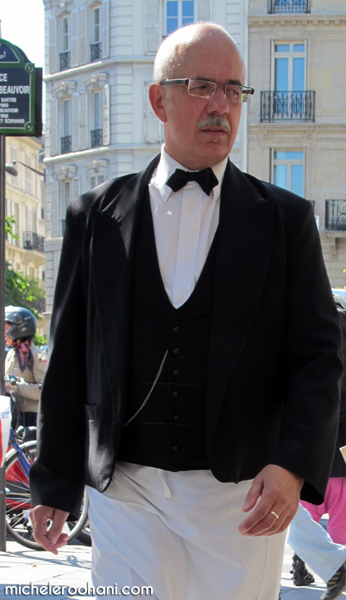
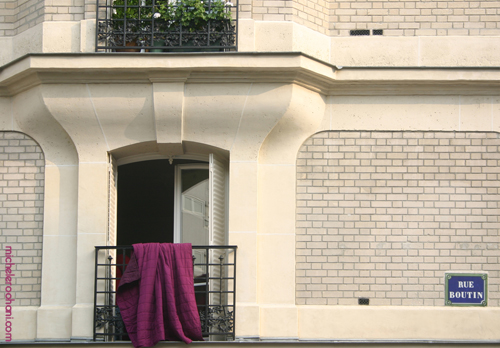
rushing towards Place des Vosges, the street signs stop me:

its’ too early in the morning for gooseberries,

I really need a strong coffee,

but of course the waitress cleans up the street and not the table left from the previous clients,

the galleries around the square are too commercial but I am glad to discover a painter from Rafsandjan, Reza Sarrafi, in one of the windows:

the wine paintings are from another painter, Annekov:

Voilà! Now you know.

I am not kidding when I say I love this city—here are my other posts about Paris:
Giacometti, a post from Montparnasse
How Enrico Fermi killed all the Aliens
July 21st, 2009
An expression that can mean anything means nothing; when you want to please everybody, you please nobody.
Enrico Fermi, the great Italian physicist, killed all the aliens in 1950 by asking this simple/innocent question: “if extra-terrestrials exist, where are they?” This question has become the Fermi Paradox.
Even though I am a science fiction fan I do agree with the skeptics that, Houston, we have a problem:
a) the search for extraterrestrial intelligence (SETI) program to detect radio transmissions from other civilizations has been a failure.
b) the question of the Great Silence remains unsolved; if life is common, why don’t we detect their radio transmissions?
Today is the 40th anniversary of the first moon landing (July 20, 1969).
I remember the thrill of hearing about it on a hot summer day in Iran; the moon has not looked the same since!
Unlike my father, I am a lousy philatelist (postage stamp collector) but I was able to find the above page I bought in 1994—on the 25th anniversary of “the big step”—among my loose leaves.
The Drake Equation—an attempt to estimate the number of extraterrestrial civilizations in the Milky Way with which we might come into contact— is still fascinating to me but I see its light getting dimmer with every “silent year”…
N = R* × fp × nE × fl × fi × fc × L
This once serious equation looks more and more like this cartoon from this very funny site:
To commemorate the 40th anniversary of Neil Armstrong’s historic walk on the moon, Google is offering Internet users a virtual trip to the moon.
I empathize with Fermi’s passion for clarity. I am simply unable to let things be foggy. The Drake equation is literally meaningless because “an expression that can mean anything means nothing.”
Related and Suggested Posts and Resources:
Carl Sagan explaining the Drake Equation.
Google earth lands on the moon.
Other Life not likely to be intelligent.
Subscribe
Main
Home
About me
Contact
Art, ...



compositions
cities
flowers
objects
portraits
sepia tones
best sellers