Marbella, the beautiful woman by the sea
July 21st, 2010
I just got back from Marbella, Spain, where the weather is hot, the sun’s always shining and the colors are intense (at least in July).
For me, the South of Spain—Andalusia—conjures up my beloved Velasquez, García Lorca and of course the native son of Malaga, Picasso. It was my first time in this part of the country so I did the usual tourist things. The great hotels of Marbella looked empty under the sizzling sun; I loved all the local decors like Plaza Romano in Hotel Puente Romao:
Andalusia is the land of Flamenco (not to be confused with the pink bird flamingo) and these paintings by Fabian Perez, translate the passion of this dance into beautiful images:
But the real ladies of Spain were painted by my beloved Velasquez: the Infantas (daughters of a king of Spain, in this case Philip IV)— infanta Margarita who stared at me for years from a poster in my kitchen and infanta Maria Theresa who became the wife of Louis XIV and lived way longer than her poor sister, Margarita.
I will make a post about Velasquez and one about Goya, once I visit the Prado in Madrid, but for now this post should do. These ladies with these extremely wide panniers inspired me to do a little Velasquez of my own:
I even drew one on the walls of the majestic Villa Padierna…
Las Meninas are everywhere in Spain even on a couple of Spanish fans I bought!
I wrote this post listening for the nth time to the superb Miles Davies’ Sketches of Spain, one of his best works.
Now let me take you to old town Marbella. It is a maze of narrow streets with white houses, restaurants and Bougainvillea galore! For good food check out Da Bruno.
Lots of small shops offering completely unnecessary but fun stuff:
The blue hour (the sun sets at 10 pm in summer) is accompanied by a dizzying fragrance of flowers.
I especially liked the 300-year-old statue of the Virgin—Virgen de los dolores— surrounded by dazzling plants:
A fun thing to do was to go to the open air market, bustling with life and colors; my mother (below in the middle) and my cousins were busy making good deals:
Southern Spain is a polka dotted country and they start dancing flamenco early:
Seeing all the beautiful vegetables, the Southern Californian (read Mexican) in me couldn’t resist treating everybody to a homemade quesadilla:
I went south of the border in every detail even the beer:
The trick is lots of green onions!
A good meal with family and friends is one of the blessings we usually take for granted.
Now back in Spain again, I shouldn’t be impressed with flowers but these hibiscuses were a red that only Goya would have understood…
The Villa had a swimming pool, a shallow spanish tile pool, a lion head fountain and Sepideh, my cousin, did her best to model for me by all three!
She looks so authentically Spanish that she’s had gotten into fights with some people in Malaga who accused her of lying when she claims to be Persian; the fact that she speaks Spanish well has not helped!
Can’t resist a poem of Garcia Lorca (english first and then spanish):
Green, how I want you green.
Green wind. Green branches.
The ship out on the sea
and the horse on the mountain.
With the shade around her waist
she dreams on her balcony,
green flesh, her hair green,
with eyes of cold silver.
Green, how I want you green.
Under the gypsy moon,
all things are watching her
and she cannot see them.
Verde que te quiero verde.
Verde viento. Verdes ramas.
El barco sobre la mar
y el caballo en la montaña.
Con la sombra en la cintura
ella sueña en su baranda,
verde carne, pelo verde,
con ojos de fría plata.
Verde que te quiero verde.
Bajo la luna gitana,
las cosas la están mirando
y ella no puede mirarlas.
Spain is a beautiful woman…
Check out this clip for a passionate and seductive flamenco dance by Belen Maya and its vocal version, Cante Jondo or deep song.
Watch the legendary Antonio Gades dancing it to perfection here.
Listen to Miles’ Sketches of Spain here.
Watch Carlos Saura’s Iberia trailer here.
For the beautiful poem (in Spanish and English) I used in my infanta image, read Dave Bonta’s post here.
Shostakovich: Iron Man 5, 8, 10
May 25th, 2010
Dmitri Shostakovich, the great Russian composer, is the ultimate Iron Man! He defeated, with his amazing music, Stalin’s Iron Fist in spite of the Iron Curtain.
Pushkin, Tolstoy and Shostakovich have helped Russia’s spirit endure the darkest moments of its history: the triumph of intense culture over politics.
Shostakovich, this fragile, shy, nervous, unassuming, fidgety little person, had a difficult and complicated relationship with the Soviet government. He lived in constant fear of persecution by a government that needed him for its propaganda machine.
I have been consumed by his music in the past several days; his symphony #8 (3rd movement) and symphony #10 (second movement), his string quartet #8 in C minor (II) are haunting to say the least. 
He was influenced first by Prokofiev and Stravinsky (needs a post all to himself) and later by Mussorgsky and Mahler; I can’t get his music (or his life story) out of my mind: the only way to put it to rest is to write about him.
What I’ve learned from my hero, Isaiah Berlin, is that people (in this case Shostakovich, this tragic figure), can not and should not be judged, from the safety of the 21st century western world, for having failed to stand up against Stalin’s terror machine. It’s just too easy to send others to their death…
“Shostakovich produced a wide range of music. In addition to the 15 symphonies for which he is best known, he wrote operas, film scores, ballets and compositions for theater. He also maintained ties with the literary community by setting the works of prominent Soviet writers (Babi Yar is one of them) to music.”
His symphonies number 5, 8 and 10 are my favorites—music notes are mightier than swords…
I hope you will find a little time to listen to this achingly beautiful music that celebrates life in all its glory and… gore.
Shostakovich : Symphony N° 8, III
Shostakovich: Gustavo Dudamel Symphony 10 II
Shostakovic: String Quartet No. 8 in C Minor, II
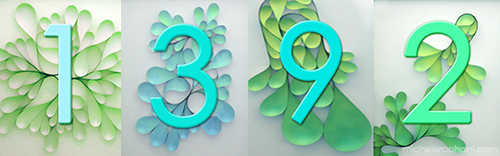
Nowruz 1389: It’s a Green Green world
March 18th, 2010
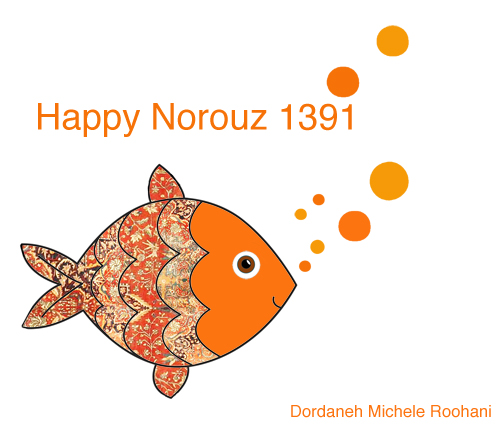
First day of Spring 2010 is the beginning of the Persian New Year of 1389—Happy Nowruz everybody!
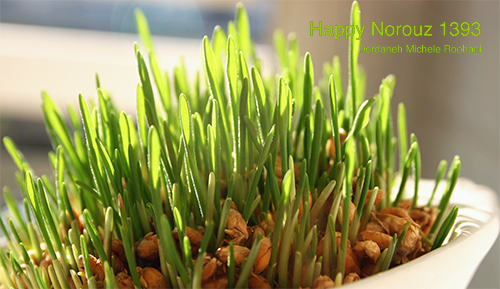
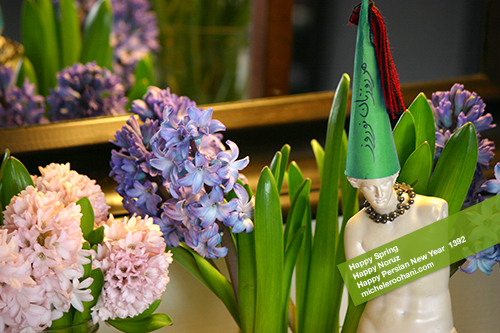
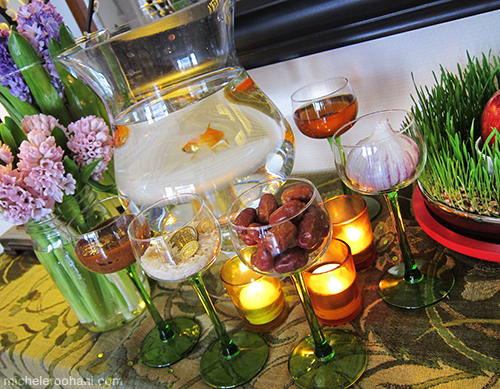
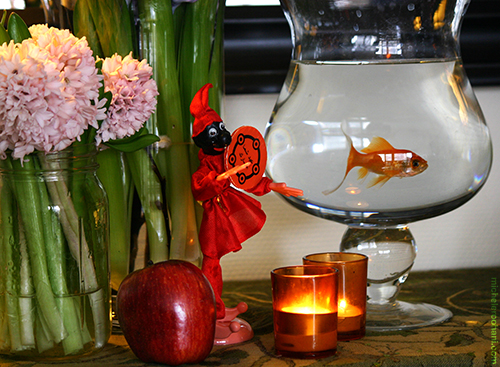
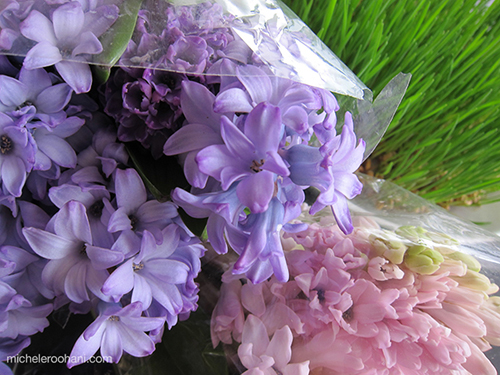
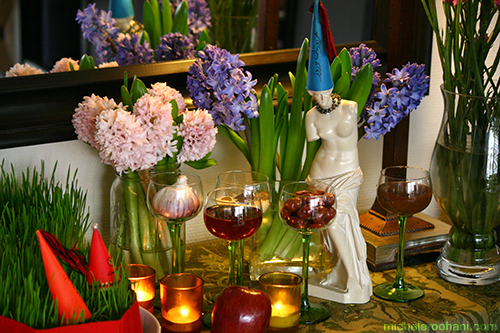
In previous years, I have talked a lot about Haft Seen (seven S’s on the new year’s spread) and the calendar; for this year, I decided to tell you which of the seven really symbolize Nowruz for me. One is Sabzeh or wheat sprouts (above) and the other is Sonbol, the hyacinth (below):
I am still in Los Angeles and the Wilshire Corridor is awash in Nowruz banners like this one:
My little sabzeh looks lonely among downtown high-rises:
Being close to the L.A.’s flower market, I left to take pictures early morning and I wasn’t disappointed. I loved the fragrance of these gorgeous stocks,
and the beautiful tulips that scream “spring is here” in so many colors:
I bought as much as I could carry and rushed home to take pictures.
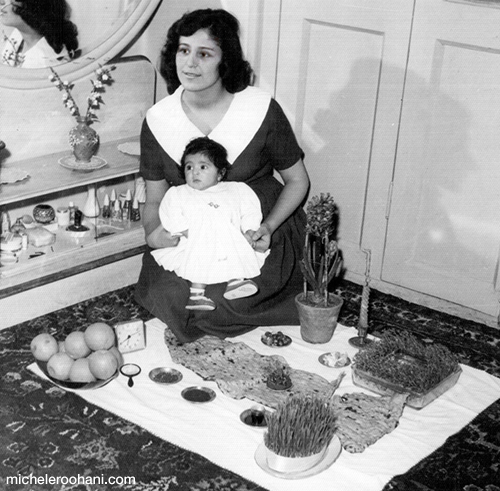
As a child, I remember listening to the Iranian singer, Pouran Shapouri, sing Eyd oumad bahaar oumad…
in our new Eyd dresses (new year’s dress) that my mom had made for my sister and I.
Vigen’s song, Shokoufeh (blossom), was another of my favorites as the harbinger of Nowruz.
يكي دو روز ديگر از پگاه
چو چشم باز ميكني
زمانه زير و رو
زمينه پرنگار مي شود
زمين شكاف ميخورد
به دشت سبزه ميزند
هر آن چه مانده بود زير خاك
هر آنچه خفته بود زير برف
جوان و شسته رفته آشكار ميشود
نگار من
اميد نوبهار من
لبي به خنده باز كن
ببين چگونه از گلي
خزان باغ ما بهار ميشود
سیاوش کسرایی
Sabzeh shows up in the new year celebrations in many countries:
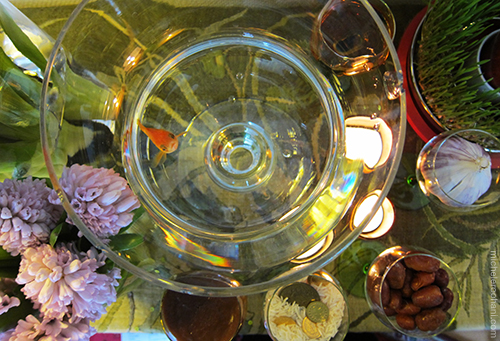
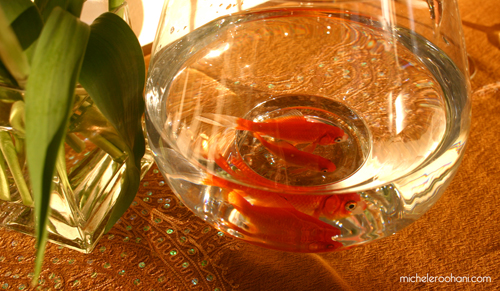
Let’s not forget my favorite, the goldfish:
Goldfish in a bowl represents life and the end of the month of Esfand (pisces).
for more on the traditions of Nowrouz: NoRuz, Norouz, haft-seen, haft-sheen, etc…
Norouz 1388, the blooming of a new year
Pouran singing about Eyd
a great slide show of Nowruz gold fish farms
Richard Neutra, the bridge between Taliesen and Bauhaus
March 5th, 2010
Richard Neutra, the quintessential California modernist architect, has made my stay in downtown Los Angeles worthwhile.
Los Angeles’ main library has an exhibition of Neutra’s sketches and drawings and I was able to take some pictures to share with you—these are my interpretations of his work:
I love these largely horizontal airy structures; they are so “modern”, you forget they were designed in 1920’s…
I admit that I had to leave California to miss it and nothing says more Los Angeles than this beautiful photo of the Stahl House by Pierre Koenig, another modernist architect:
the photographer, Julius Shulman, became famous by this one black and white shot from 1960 (above) and its color version (below):
Born in Vienna, Neutra (1892 – 1970) was influenced by his fellow Austrians, Gustav Klimt and Egon Schiele (both died in 1918 when Neutra was 26 years old); this little painting of his could have been created by Klimt himself:
Another great influence on the young Neutra was Frank Lloyd Wright who invited Neutra to work in his studio in Taliesen. They rank him second only to the great Lloyd Wright in American architecture. Other early influences were Louis Sullivan (he coined “form follows function”), Otto Wagner and Erich Mendelsohn.
This sketch is the Van der Leeuw House solarium (complete with bathing beauties) that Neutra envisioned to build for himself:
Chairs (this one from 1919) weren’t the only things besides buildings that Neutra designed,
he even designed aluminum buses!
Richard Neutra, the romantic engineer, was passionate about art, technology and architecture—I love this drawing of a cellist playing Bach:
Leaving the cold winters and the world wars of Europe, Neutra took refuge in the sunny climate and rich landscape of Southern California; with his cool and sleek modern style he coined the term biorealism: “the inherent and inseparable relationship between man and nature.”
To see my favorite architects go here
Catch the exhibition at the L.A. Library here
My three Italian boy friends
February 23rd, 2010
I was late for my rendez-vous with Italo Calvino but he didn’t get mad; time is after all an elastic commodity for Italians…
Seamus Heany talked to me at length about him and encouraged me not to despair but how could I? Calvino suddenly died before I got to know him.
Of the Italian Princes so far I only knew Umberto Eco and Primo Levi; I got to like Eco a lot after he took me to see the movie The name of the Rose about twenty years ago. Umberto and Primo each deserve their own blog post but let’s continue with Calvino.
I liked so much what Calvino’s said about reading that I need to share it with you; read it and judge for yourself:
“In the shop window you have promptly identified the cover with the title you were looking for. Following this visual trail, you have forced your way through the shop past the thick barricade of Books You Haven’t Read, which are frowning at you from the tables and shelves, trying to cow you…And thus you pass the outer girdle of ramparts, but then you are attacked by the infantry of Books That If You Had More Than One Life You Would Certainly Also Read But Unfortunately Your Days Are Numbered. With a rapid maneuver you bypass them and move into the phalanxes of the Books You Mean To Read But There Are Others You Must Read First, the Books Too Expensive Now And You’ll Wait Till They’re Remaindered, the Books ditto When They Come Out in Paperback, Books You Can Borrow From Somebody, Books That Everybody’s Read So It’s As If You Had Read Them, Too. ”
The above image is that passage in wordle.
Gore Vidal wrote in 1985: “Europe regarded Calvino’s death as a calamity for culture.” and I agree. Italy is not just an operatic country with clowns like Berlusconi at its head…
A couple more quotes from Calvino:
“Novels as dull as dishwater, with the grease of random sentiments floating on top.”
“Only a certain prosaic solidity can give birth to creativity: fantasy is like jam; you have to spread it on a solid slice of bread. If not, it remains a shapeless thing, like jam, out of which you can’t make anything.”
Read about Calvino here
Vidal talking about him here
Love is in the (freezing )air…
February 14th, 2010
Another Valentine’s Day and another excuse to say I love you to people who matter—in the universal language of poetry and roses…
I am in love,
with Italo Calvino but he doesn’t care much about me…I have to dedicate a post to him!
“Mon bel amour mon cher amour ma déchirure
Je te porte dans moi comme un oiseau blessé
Et ceux-là sans savoir nous regardent passer
Répétant après moi les mots que j’ai tressés
Et qui pour tes grands yeux tout aussitôt moururent” Aragon
Let’s stay in Europe with an Irish poet:
“Her scarf a la Bardot,
In suede flats for the walk,
She came with me one evening
For air and friendly talk.
We crossed the quiet river,
Took the embankment walk.” Seamus Heaney
Some sexy poetry from the good old English poet:
“The things about you I appreciate
May seem indelicate:
I’d like to find you in the shower
And chase the soap for half an hour.
I’d like to have you in my power
And see your eyes dilate.” John Fuller
I wish all of my friends a very sweet Valentine:
One last poem from Fereydoon Moshiri:
بگذار که بر شاخه این صبح دلاویز
بنشینم و از عشق سرودی بسرایم
آنگاه به صد شوق چو مرغان سبکبال
پر گیرم ازین بام و به سوی تو بیایم
خورشید از آن دور از آن قله پر برف
آغوش کند باز همه مهر همه ناز
سیمرغ طلایی پر و بالی است که چون من
از لانه برون آمده دارد سر پرواز
پرواز به آنجا که نشاط است و امیدست
پرواز به آنجا که سرود است و سرور است
آنجا که سراپای تو در روشنی صبح
رویای شرابی است که در جام بلور است
“I’d like to be your only audience,
The final name in your appointment book,
Your future tense.”
If this wasn’t enough to satisfy your Valentine’s cravings you can see more of Valentine 2009 here and Valentine 2008 here.
To hear all the above poetry read by a great voice go here.
all the flowers in this post are from Marsano in Zurich http://www.marsano.ch
Persian Rug: a paradise at your feet
February 3rd, 2010
Being Iranian, I am fascinated by Persian rugs and the exquisite uniqueness that defines them. The art of carpet weaving in Iran is deeply connected with the culture and the customs of the country.
Being away from California, surrounded by snow in Switzerland and far from my natural “soft fascinations” (read flowers, sunshine, rustling trees) I am experiencing a funny sense of “ecoanxiety” that may be cured by writing about my favorite permanent garden: the Persian Rug…
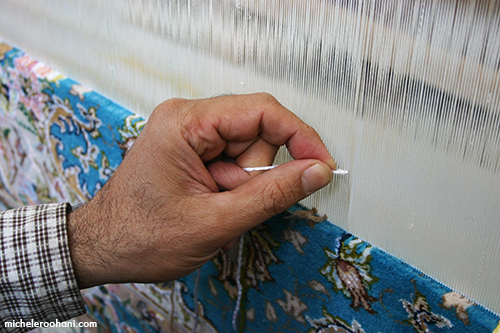
The designs (naghsheh or cartoon—a grid on paper with spaces colored to guide rug weavers in selecting pile yarns) are still mostly drawn by hand even though computers are doing wonders in this field.
Iranians are literally conceived, born and brought up on Persian rugs! Warmed by their soft and comfortable texture, touching, caressing, lying down and relaxing on them, comes naturally to Persians. The rugs add warmth underfoot like my favorite red carpet with these gorgeous Shah Abbasi patterns (with floral and leaf motifs mainly in the form of lotus blossoms):
The density of tightly woven Persian knots (or guereh) are the calibrating tool for the quality of the rug,
a good Nain rug may have 500 kpsi or 500 knots per square inch (farsibaaf, asymmetric or Persian pile knot.)
This is how a flower looks on the back of this Nain (Na’in):
and the same carpet from the front:
Like most textiles, carpets consist of warps (tar) and wefts (pud). The warps are the threads running the length of the carpet. The wefts are the threads that run across its breadth. This is the same carpet spread out:
Persian rugs go by region (cities mostly— like Tabriz, Esfahan, Nain, Kashan, Kerman, etc…) and each region has its MasterWeaver brand. A small encased signature can usually be found in the minor border like Habibian in Nain, Pirouzian in Tabriz and Taghavi in Bijar.
The most important signature must be Maqsud Kashani’s (from 1540) on the famous pair of Ardabil Carpets. A poem of Hafez is woven into the cartouche:
“Except for thy threshold, there is no refuge for me in all the world.
Except for this door there is no resting place for my head.”
جز آستان توام در جهان پناهی نیست
سر مرا بجز این در حواله گاهی نیست
The Ardabil Carpets have an interesting story: the lower field and border of one of them has been used to restore the other (now in Victoria and Albert Museum in London). The used and abused twin sister was kept in the dark (not to outshine the V&A version) until 1931 and finally found her way to Los Angeles County Museum of Art in 1965.
After exhaustive restoration done to the dazzling beauty, the LACMA sister was finally shown last year (look at how they had to wash it!)
The Ardabil carpets are the world’s oldest dated and historically important carpets in the world. This is the twin sister in Victoria and Albert museum in London:

It all comes down to this fundamental design that I just finished reproducing for the blog:
A love for fine Farsh (rug in persian) may be one of the few things that Shahs and Mullahs have always agreed upon!
Even though I have visited the great Manufacture des Gobelins some years ago,
I am dying to see the real thing in Iran,
and take some great pictures.
I will leave you with this superb painting of my favorite Orientalist painter, Gerôme, called The Carpet Merchant (ca 1887):
A great site to get acquainted with Persian rugs: Farsh Mashad
Weaving Art Museum here
About different motifs and style here
Strasbourg Christmas, an Augmented Reality
December 19th, 2009
Strasbourgers in the Alsace region of France claim that they are the “Christmas Capital” of Europe so as a good muslim I went there to check.
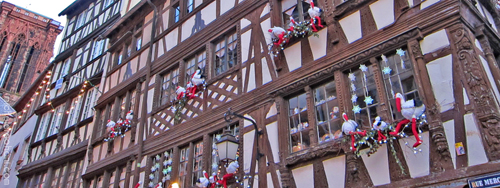
Well, they keep saying it everywhere:
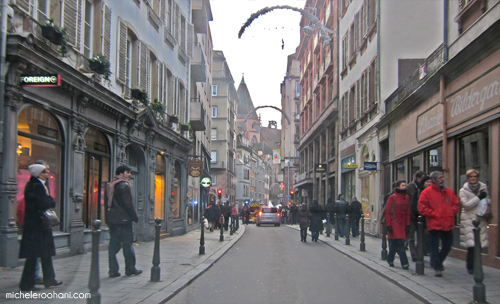
It was a very cold day but thousands of poeple were swarming the streets of this beautiful Alsatian city:
walking up and down narrow streets,
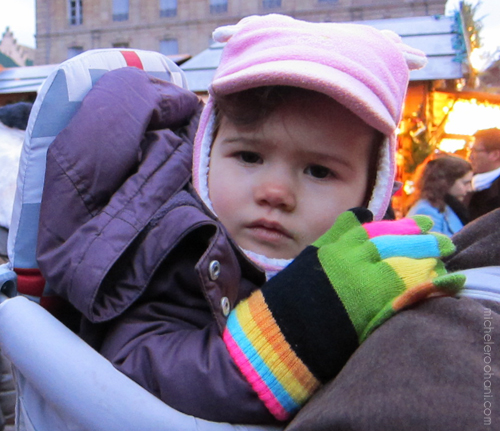
They have no pity for their babies fighting the cold,
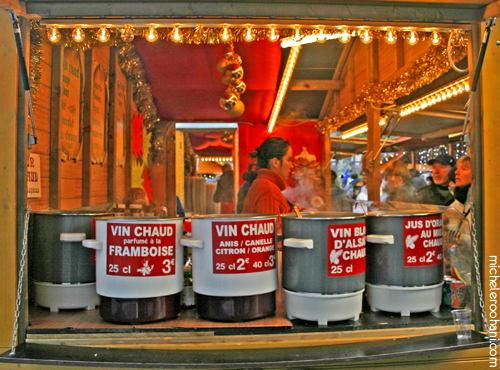
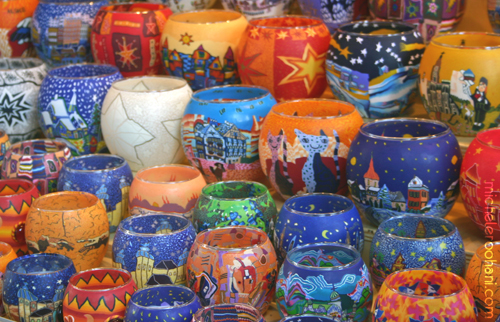
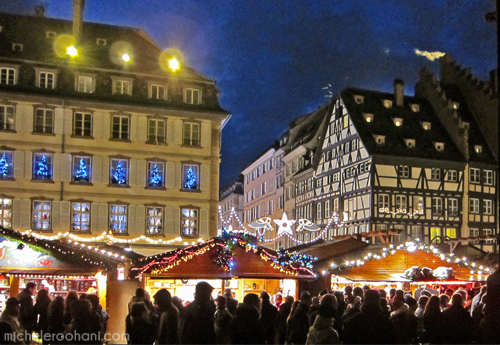
maybe because they drink this mulled wine called “Vin Chaud” (hot wine) or “Gluehwein” (in german): a concoction usually prepared from red wine, heated and spiced with cinnamon sticks, vanilla pods, cloves, citrus and sugar. They sell it in every other stand on the big Christmas market in Strasbourg:
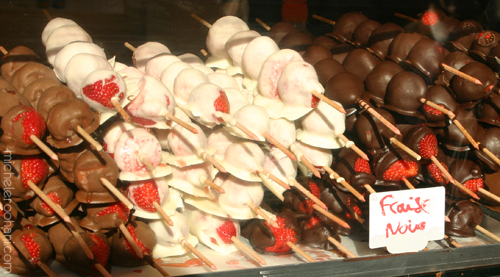
I saw my first chocolate covered “strawberry kababs”:
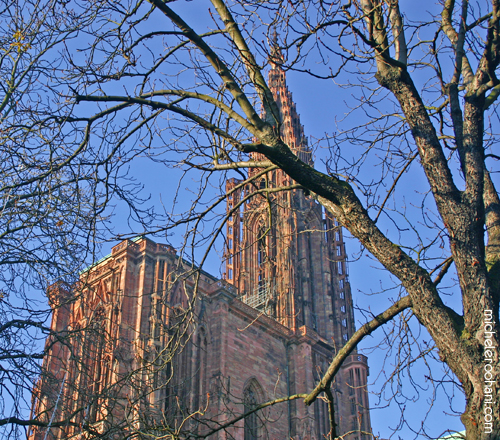
Strasbourg is home to one of the most beautiful cathedrals in Europe:
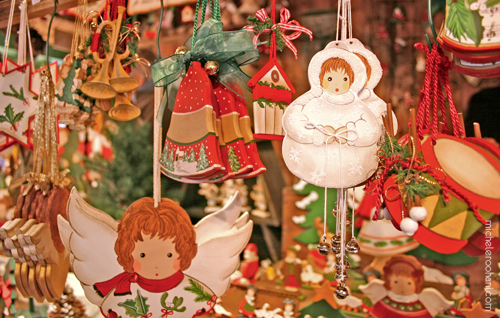
where Jesus’ birth will be celebrated this year with pomp and thousands of little ornaments made in Alsace (read China):
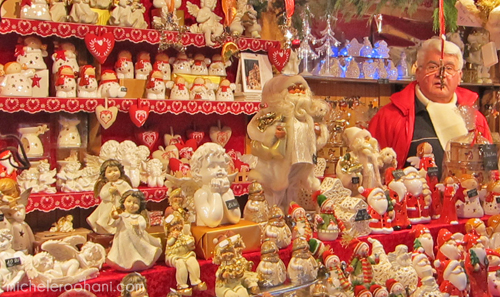
The market is not close to the big church but right at its feet with Santa Claus himself selling some of the stuff:
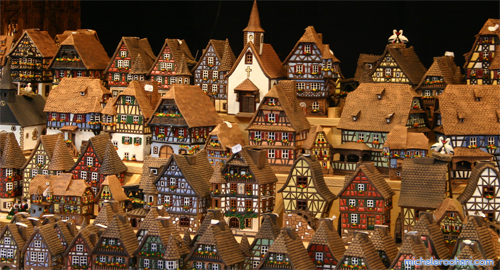
Here is Alsace in all its glory (albeit in miniature):
and colors,
with little chefs baking for the big birthday (Jesus’, remember?)
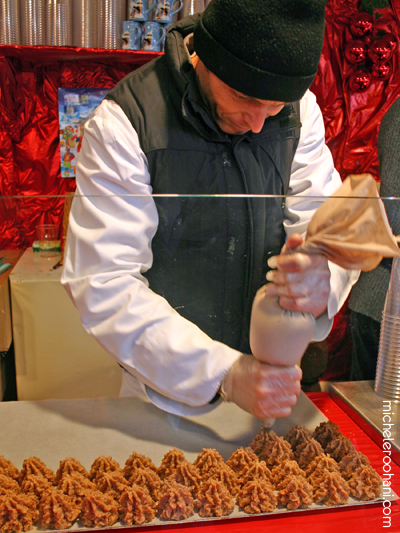
and big chefs of course making macaroons:
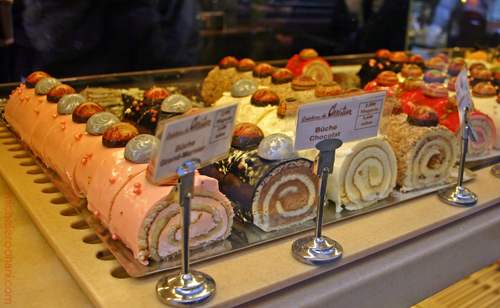
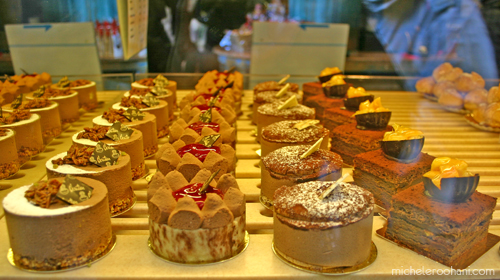
but for people with a weakness for great pastry I have a better treat:
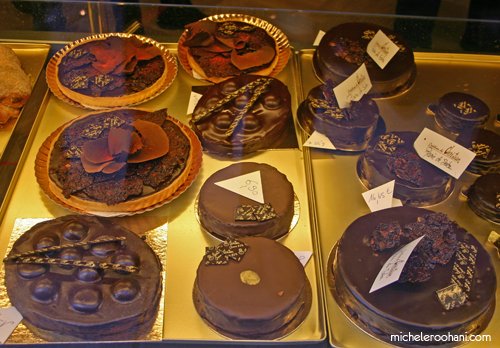
The above are Christmas Buches but Christian Patisserie—that I discovered a couple of years ago on my first trip to Alsace—is known for its chocolate:
and anything related to it:
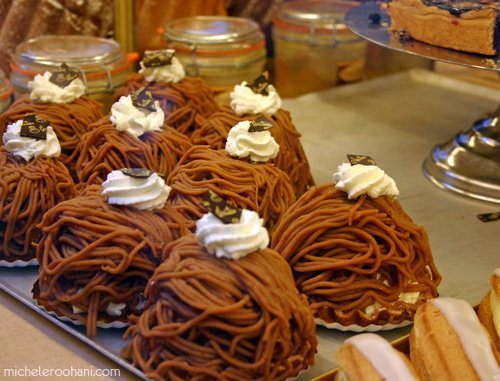
Chocolate not being on my repertoire much, I opted for the fabulous chestnut cream “Mont Blanc”:
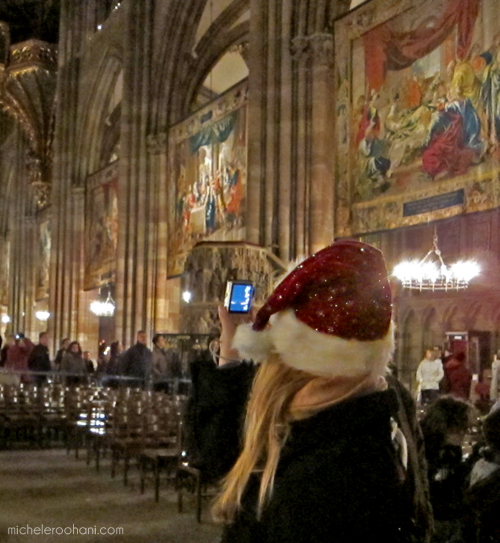
I went to the cathedral where a thousand Santas were busy clicking away on their cameras,
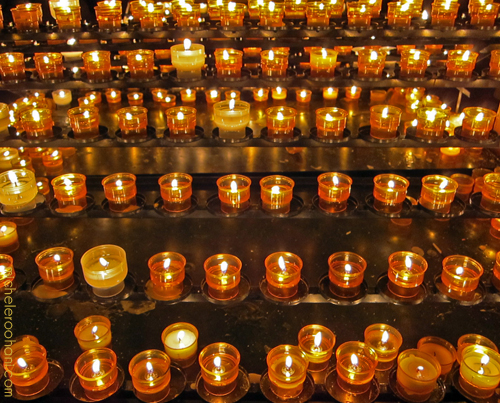
and a thousand candles promised to fulfill wishes…
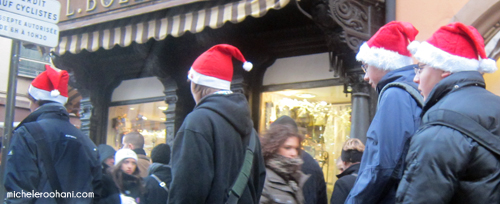
By the end of the day, I was one of the few without a red hat,
Alsace’s emblem is a stork—you see them everywhere:
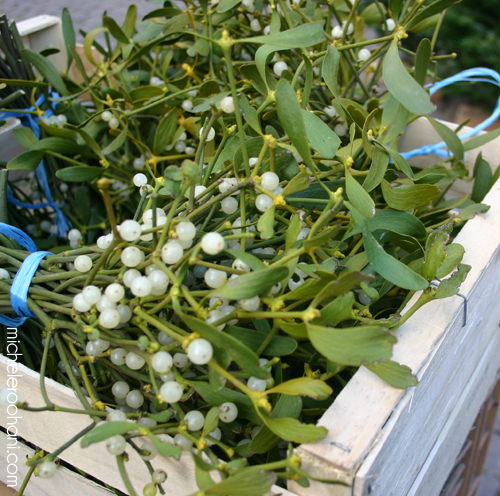
I couldn’t resist buying my first real mistletoe:
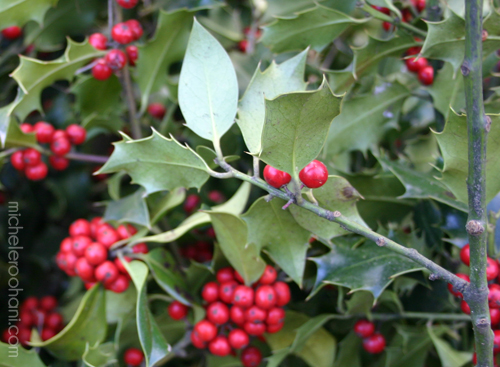
and looking at the holly,
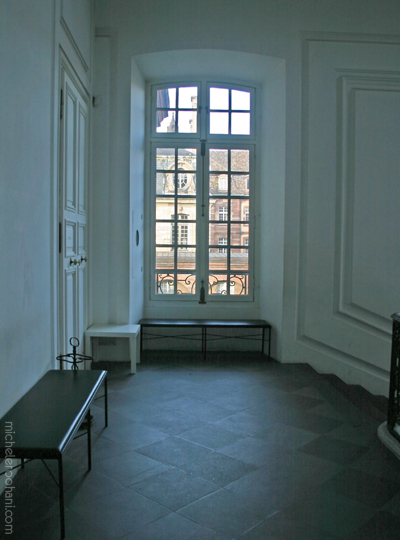
I went to see the Fine Arts Museum:
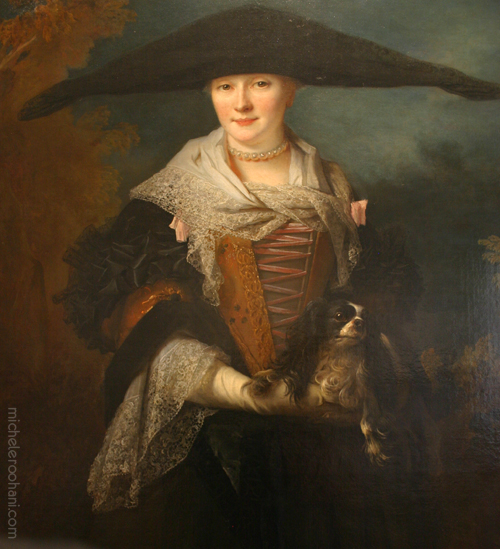
where I revisited “the beautiful woman from Strasbourg”:
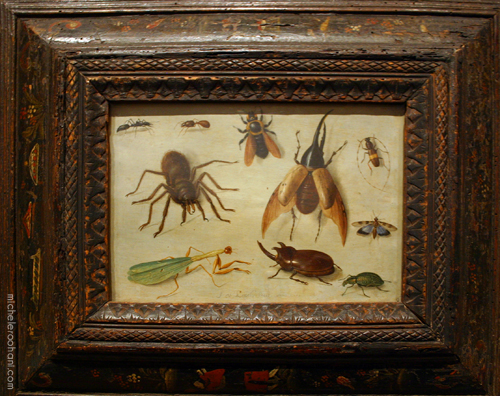
and the fabulous dutch still life paintings and my favorite Kessel insects of course:
By the time I got out it was getting dark but the market was still hustling and bustling,
This whole trip almost made me forget Copenhagen’s climate summit, the American Health Bill disaster and the Swiss minarets…
Have a golden Christmas everybody!
Between Hope and Chaos, 165 years of Iranian Photography
November 12th, 2009
The Quai Branly Museum presents the second PhotoQuai, the trendsetter biennial event dedicated to non-Western photography until November 22, 2009. Catch it if you can.
I was inspired to create this poster here and the clip at the end of the post:
Some of the images were breathtaking and I would like to share them with you.
The above image is from Abbas Kowsari; I call the next one by Gohar Dashti, “tea and tank”!
The Artistic Director of the Photoquai biennial is my friend, Anahita Ghabaian Etehadieh, Iranian founder and owner of the Silk Road Gallery, the only establishment in Iran dedicated exclusively to photography.
These two women were photgraphed by Bahman Jalali, one of the two curators of the exhibition:
More ambitious than the biennial itself, is the homage given to a sample of 165 years of Iranian photography, in the museum. It gives an overview of Iranian photography from the end of the 19th century, with the portraits from the Qajar era, up until the most contemporary works by major Iranian photographers. An uneven, discontinuous road full of great surprises…
The above photos were taken by Naser Al Din Shah himself, a photography enthusiast, and the following ones are by Armenian-Iranian photographer Antoine-Khan Sevruguin:
I love this shy Tar player:
The exhibition was especially interesting to me in its depth if not breadth of the older photos. I love these cute children photographed with their father in early 20th century peeking out of their hejab:
The exhibit spills into 20th century with masterpieces like Kaveh Golestan’s images of Iran Iraq war:
This visual storytelling will continue in the Musée de la Monnaie, museum of the French Mint and Treasury until December 20th. The exhibition is called “between Hope and Chaos” dedicated to 30 years of Iranian photojournalism, the three most recent generations of Iranian photographers between the 1979 Islamic Revolution and 2009.
I would look for my favorite works exhibited by Newsha Tavakolian:
I prefer this one that I got from her site—there is something otherworldly about Persepolis under snow…
Photoquai tries to highlight and promote artists unknown or little known in Europe encouraging cross-cultural dialogue across the globe.
A promenade along the Seine at quai Branly had been transformed into an open-air exhibition of photography where 50 photographers, chosen by the likes of Reza Deghati, the phenomenal Iranian photographer, exhibit their work.
Watch a great clip in TV5 here (even if you don’t speak french!)
165 years of Iranian photography here
PhotoQuai, Quai Branly Museum here
Iran, between Hope and Chaos here
Noble Rot, the liquid gold of Sauternes
October 25th, 2009
Drive forty minutes from Bordeaux, and you will get to the most amazing wine country of the region, Sauternais, or the only area around Bordeaux where the noble rot grows.
A most peculiar wine is produced here that has not much to do with the red Bordeaux wines that we all know (red or white). Sauternes is made from grapes that have been affected by a gray fungus, Botrytis Cinerea, which causes the grapes to shrivel, leaving a sugary fruit with concentrated flavors resulting in distinctively flavored wines. 
I had heard about the Noble Rot (an oxymoron of a name) but I was still amazed to see these grapes on the vine stocks:
The grapes are definitely getting ripe here, all semi rotten! The best Sauternes come from vines that have been hand-picked—up to 12 separate times—to ensure that the grapes are not removed from the vines before reaching the perfect degree of ripeness required for these wines.
The eminent Château d’Yqem, the most expensive Sauternes wine, is the only estate in France who has received a class of its own, one step above Premier Crus. Each grape is picked individually, and only when it is rotten enough. Thanks to the noble rot and a lot of hard work, the result is an exquisitely flavored wine that is acidic enough to avoid falling into the trap of being a mere dessert wine.
The Sauternes region is located 40 km (25 miles) southeast of the city of Bordeaux along the Garonne river and its tributary, the Ciron, which demarcates Barsac (Orange on the map) and Sauternes (yellow on the map). Barsac lies within Sauternes, and is entitled to use either name. Somewhat similar but less expensive and typically less-distinguished wines are produced in the neighboring regions of Monbazillac (which I tasted a couple of years ago when visiting Bergerac) , Cérons, Loupiac and Cadillac (not the car)!
The moisture the Ciron brings, and the morning mists it causes, are favorable to the development of the fungus Botrytis cinereangus. This contributes to the high quality and renown of Sauternes wines.My guide explained that vines produce one to two bottles of wine everywhere else, but in Sauternes, you can only get one to two glasses per year! No wonder this wine is so revered (and expensive)…
Not having money to burn, I only bought some of the more modest bottles after the tasting:
Of course, there are myriads of labels to choose from:
like these bottles with ample and intense golden liquid inside…
You wonder how on earth with amazing wines like these in the region,
some of the locals drink coffee…
My other post about wine:
A night with some dry drunk Persians here
Subscribe
Main
Home
About me
Contact
Art, ...





compositions
cities
flowers
objects
portraits
sepia tones
best sellers