Nowruz 1389: It’s a Green Green world
March 18th, 2010
First day of Spring 2010 is the beginning of the Persian New Year of 1389—Happy Nowruz everybody!
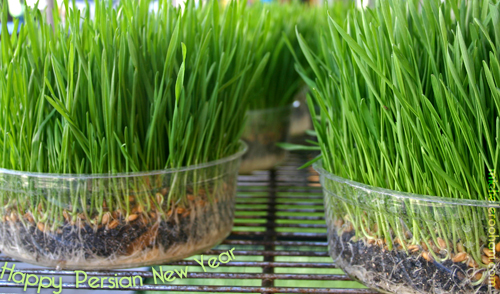
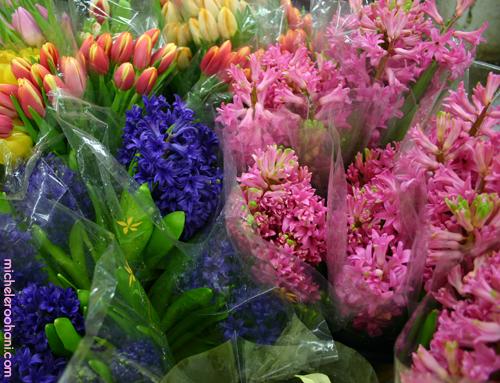
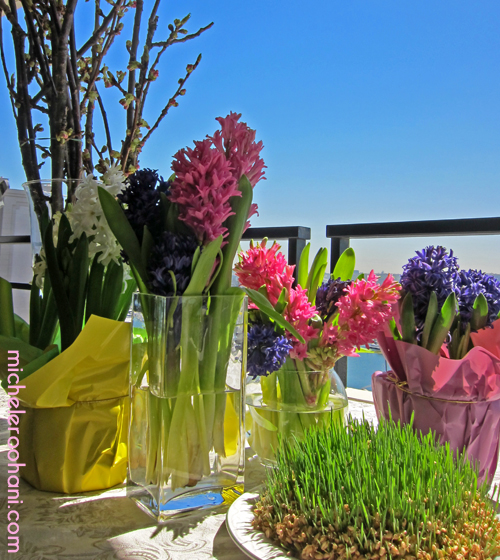
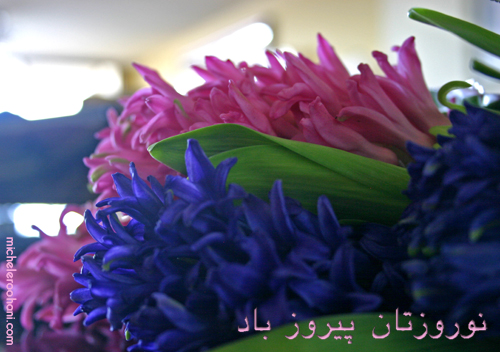
In previous years, I have talked a lot about Haft Seen (seven S’s on the new year’s spread) and the calendar; for this year, I decided to tell you which of the seven really symbolize Nowruz for me. One is Sabzeh or wheat sprouts (above) and the other is Sonbol, the hyacinth (below):
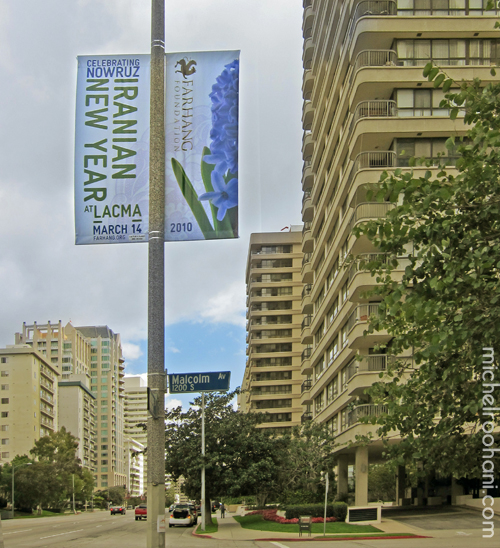
I am still in Los Angeles and the Wilshire Corridor is awash in Nowruz banners like this one:
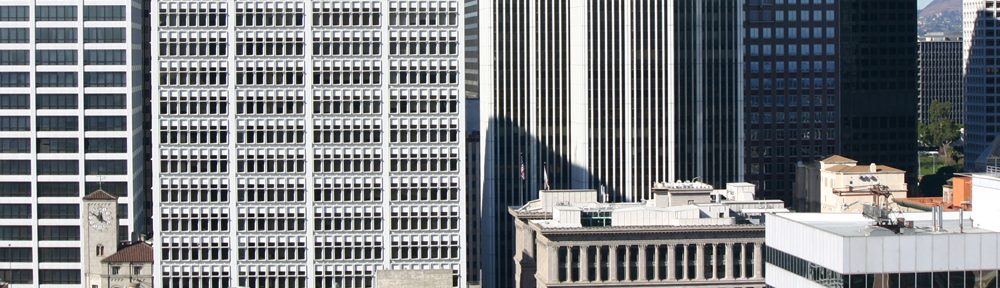
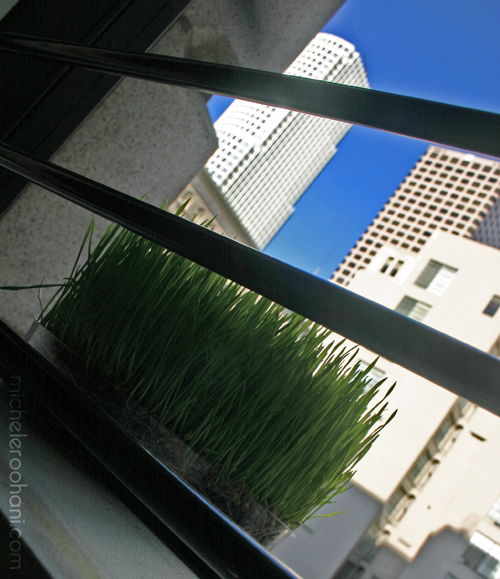
My little sabzeh looks lonely among downtown high-rises:
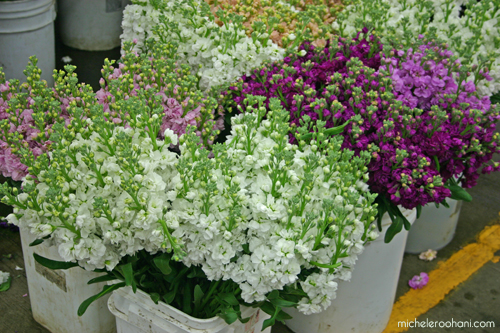
Being close to the L.A.’s flower market, I left to take pictures early morning and I wasn’t disappointed. I loved the fragrance of these gorgeous stocks,
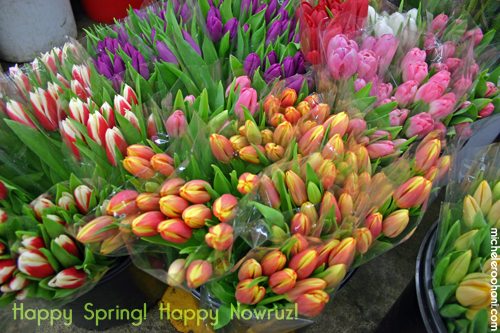
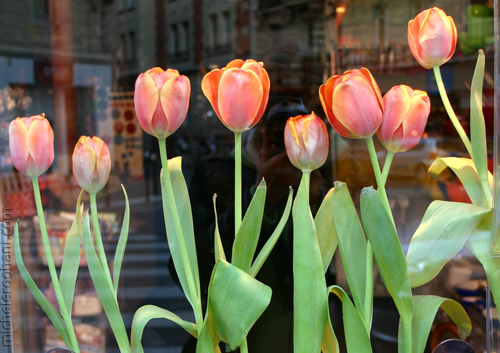
and the beautiful tulips that scream “spring is here” in so many colors:
I bought as much as I could carry and rushed home to take pictures.
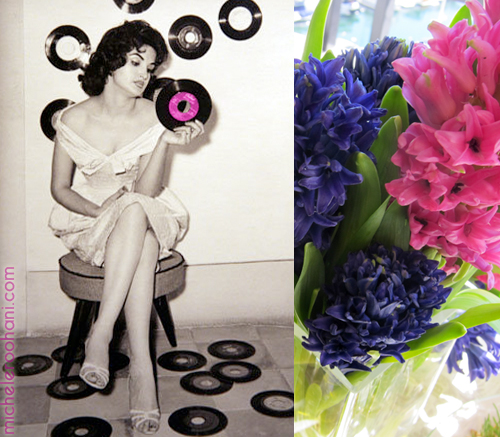
As a child, I remember listening to the Iranian singer, Pouran Shapouri, sing Eyd oumad bahaar oumad…
in our new Eyd dresses (new year’s dress) that my mom had made for my sister and I.
Vigen’s song, Shokoufeh (blossom), was another of my favorites as the harbinger of Nowruz.
يكي دو روز ديگر از پگاه
چو چشم باز ميكني
زمانه زير و رو
زمينه پرنگار مي شود
زمين شكاف ميخورد
به دشت سبزه ميزند
هر آن چه مانده بود زير خاك
هر آنچه خفته بود زير برف
جوان و شسته رفته آشكار ميشود
نگار من
اميد نوبهار من
لبي به خنده باز كن
ببين چگونه از گلي
خزان باغ ما بهار ميشود
سیاوش کسرایی
Sabzeh shows up in the new year celebrations in many countries:
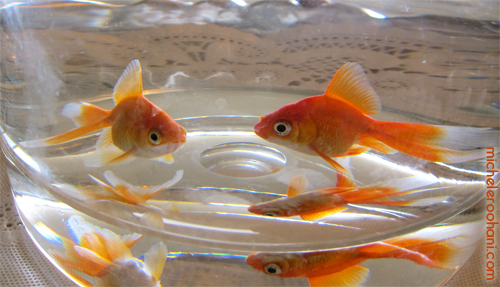
Let’s not forget my favorite, the goldfish:
Goldfish in a bowl represents life and the end of the month of Esfand (pisces).
for more on the traditions of Nowrouz: NoRuz, Norouz, haft-seen, haft-sheen, etc…
Norouz 1388, the blooming of a new year
Pouran singing about Eyd
a great slide show of Nowruz gold fish farms
Port-au-Prince: Capital of Pain
January 19th, 2010
ca·lam·i·tiy:
1 : a state of deep distress or misery caused by major misfortune or loss
2 : a disastrous event marked by great loss and lasting distress and suffering
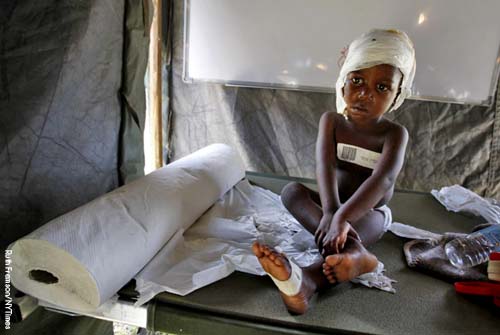
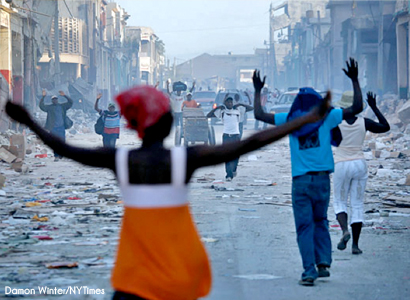
This “bar-coded” child is the symbol of the total helplessness of people in Port-au-Prince.
I am heartbroken by the utter distress/despair of Haiti. So much misery and suffering caused by a few seconds of random natural violence…
“Tout est enfin divisé
Tout se deforme et se perd
Tout se brise et disparait
La mort sans conséquences”
“Everything is finally divided
Everything is deformed and lost
All breaks and disappears
Death without consequences” Eluard
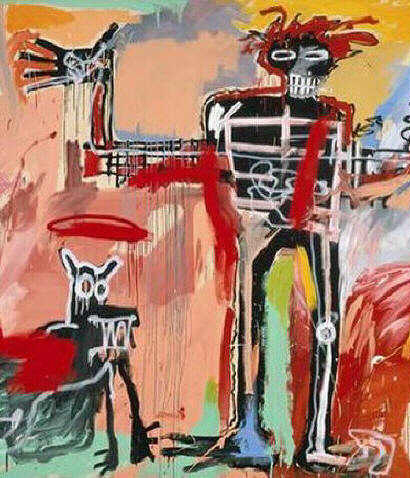
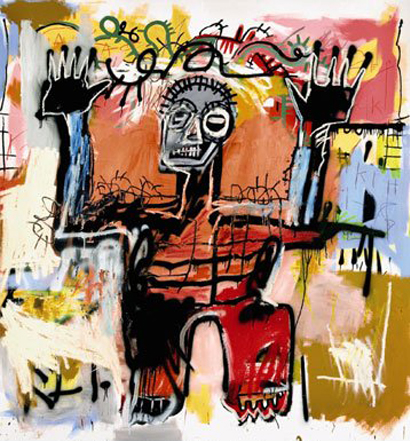
I wonder how Basquiat would have seen all this suffering in his fatherland; he painted some prescient images in 1980’s…
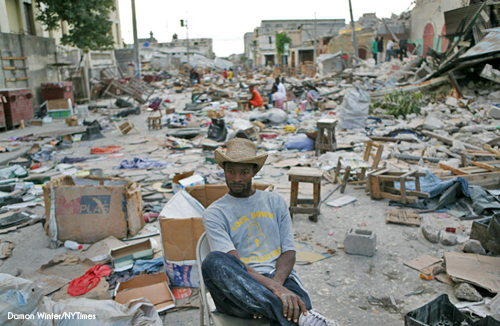
Damon Winter has taken striking pictures of the inconsolable Haiti.
How Enrico Fermi killed all the Aliens
July 21st, 2009
An expression that can mean anything means nothing; when you want to please everybody, you please nobody.
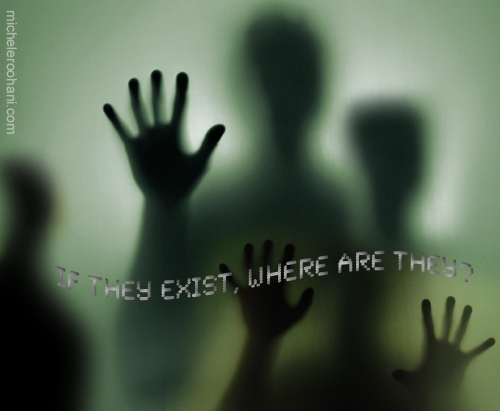
Enrico Fermi, the great Italian physicist, killed all the aliens in 1950 by asking this simple/innocent question: “if extra-terrestrials exist, where are they?” This question has become the Fermi Paradox.
Even though I am a science fiction fan I do agree with the skeptics that, Houston, we have a problem:
a) the search for extraterrestrial intelligence (SETI) program to detect radio transmissions from other civilizations has been a failure.
b) the question of the Great Silence remains unsolved; if life is common, why don’t we detect their radio transmissions?
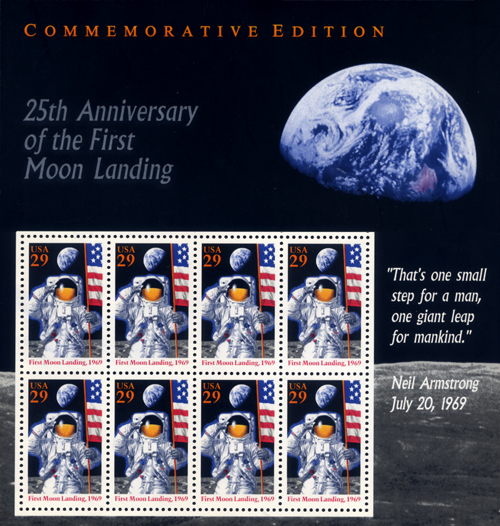
Today is the 40th anniversary of the first moon landing (July 20, 1969).
I remember the thrill of hearing about it on a hot summer day in Iran; the moon has not looked the same since!
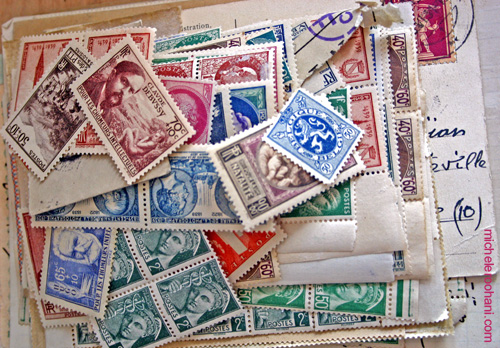
Unlike my father, I am a lousy philatelist (postage stamp collector) but I was able to find the above page I bought in 1994—on the 25th anniversary of “the big step”—among my loose leaves.
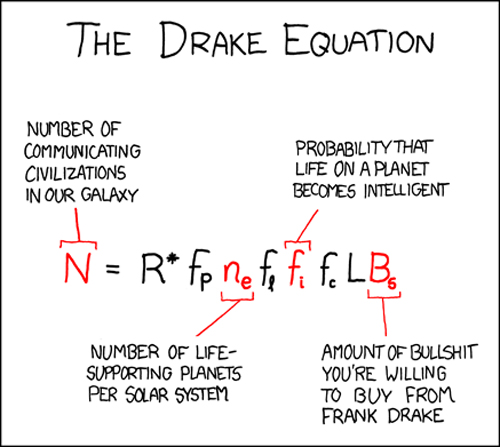
The Drake Equation—an attempt to estimate the number of extraterrestrial civilizations in the Milky Way with which we might come into contact— is still fascinating to me but I see its light getting dimmer with every “silent year”…
N = R* × fp × nE × fl × fi × fc × L
This once serious equation looks more and more like this cartoon from this very funny site:
To commemorate the 40th anniversary of Neil Armstrong’s historic walk on the moon, Google is offering Internet users a virtual trip to the moon.
I empathize with Fermi’s passion for clarity. I am simply unable to let things be foggy. The Drake equation is literally meaningless because “an expression that can mean anything means nothing.”
Related and Suggested Posts and Resources:
Carl Sagan explaining the Drake Equation.
Google earth lands on the moon.
Other Life not likely to be intelligent.
Fatherhood in an Age of Insanity—by guest blogger Dr. Ali Nasseh
June 21st, 2009
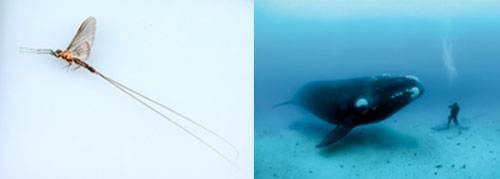
A wise man once said: Father’s Day should be nine months before Mothers’ Day and in some crazy way, this statement makes sense! For men, fatherhood is a byproduct of sex. At least, that’s what evolutionary psychologists tell us. Through the millennia, Children of men have been caused by our sexual instincts as a species and not through rational analysis of the concept of fatherhood. The same goes for other animals. Whether an organism has a one day lifespan like the mayfly or if it lives for a couple of centuries like the bowhead whale , the life of all organisms appears focused on survival, finding a mate, and producing offspring.
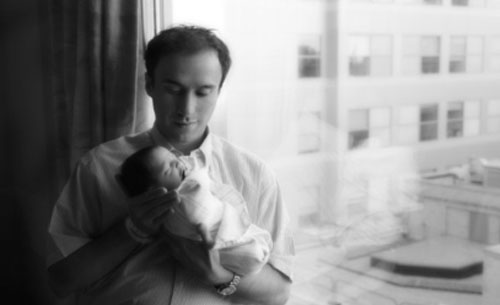
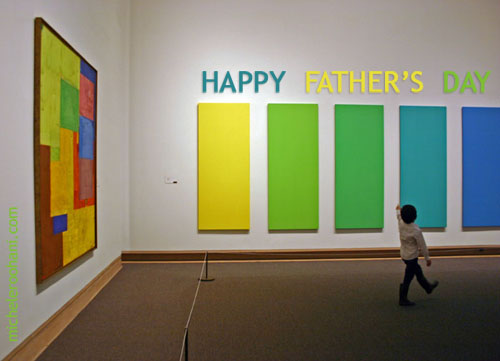
And quite frankly, if I were a mayfly with a single day to live, I’d also put mating at the very top of my list! Once that first item is checked off, we humans preoccupy ourselves with the arts, culture, and entertainment in order to fill the remaining hours of the day. Voila! But let’s not get off the subject. Father’s Day is the day we celebrate Fathers. And since I just became a father a month ago and am still a freshman on the subject, I would like to salute those fathers who came before me.
But what are the merits of fatherhood? Other than our biological instinct for sex that results into children, do we have any rational reasons for this act? The project involves so much work and sacrifice that one may wonder what’s the utility of the whole thing. It starts with dirty diapers and ends with a lifetime of anxiety over safety, health, and happiness of our child. An old, Persian expression says, “Children are hard, only for the first one hundred years!”
Yet, when a child smiles, learns, and grows, and especially when she pays her parents back with emotional pride, all those sleepless nights and anxieties melt away and the entire ordeal appears worthwhile. Or does it?
I want to pose these questions to the fathers and others out there, and to those who consciously or unconsciously chose this path. I’d like to ask you to make your case for or against fatherhood in today’s world of dynamic change and uncertain future. Are we leaving a better place for our children, or has our greed and recklessness destroyed our economy and environment irreparably? Is it still a responsible act to bring children into this world given the future challenges?
The lost and found Art of Bookbinding, a second anniversary issue
April 27th, 2009
It’s been two years since I started this blog and I just have to make this post fabulous…I’ve been wanting to write about the new Kindle for a while but I have felt guilty towards books!
As many of you know I am a shameless bibliophile but even though I am a rather “early adapter” of new technologies, buying a Kindle has not been a priority (you can carry a big chunk of your library—1500 books— and the neighborhood’s news stand in one Kindle).
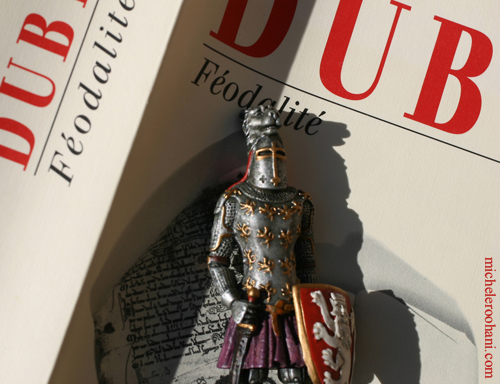
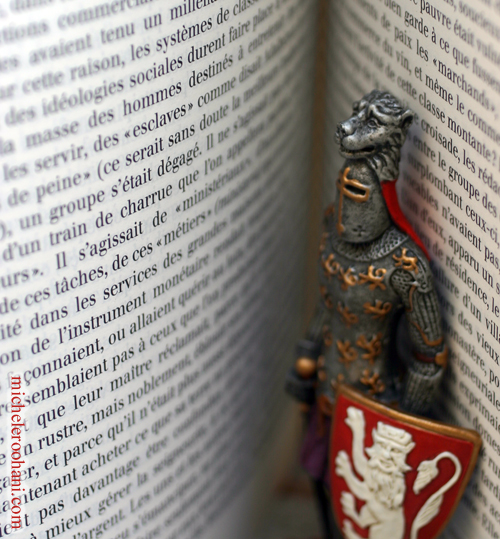
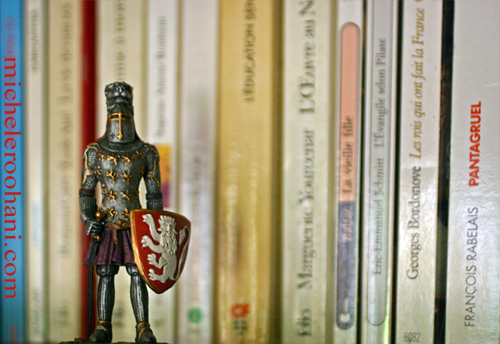
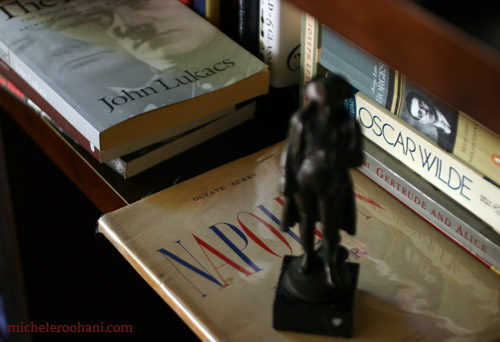
I am tactile and love touching books and feeling the pages, the type, smelling the paper, the ink, etc…this little soldier guards my books valiantly!
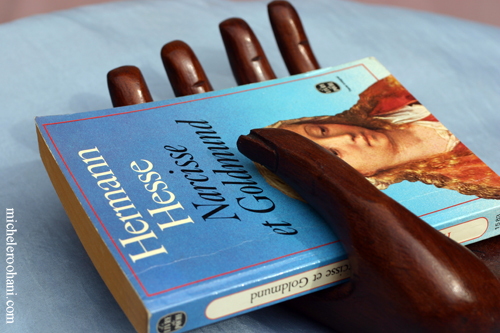
This one—Herman Hess’ Narcissus and Goldmund— was one of my favorites and I have read it in three languages during the past 30 years (talking about obsession!) and I can’t imagine getting the same pleasure from reading it on Kindle…
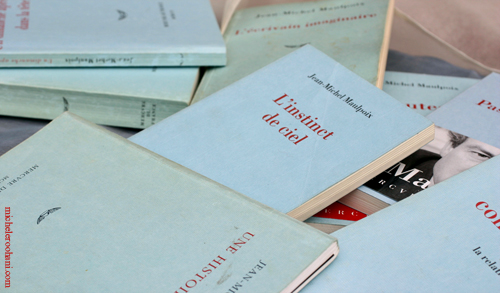
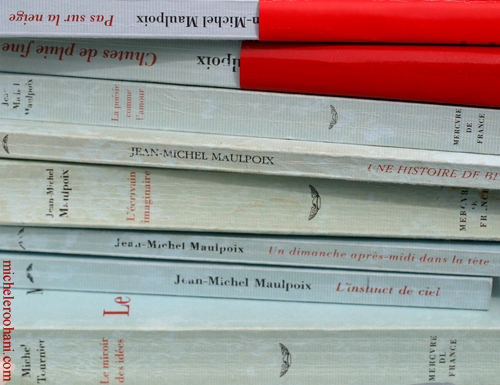
Could I have appreciated Jean Michel Maulpoix’s poetry without his signature blue covers? No paper?
Would he have wanted to be read on a gadget? Knowing him, I would say non!
“Blue makes no noise. It is a timid color, without ulterior motives, forewarning or plan; it does not leap out at the eye like yellow or red do, but rather draws it in, taming it little by little, letting it come unhurriedly, so that it sinks in and drowns in it, unaware.”
I can read Lukacs or Gopnick on a Kindle but not the Shahnameh (even writing about it is sacrilegious). One of my favorite blog posts is the one I wrote about this passion of mine.
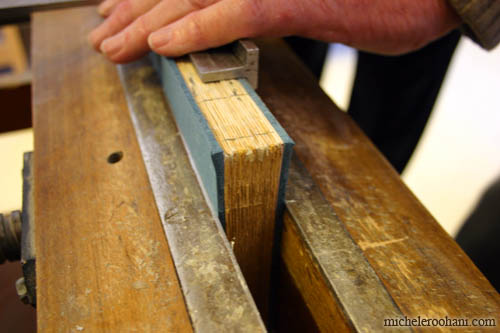
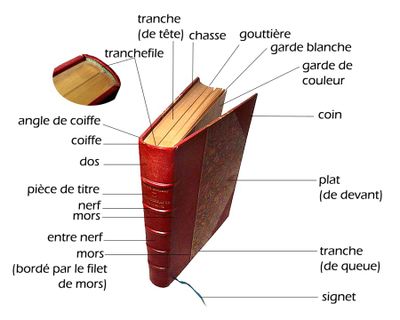
I audited a bookbinding course on my last trip to europe and was pleasantly surprised to see that this beautiful art is not dead.
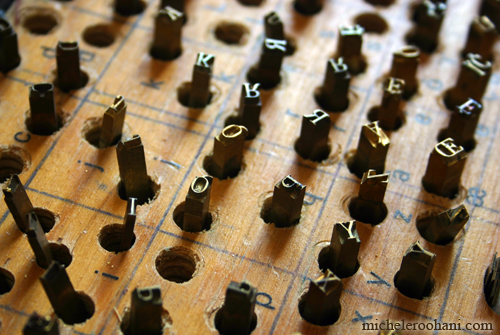
people in the atelier were restoring old books—resewing the pages, making new covers, etc—with a lot of love, attention and reverence. These fonts were for leather book jackets:
Is Amazon.com cannibalizing its own industry? They are the makers of Kindle.
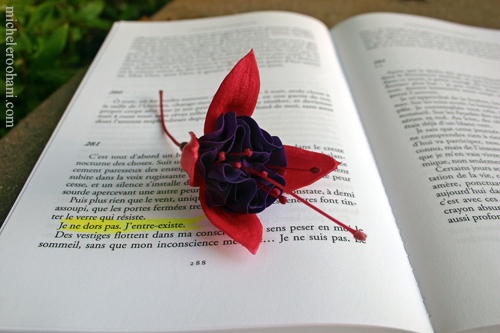
I have to admit that even I would love to have all the newspapers I read daily, on one gadget. The gadget that carries most of my books to choose from on a trip; I guess all I am saying is that it’s very hard to read poetry on a machine—wouldn’t these beautiful poems feel/sound better on paper?
i do not know what it is about you that closes
and opens;only something in me understands
the voice of your eyes is deeper than all roses
nobody,not even the rain,has such small hands
e.e. cummings

“Parfois je me fais presque honte
De croire autant ce que je ne crois pas.
C’est une variété de rêve
Avec le réel au milieu.” Fernando Pessoa
Thank you all for the kind comments and support through these past two years.
Revisit my post on books here.
A book is a present we keep opening—again and again…
Caged tulips and false sense of security
March 27th, 2009
“Real security is the ability to tolerate mystery, complexity, ambiguity—indeed hungering for these things.” Eve Ensler
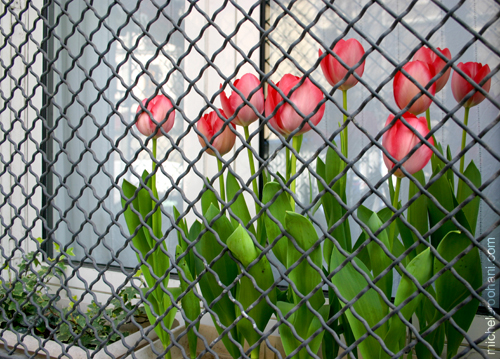
Behind bars, these tulips have lost their beauty and have only gained a false sense of protection.
Real security means contemplating death, not pretending it doesn’t exist. We are prisoners of our fears or the fears of our fathers; uniformity becomes the only acceptable way…
“When security becomes the center of your life, you can’t travel very far or venture too far outside a certain circle. You can’t allow too many conflicting ideas into your mind at one time as they might confuse you or challenge you. You can’t open yourself to new experiences, new people, and new ways of doing things.”
Self-imposed rules prevent potential disasters but they also ensure mediocrity—Salieri’s mediocrity against Mozart’s genius…Too scared of trying new things, we stay secure, in control and alone.
According to Charlie Jones , “the only difference from where you are right now, and where you’ll be one year from now, are the books you read and the people you meet.”
For a great example of passion for life and risk taking that leads to success see my popular post about Gustavo Dudamel.
Norouz 1388, the blooming of a new year
March 15th, 2009
The Persian new year, called Norouz (or Nowrouz)—New Day—is just around the corner and Southern California nights have the sweetly fragrant scent of jasmine and citrus flowers. Last year’s Norouz blog remains my most read post so please visit it for a detailed account of Haft-seen and some great pictures.
Tulips don’t know much about the financial crisis and narcissi couldn’t care less about job layoffs; they come out with their effortless beauty, reminding us that nature renews its vows with life every spring.
Before 1564, most of Europe celebrated the New Year with the first day of Spring.
The Gregorian calendar changed that to January first. To me, it is only natural to start the year with the first day of spring and not in the dead of winter…
“Give me the splendid silent sun with all his beams full-dazzling,
Give me odorous at sunrise a garden of beautiful flowers where I can walk undisturb’d,
Give me to warble spontaneous songs recluse by myself, for my own ears only,
Give me solitude—give me Nature—give me again, O Nature, your primal sanities! Walt Witman
The Norouz celebration lasts 13 days and is rooted in the 3,000-year-old tradition of Zorastrianism. March 21st will be the first day of spring, the first day of the new year. The fragrance of these lemon tree blossoms reminds me of a Norouz I spent in Shiraz years ago…
This poem of Fereydoon Moshiri always makes me smile…
بوی باران، بوی سبزه، بوی خاک
شاخه های شسته، باران خورده، پاک
آسمان آبی و ابر سپید
برگ های سبز بید
عطر نرگس، رقص باد
نغمه شوق پرستوهای شاد
خلوت گرم کبوترهای مست …
نرم نرمک می رسد اینک بهار
خوش به حال روزگار
خوش به حال چشمه ها و دشت ها
خوش به حال دانه ها و سبزه ها
خوش به حال غنچه های نیمه باز
خوش به حال دختر میخک – که می خندد به ناز –
خوش به حال جام لبریز از شراب
خوش به حال آفتاب
Would it be the dawn of 1388 or 2547 like some purist Persians suggest? It’s surreal to see this anachronistic image of the late shah’s crown in the middle of Santa Monica boulevard wishing you a happy new year in Persian!
I just can not resist sharing these beautiful flowers with you:
This is a celebration of Life.
It is time to recalibrate our priorities and do some spring cleaning. Just look at the beautiful baby green of this Hydrangea:
The hyacinths (sonbol) or the quintessential Norouz flower:
I wouldn’t dare translating this beautiful Rumi poem about Norouz:
اندر دل من مها دل افروز توئي
ياران هستند ليك دلسوز توئي
شادند جهانيان به نوروز و به عيد
عيد من و نوروز من امروز توئي
Don’t forget to visit my last year’s Norouz post.
Norouz Pirouz!
2009 better be better…
January 1st, 2009
And what a year 2008 has been…The fresh 2009 better be better! I don’t remember people looking forward to retire a year (and their president) so eagerly.
The optimist in me hopes for:
“Another fresh new year is here . . .
Another year to live!
To banish worry, doubt, and fear,
To love and laugh and give!
This bright new year is given me
To live each day with zest . . .
To daily grow and try to be
My highest and my best! William Arthur Ward
The realist in me screams back:
“New Year’s Resolution: To tolerate fools more gladly, provided this does not encourage them to take up more of my time.” James Agate
Apocalypse in Paradise
November 17th, 2008
Southern California fires are pretty democratic, they hit the mansions and trailer parks and everything in between with the same cruelty… The current definition of a Californian is still “did or did not escape the fires?”
“Devil winds, hill-hopping infernos, smoked mansions, torched trailers, barren freeways, and brilliant sunsets lingering in low-hanging canopies of burnt dreams.” That’s how Steve Lopez describes all hell breaking loose in California.
Last year in october I wrote:”wildfires, burning out of control, are continuing to threaten thousands of homes in California. You can’t help but to have this incredible sense of the fragility of everything. As human beings we are wired to think that everything will stay the way it is, safe from sudden and intense changes…” My childhood home burnt down in 1970—my barbie collection got charred along with the rest of the house…
Palm trees help spread fire—I’ve never liked them much—to see an amazing photo essay click here.
It’s amazing how fire spares a house or two in the middle of a whole burnt neighborhood—my friend’s house in Anaheim hills stayed intact when his neighbor’s got completely destroyed; his daughter, Kimiya, has sent me these pictures of their street:
and this one:
The chimneys are the only things standing in most burnt houses.
To watch a powerful clip from BBC, click here.
“Often it takes some calamity to make us live in the present.” Bill Watterson
Claude Verlinde and Jacques Poirier, mirage makers.
April 27th, 2008
Claude Verlinde and Jacques Poirier are two underrepresented French painters. They are both master illusionists/image makers/mirage makers.
I fell in love with the above painting when I first got introduced to Verlinde’s work in Paris. We all know hollow people, lacking in real value, sincerity, or substance – we have all met shallow people lacking in depth of thought, or feeling. In Persian we call them “hollow drums”: noisy but empty.
Thanks to the internet we can know of something without really knowing about it. We used to have to read, to see, to hear something in order to be able to talk about it but not anymore folks! everybody’s an expert.
I’ve been wanting to talk about V.S. Naipaul for the longest time. Every time that somebody tries to eat up my life/time, I remember the writer’s fabulous statement reported on BBC: “my life is too short, I can’t listen to banality”.
Staying with the trompe l’oeil of Verlinde and Poirier, take a look at this very clever ad:
You can see the rest of these very funny ads here.
Today is my blog’s first anniversary! If you like what you see, please subscribe.
Subscribe
Main
Home
About me
Contact
Art, ...


compositions
cities
flowers
objects
portraits
sepia tones
best sellers