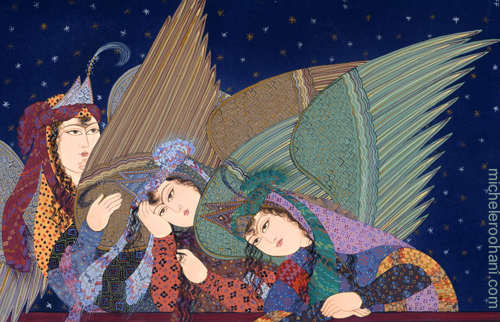
Bahram and his seven rainbow Princesses
August 26th, 2011
I heard from Bahram, my mentor and friend, that he has lost his cousin, Hossein Ziai, director of Iranian Studies at UCLA. This post is an homage to a great scholar.
Nezami Ganjavi the great 12th century Persian poet is considered the greatest romantic epic poet in Iranian literature. Haft Paykar (seven portraits or seven beauties) is the story of Bahram V, the Sassanid king who falls in love with seven princesses from the seven different countries. Each is associated with a different color, planet and virtue. The King searches for the princesses and wins them as his brides.
He orders his architect, Shideh, to build seven domed structures in seven different colors for each of his new brides. The buildings are to be astrologically linked with a specific planet, color and day of the week. The princesses take up residence in the splendid pavilions. On each visit, the king visits the princesses on successive days of the week. Each princess relates to the king a story matching the mood of her respective color and they teach him about the seven virtues of Patience, Truth, Faith, Passion, Serenity, Fairness and Devotion to God.
This first one is on Saturday (Shanbeh) when he visits Farouk, the daughter of the of Rajah of India. She wears black and she teaches the king about Patience:
Each princess tells the king a tale, an engaging story containing a moral lesson.On Sunday (Yek-Shanbeh) Bahram visits Homay, the daughter of the Roman Caesar; she wears yellow. My Persian friends can read the titles that tells the day of the week and the color. The Princess of the Yellow Dome teaches the value of Honesty.
Nezami wrote sensuous poetry; the main one is the Panj Ganj or Khamseh. The story of Bahram Gur (Bahram the hunter) is one of the 5 stories of this epic poem.
Monday (Do-Shanbeh) is Naz Pari‘s turn; she is the daughter of the king of Khwarazm, in green; when, at the end of each episode, Bahram embraces a princess, he also embraces her culture, her traditions, her teachings. Naz Pari teaches the king about the value of Faith.
The ladies in waiting are deliciously painted in these works; they are delicate, exquisite:
On Tuesday (Seh-Shanbeh), the king visits his other princess, Nasrin Nush, the daughter of the king of the Slavs, who is wearing red. His red Russian queen of Tuesdays is a “honeyed apple, sweet and rosy-hued.”
The Red Princess is all about passion, and her story is about a fiery Warrior Maiden who cannot find her equal in a man.
Wednesday (Ch’har-Shanbeh) is Azaryun’s turn; she is the daughter of the king of Morocco, in blue:
Bahram spends Thursday (Panj-Shanbeh) night with Yaghma Naz, the daughter of the Khaqan of the Turks; she wears a saffran colored dress:
Last but not least, Bahram visits on Friday (Jom’eh) , Dorosti, the Iranian princess from the House of Kay Kavus; she wears white.
Thus Bahram progresses from Saturday to Friday, from black to white, from darkness to illumination. When he finally emerges from the palace of the Persian Princess of the White Dome, it is the first day of Spring – Nowruz – the beginning of the New Year.
The idea of glorifying a king who had seven wives troubled me a bit but then I remembered that it was written 800 years ago…
I made these images from the archives of the National Library of France here.
Art paris 2011: a short walk from sublime to sordid
April 18th, 2011
Art Paris, a major event in the international Art scene took place last month in Paris and was everything from sublime…
…to sordid:
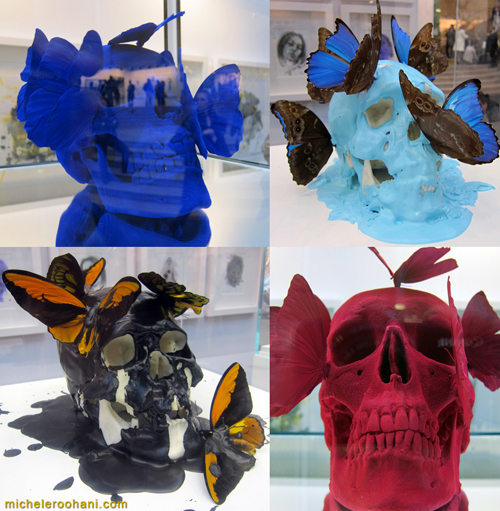
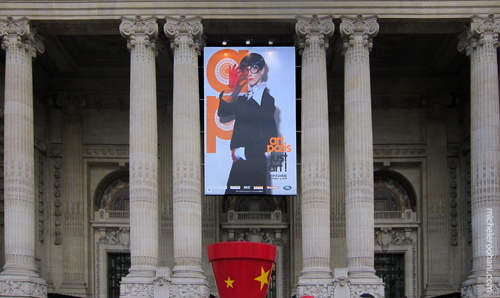
The following are the works that caught and kept my attention so let’s just start from the beginning; if you are lucky you get in the Grand Palais from the VIP entrance and not the main one (below) where you have to wait with the unwashed masses:
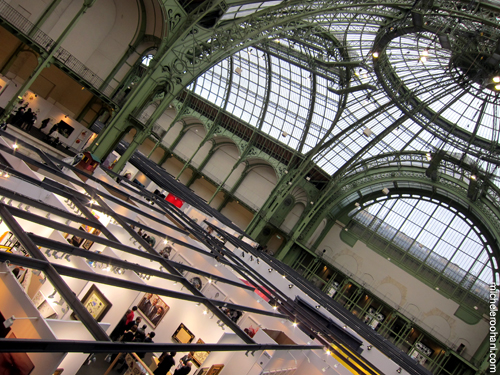
The huge glass dome is stunning on its own so imagine how spectacular it was over these amazing galleries.
The first booth had these curious works by Devorah Sperber:
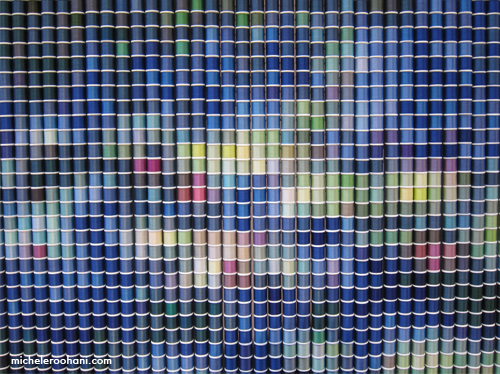
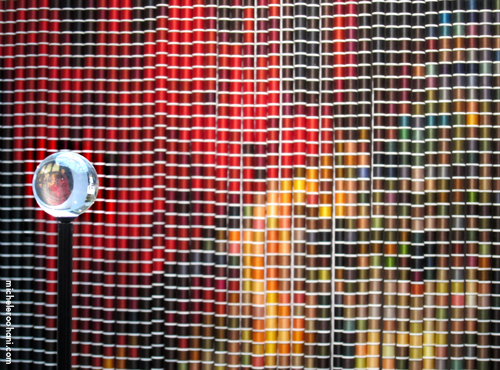
Spools of tread stand for dabs of paint and the images that were hung upside down are only recognized when you see them through an optical device.
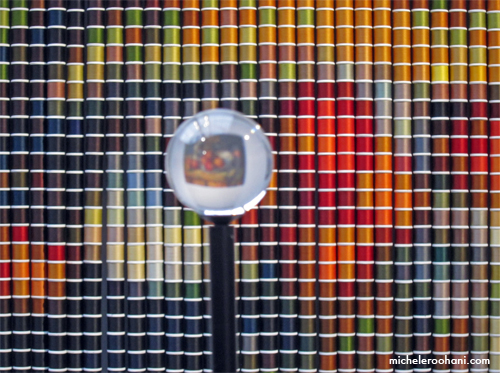
The colored thread spools make an abstract pattern that comes to focus when viewed through—in this case— a crystal ball; Cezanne’s still life (below) is recognizable when viewed through this clear acrylic sphere (above).
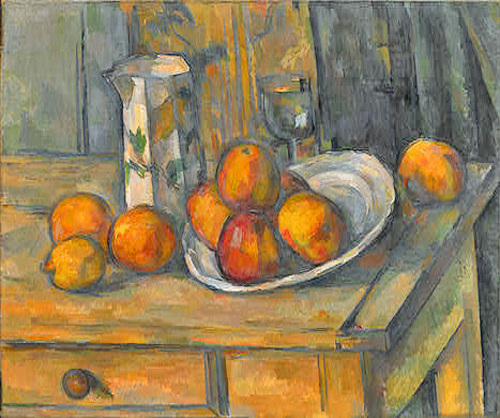
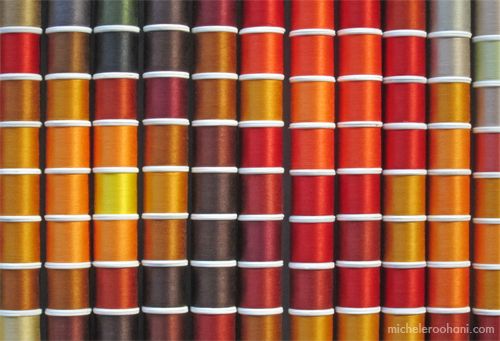
Without the optical device, you are just looking at thousands of colored tread spools—1470 of them in this case!
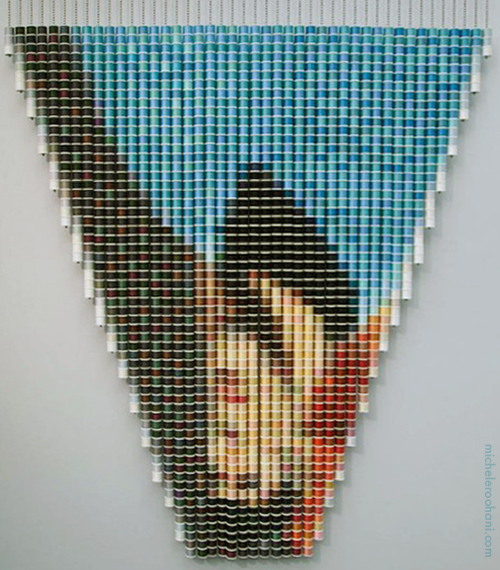
The most surprising to me was Van Eyck’s masterpiece, The Virgin of Chancellor Rolin:
The whole image below is recognizable in the little ball above. Magic made of 5272 spools of thread.

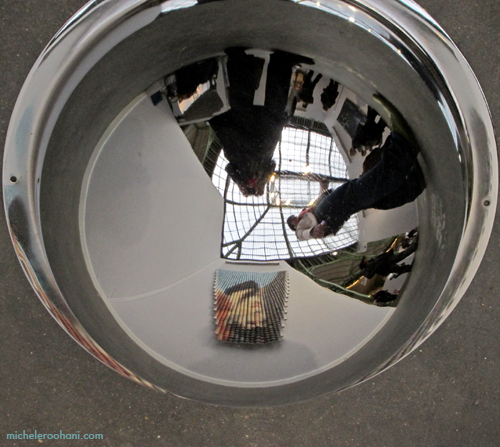
On the lighter side of the spectrum, Mister Spock was patiently waiting for me in this work called “Mirror Universe”; like the artist herself, I too remember the 1967 Star Trek episode “Mirror, Mirror” in which a transporter mishap switches the crew of the Enterprise with their evil counterparts, trapping them in a “savage parallel universe.”
That image could be seen through a hemispherical mirror:
I loved the work of the super talented Dutch Artist, Pieke Bergmans:
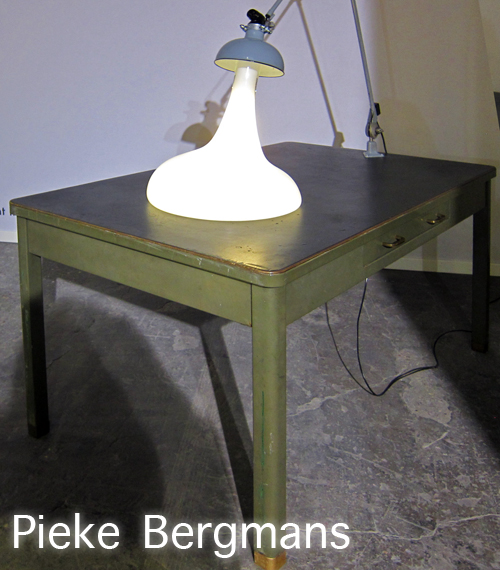
Liquid light bulbs or “Light Blubs” as she calls them are hand blown bulbs presented attached to pendant and desk lamps or resting on old office furniture.

I met the artist, Aurore Vermue, posing with the spectacular pin and button artwork of Ran Hwang,
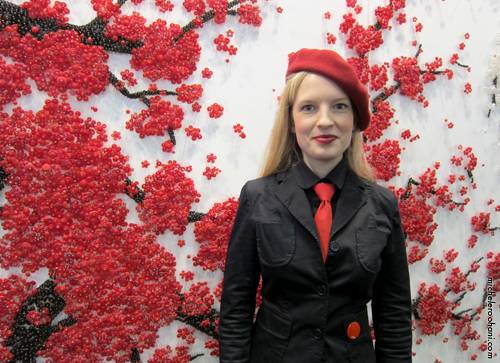
in front of the fabulous Kashya Hildebrand gallery:
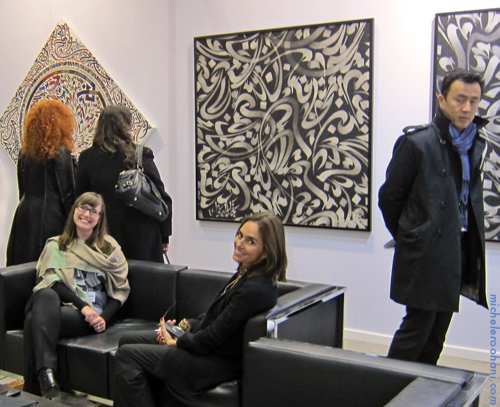
A nice discovery for me was the work of Katayoun Rouhi; she uses Persian calligraphy in her perspectives; I particularly liked this painting with the little girl in a forest of poetry:
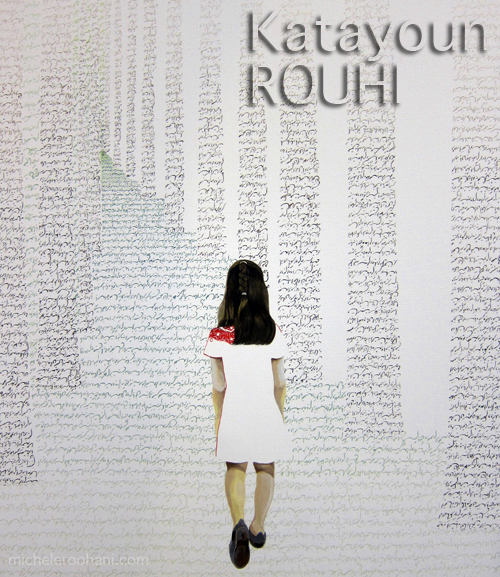
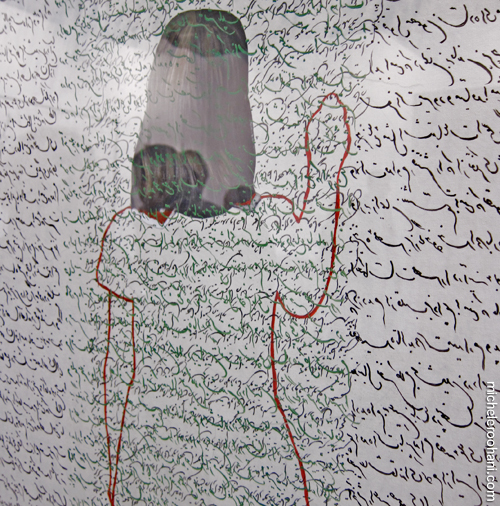
I was the only one bending to be able to read the writings that were all upside down:
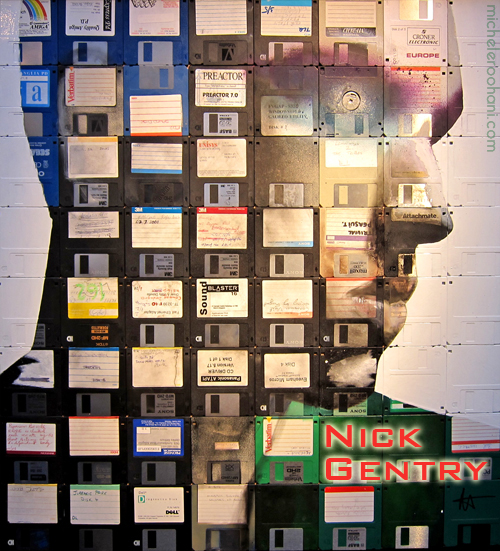
Nick Gentry’s portraits made of floppy disks were interesting in their own way:
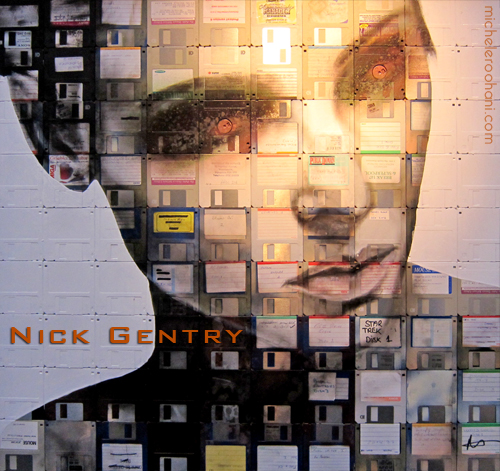
I had forgotten these disks, superseded by other storage media in only a few years…
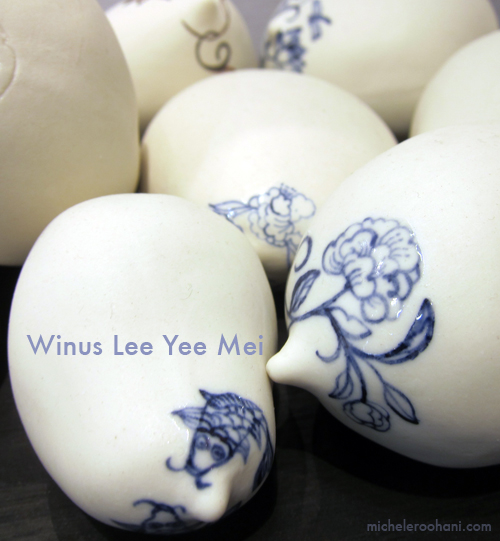
These beautiful objects by Winus Lee Yee Mei were called “a group of boobs”:
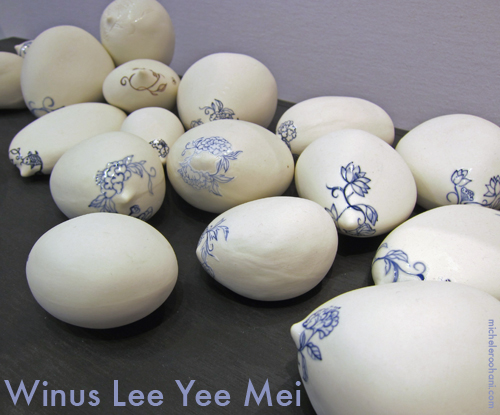
it was hard not to touch!
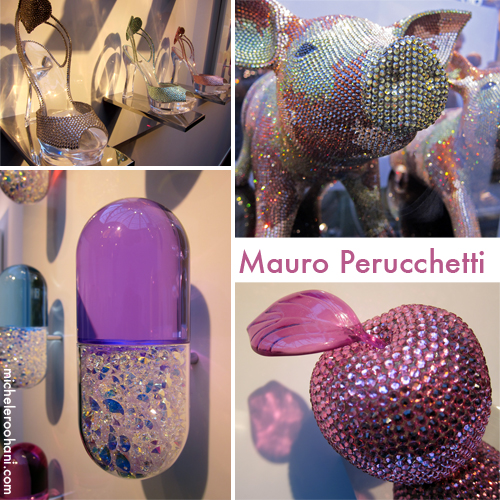
The show took a turn for the whimsical with Mauro Perucchetti: from the three little pigs to giant pills and all in Swarovski crystal, resin and arylic,
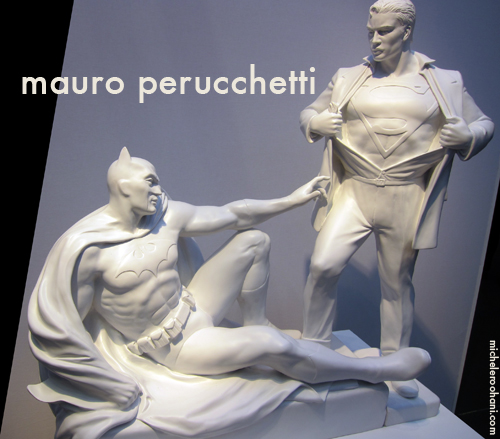
I liked his “gay” superheroes:
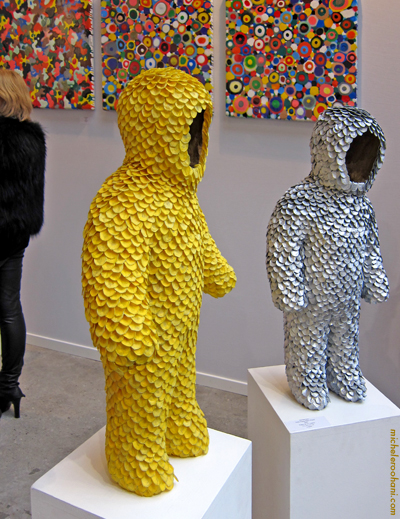
These little child-figures covered with brightly dyed hanji-made scales in yellow and silver are the work of Sun Rae Kim who created these bodiless suits after her daughter, Tscho-Young; they were so cute:
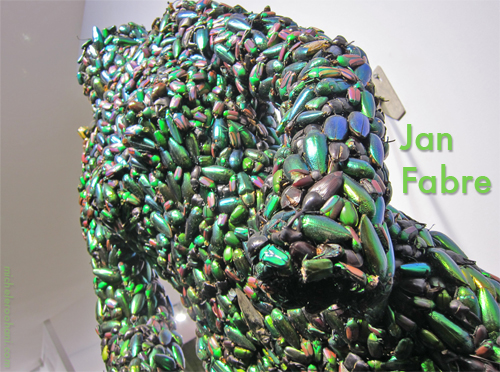
The mind blowing opposite was Jan Fabre’s insect covered sculptures; the Belgian Fabre is a multidisciplinary artist, designer, sculptor, playwright and stage designer. I Just found out that he likes these jewel scarabs because of his great grandfather who’s been a famous entomologist. Yeap, these are beetles people!
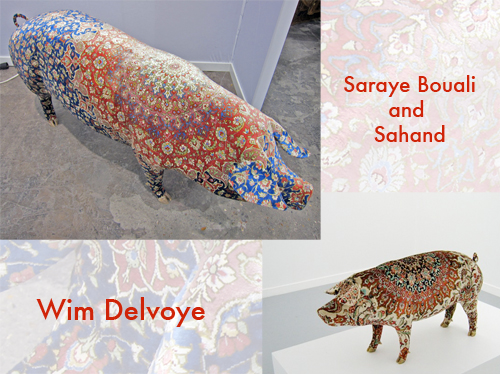
The other Belgian great was Wim Delvoye and his persian carpet clad real stuffed pig. This sold for 180,000 euros and I am sure the buyer wasn’t an Iranian!
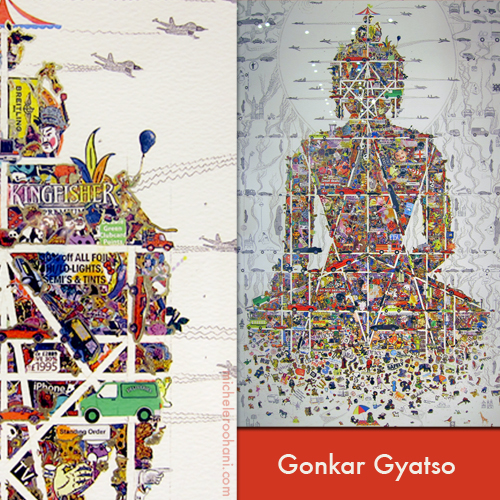
On a more serene note, Gonkar Gyatso, the Tibetan artist, had “Buddha in modern Times”. You could spend an hour exploring little stories embedded in the image:
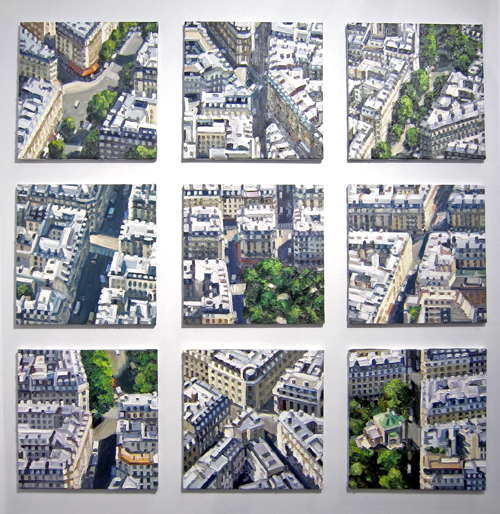
I liked the straightforward “Paris Block” by Ralph Fleck; I discovered his site and loved his “figures”.
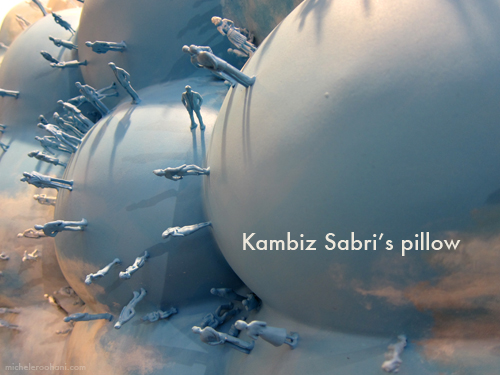
Persian artists being a hot commodity, Kambiz Sabri was the other Iranian artist showing his sculptures like this funny “pillow”:
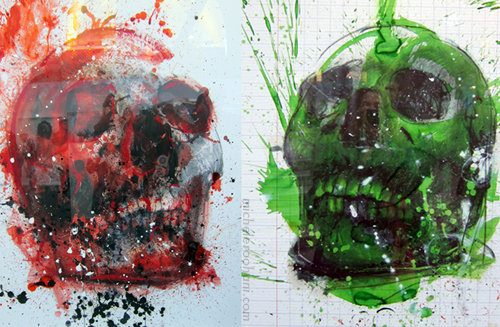
So to recap, I went from Philippe Pasqua‘s gory skulls (which by the way I love),
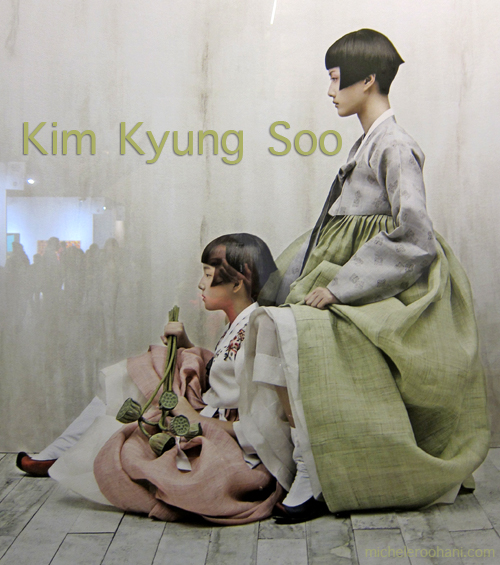
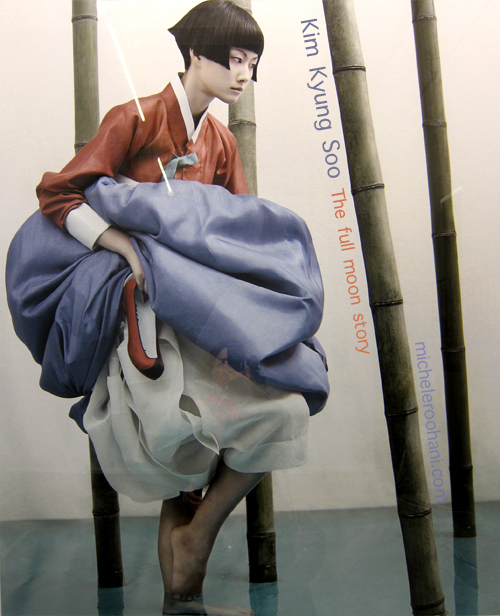
to the sublime Kim Kyung Soo’s “the full moon story”:
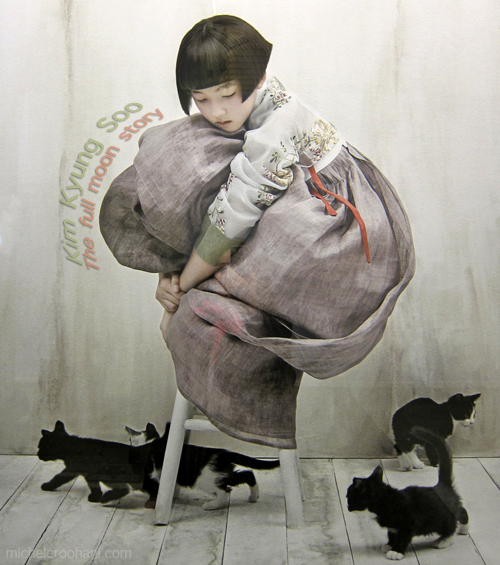
Her photos were truly arresting; pure poetry…
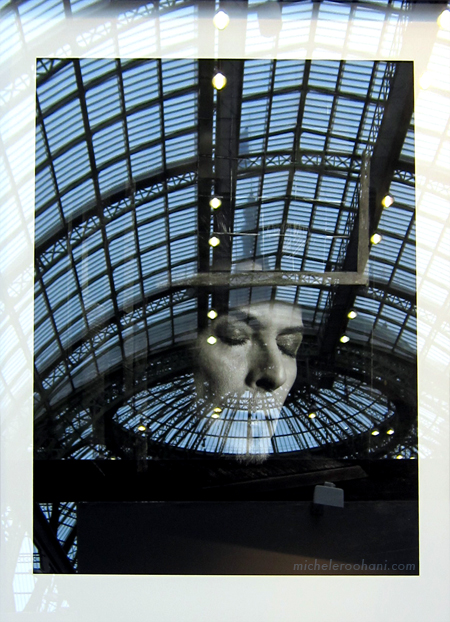
And in all this, Albert Watson’s David Bowie was sleeping:
I am very happy I got to know some of these artists’ works; take the time to discover them for yourself. The post has all their links.
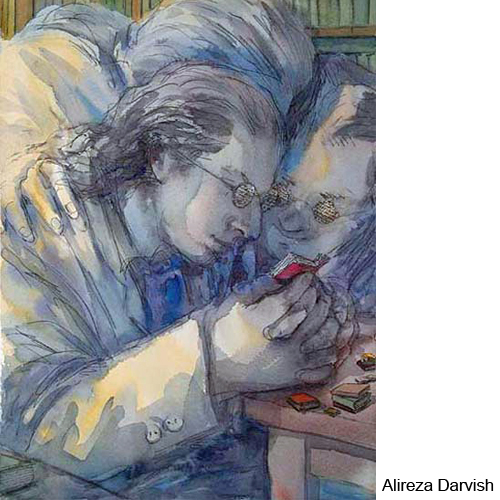
Alireza Darvish, the amazing bibliophile
February 20th, 2011
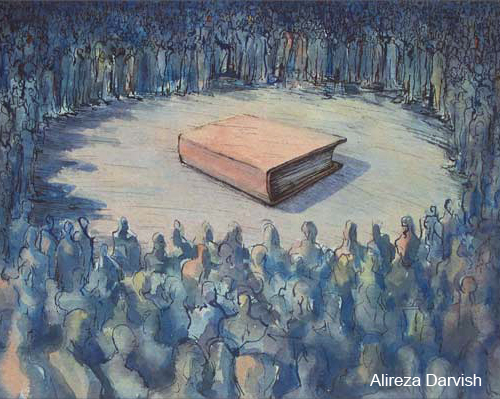
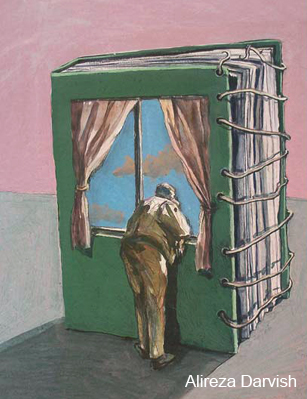
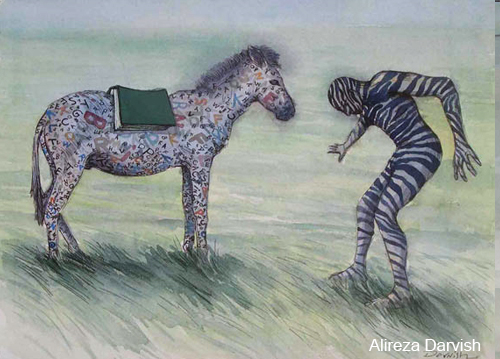
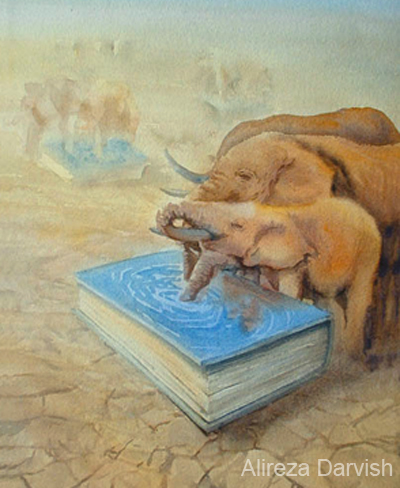
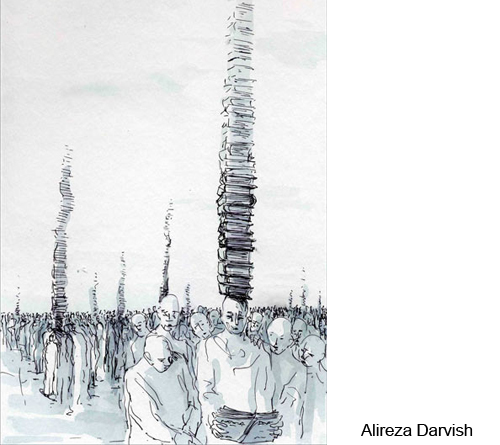
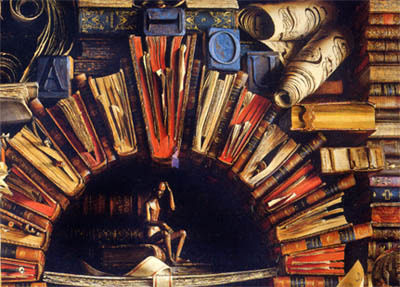
I was blown away a couple of years ago by the work of the super talented Alireza Darvish, and I would like to share it with you; he is in love with books and the way he illustrates with them, makes every bibliophile swoon…
This is his Egyptian version:
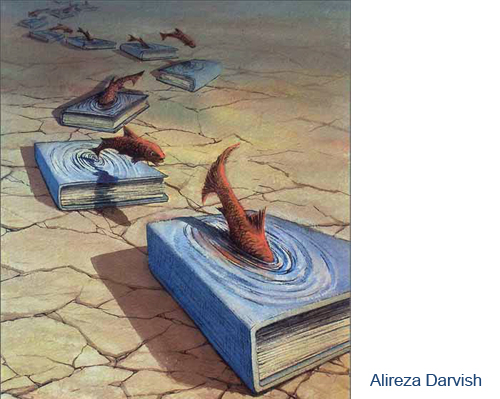
I fell in love with Darvish’s “fish-book” below:
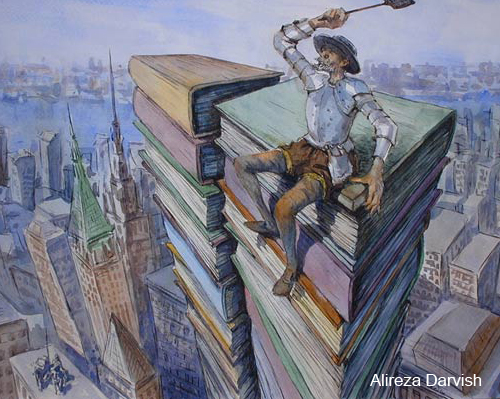
I am reading the new translation of Cervantes’ Don Quixote (my first time) so the following image rings closer:
Darvish becomes playful with his “interbooks”,
The problem of too many books and not enough time:
He’s having fun with the reverse situation too:
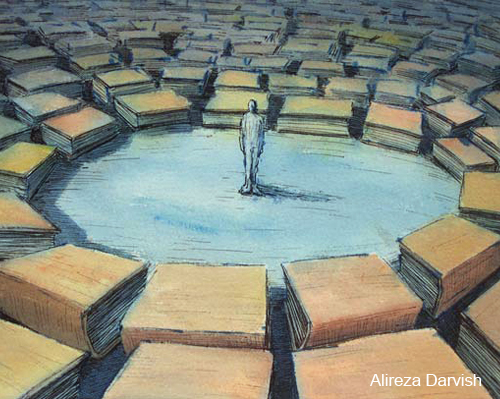
the one man book:
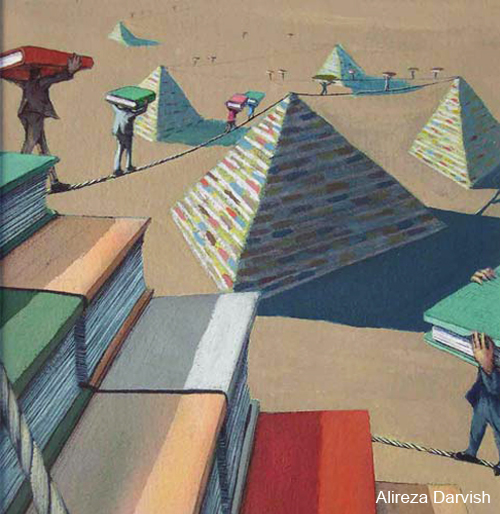
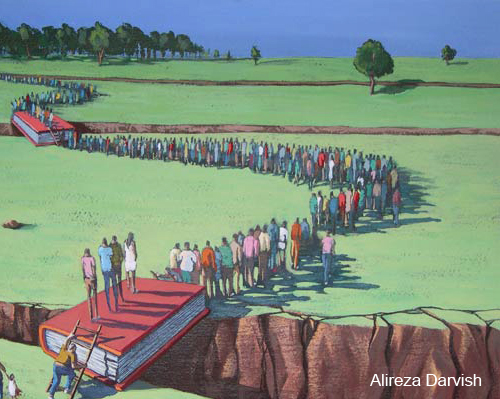
He uses books as bridges (I love the methaphor…),
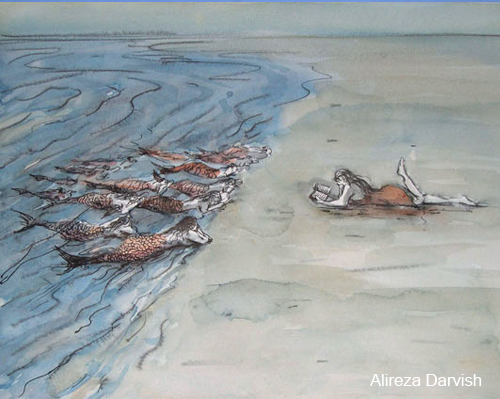
Bu I still love Alireza Darvish’s illustrations when he becomes whimsical like in this one where the woman is reading to the mermaids:
I like his animals,
he gets poetic…
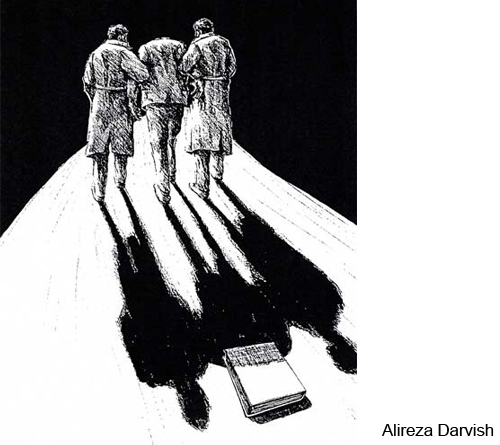
Don’t be fooled by the phantasmagorique side of Alireza Darvish, he has a darker side:
and a way darker side:
but he remains delightful and great to discover!
Visit his site here.
Take a look at his fantastic animations here.
In BBC here.
Belle Mellor, mi Amor
January 21st, 2011
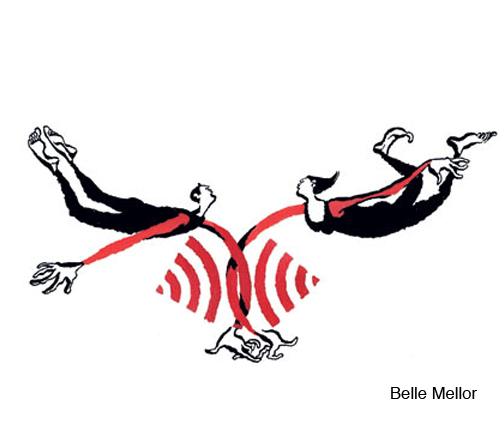
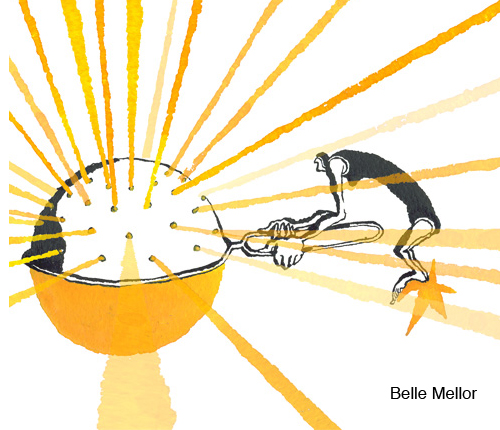
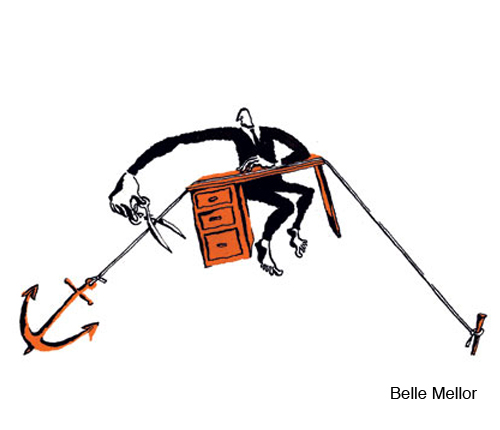
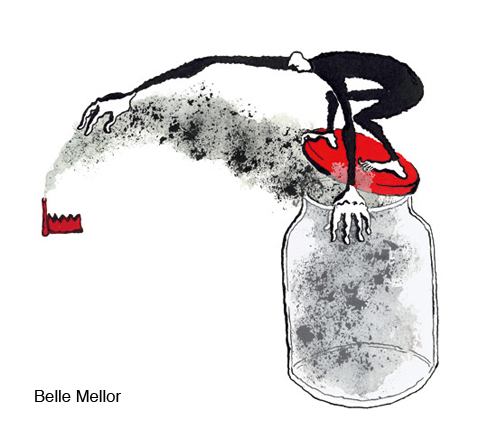
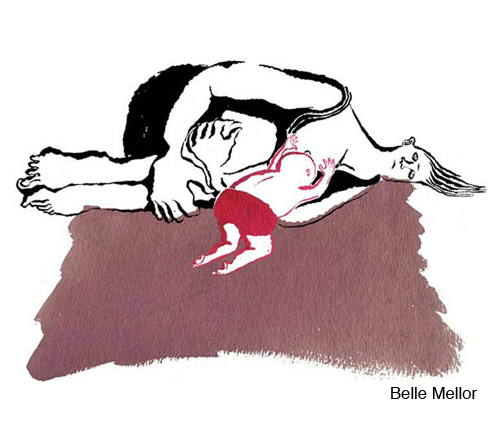
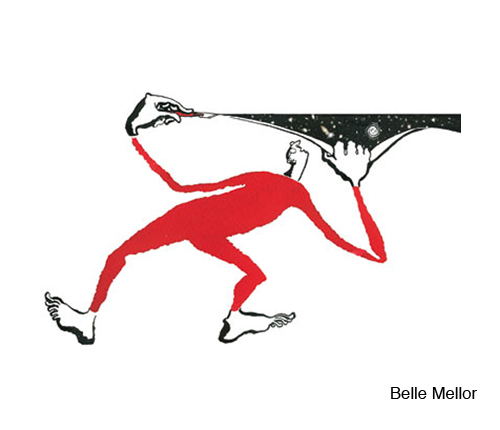
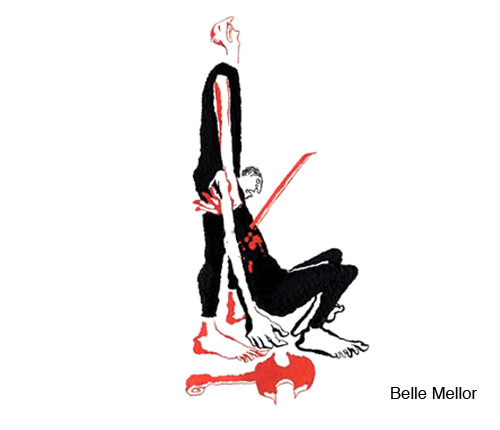
Belle Mellor is my favorite illustrator; I discovered her work through the Economist some years ago and I am hooked!
Her images are clever, funny and subtle.
The above images are from one of my best Economist articles, A survey of mobility, Nomads at last.
How can you get more witty than these?
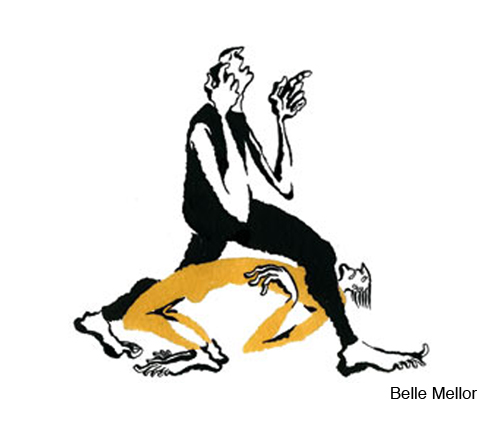
Here her man is walking over everybody,
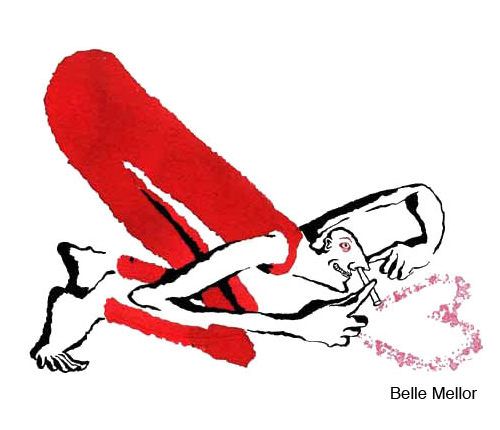
but here the dude is addicted to love…
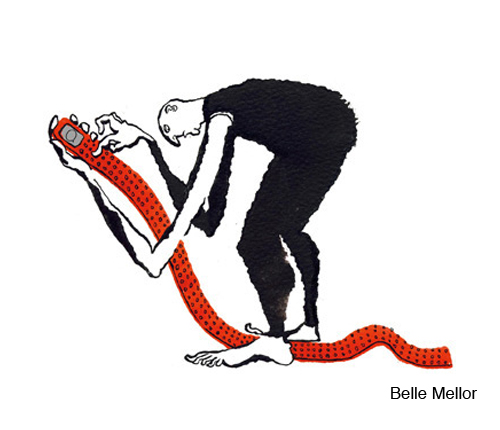
a cell phone with Chinese alphabet?
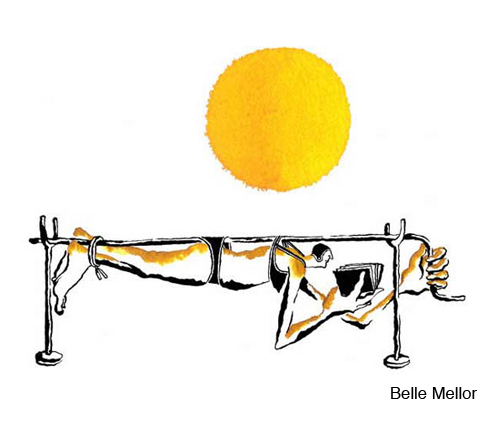
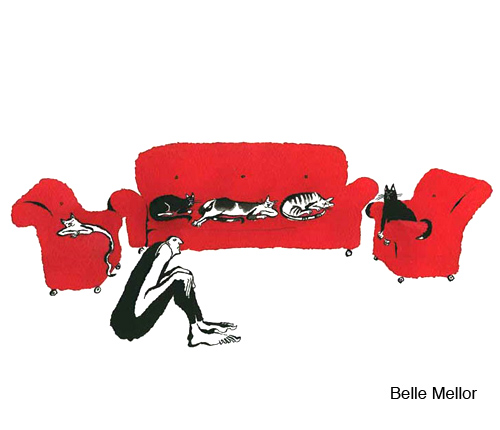
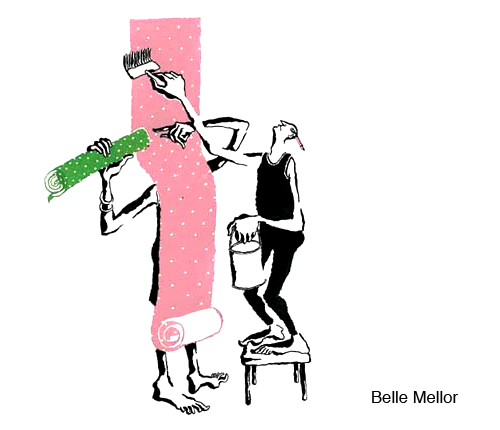
Mellor calls this Three piece suite for people who are homebound,
and people who can’t wait to get away from their office desks:
She has illustrated a lot of great articles about pollution (air, noise, etc…),
and she can be seriously sad:
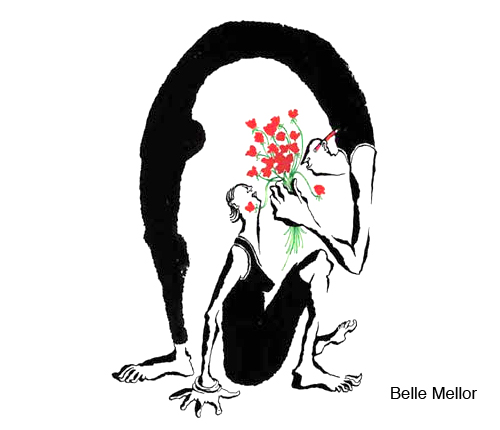
but she really gets me when she goes softer like in this one below:
This is her tragedy,
and her bliss:
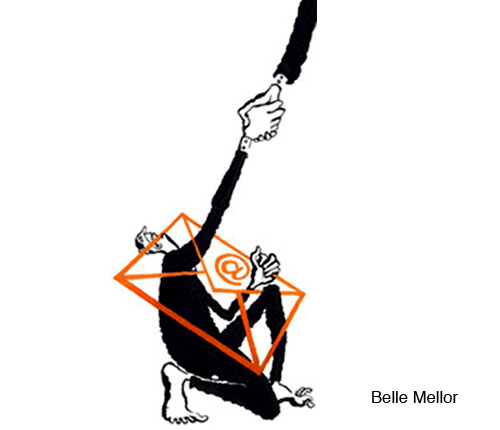
Rescue your emails?
‘Ask What I Want’ | How Magazine | For an article, about how designers need to listen to their clients:
I wished everybody,
to see her work, go to her website.
and read about her here.
Persian Rug: a paradise at your feet
February 3rd, 2010
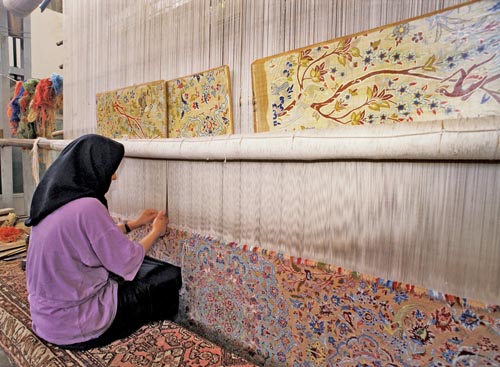
Being Iranian, I am fascinated by Persian rugs and the exquisite uniqueness that defines them. The art of carpet weaving in Iran is deeply connected with the culture and the customs of the country.
Being away from California, surrounded by snow in Switzerland and far from my natural “soft fascinations” (read flowers, sunshine, rustling trees) I am experiencing a funny sense of “ecoanxiety” that may be cured by writing about my favorite permanent garden: the Persian Rug…
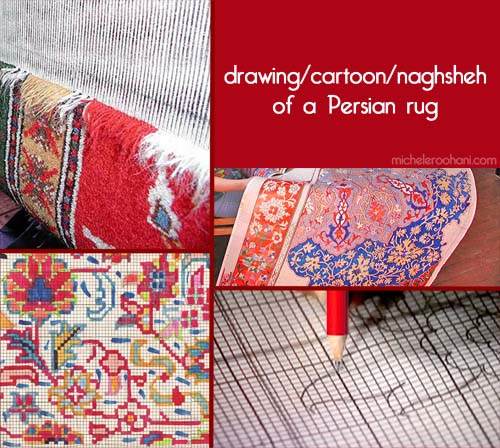
The designs (naghsheh or cartoon—a grid on paper with spaces colored to guide rug weavers in selecting pile yarns) are still mostly drawn by hand even though computers are doing wonders in this field.
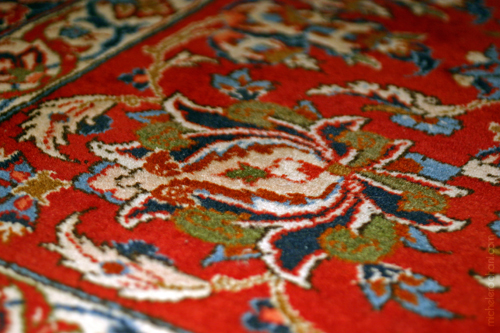
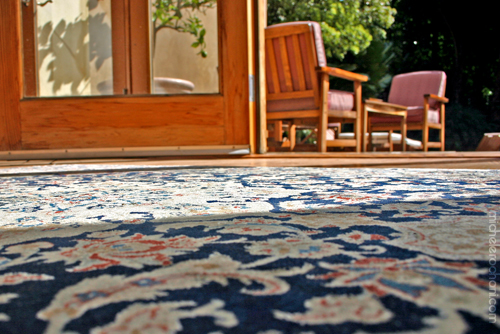
Iranians are literally conceived, born and brought up on Persian rugs! Warmed by their soft and comfortable texture, touching, caressing, lying down and relaxing on them, comes naturally to Persians. The rugs add warmth underfoot like my favorite red carpet with these gorgeous Shah Abbasi patterns (with floral and leaf motifs mainly in the form of lotus blossoms):
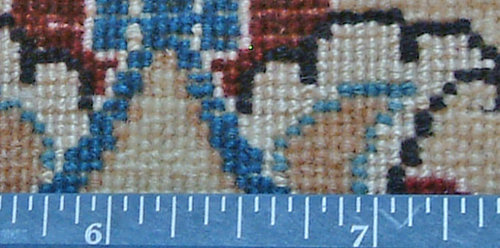
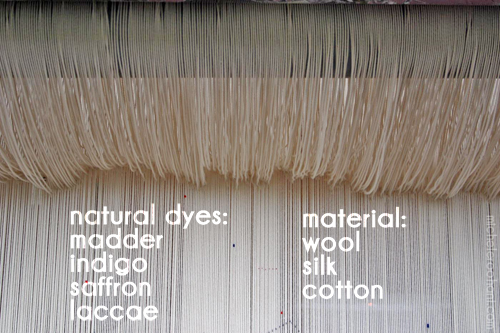
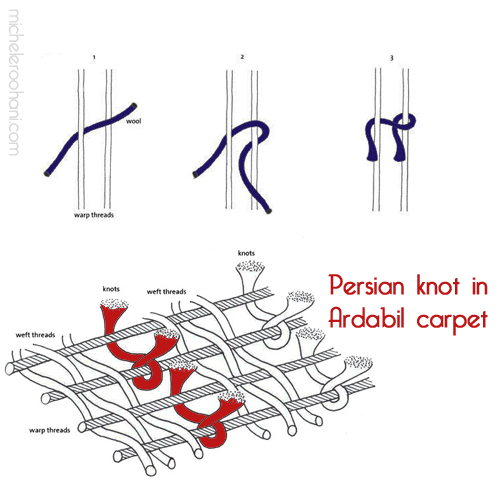
The density of tightly woven Persian knots (or guereh) are the calibrating tool for the quality of the rug,
a good Nain rug may have 500 kpsi or 500 knots per square inch (farsibaaf, asymmetric or Persian pile knot.)
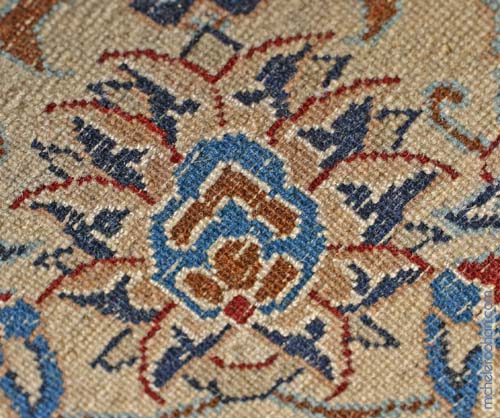
This is how a flower looks on the back of this Nain (Na’in):
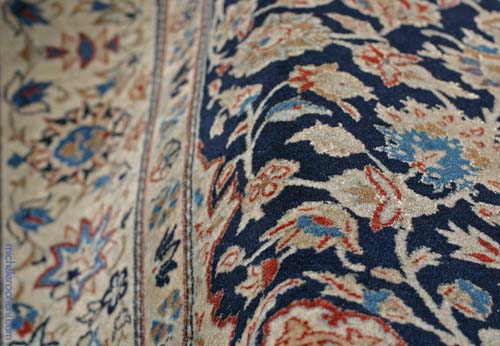
and the same carpet from the front:
Like most textiles, carpets consist of warps (tar) and wefts (pud). The warps are the threads running the length of the carpet. The wefts are the threads that run across its breadth. This is the same carpet spread out:
Persian rugs go by region (cities mostly— like Tabriz, Esfahan, Nain, Kashan, Kerman, etc…) and each region has its MasterWeaver brand. A small encased signature can usually be found in the minor border like Habibian in Nain, Pirouzian in Tabriz and Taghavi in Bijar.
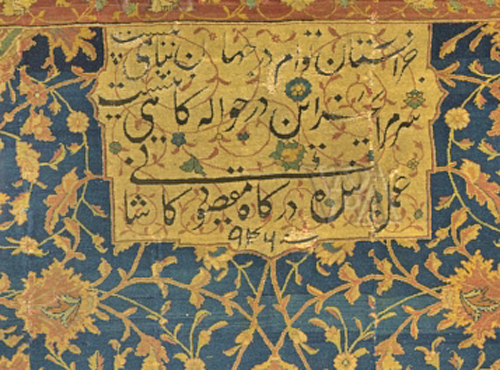
The most important signature must be Maqsud Kashani’s (from 1540) on the famous pair of Ardabil Carpets. A poem of Hafez is woven into the cartouche:
“Except for thy threshold, there is no refuge for me in all the world.
Except for this door there is no resting place for my head.”
جز آستان توام در جهان پناهی نیست
سر مرا بجز این در حواله گاهی نیست
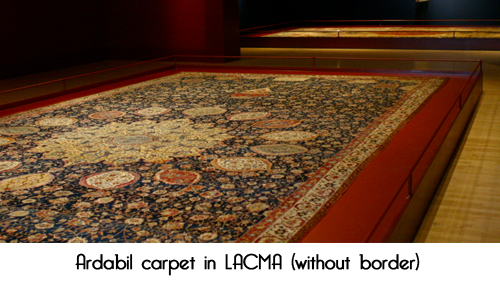
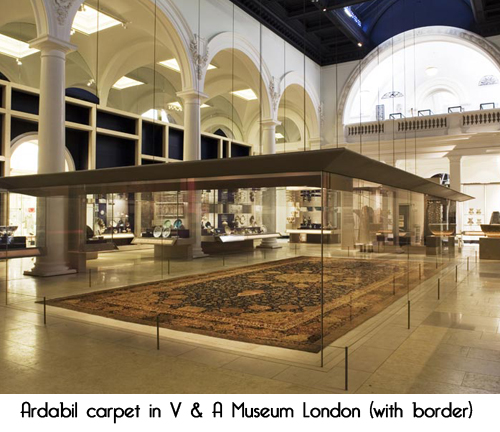
The Ardabil Carpets have an interesting story: the lower field and border of one of them has been used to restore the other (now in Victoria and Albert Museum in London). The used and abused twin sister was kept in the dark (not to outshine the V&A version) until 1931 and finally found her way to Los Angeles County Museum of Art in 1965.
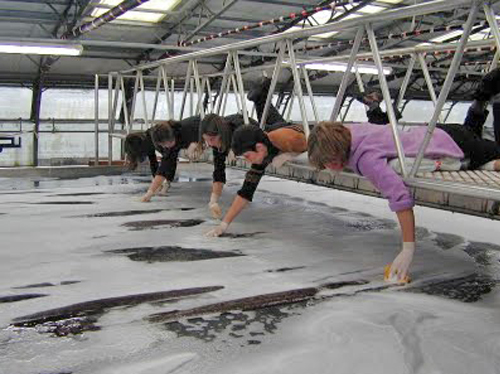
After exhaustive restoration done to the dazzling beauty, the LACMA sister was finally shown last year (look at how they had to wash it!)
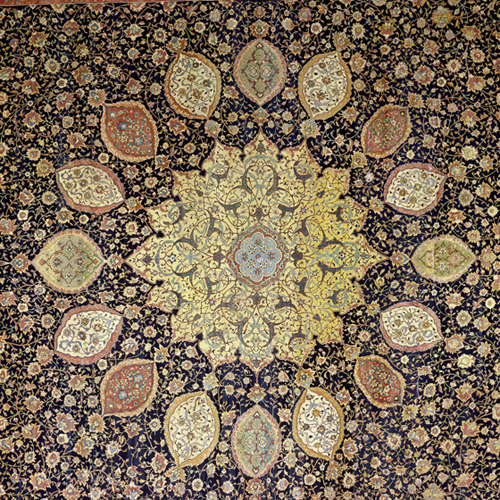
The Ardabil carpets are the world’s oldest dated and historically important carpets in the world. This is the twin sister in Victoria and Albert museum in London:

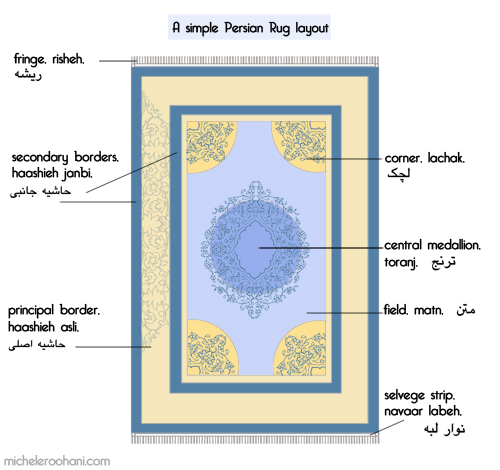
It all comes down to this fundamental design that I just finished reproducing for the blog:
A love for fine Farsh (rug in persian) may be one of the few things that Shahs and Mullahs have always agreed upon!
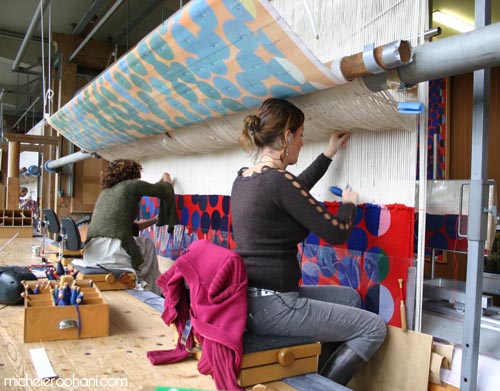
Even though I have visited the great Manufacture des Gobelins some years ago,
I am dying to see the real thing in Iran,
and take some great pictures.
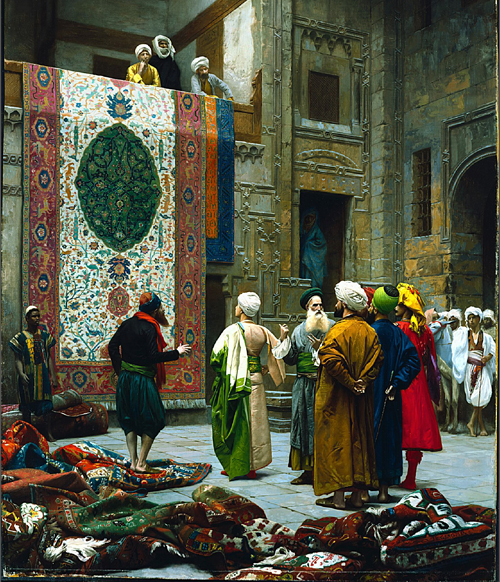
I will leave you with this superb painting of my favorite Orientalist painter, Gerôme, called The Carpet Merchant (ca 1887):
A great site to get acquainted with Persian rugs: Farsh Mashad
Weaving Art Museum here
About different motifs and style here
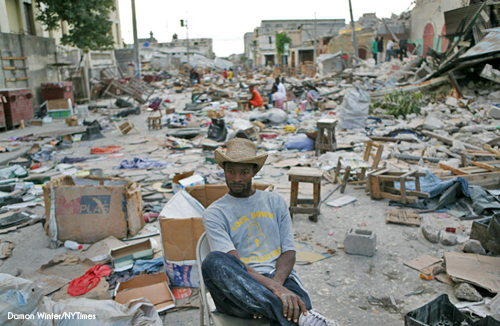
Port-au-Prince: Capital of Pain
January 19th, 2010
ca·lam·i·tiy:
1 : a state of deep distress or misery caused by major misfortune or loss
2 : a disastrous event marked by great loss and lasting distress and suffering
This “bar-coded” child is the symbol of the total helplessness of people in Port-au-Prince.
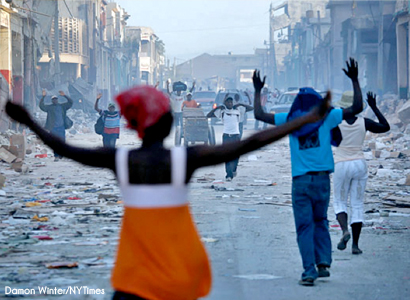
I am heartbroken by the utter distress/despair of Haiti. So much misery and suffering caused by a few seconds of random natural violence…
“Tout est enfin divisé
Tout se deforme et se perd
Tout se brise et disparait
La mort sans conséquences”
“Everything is finally divided
Everything is deformed and lost
All breaks and disappears
Death without consequences” Eluard
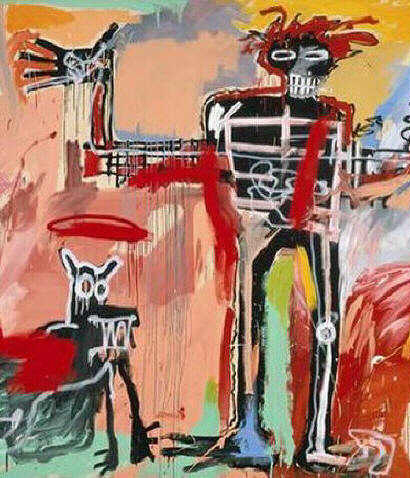
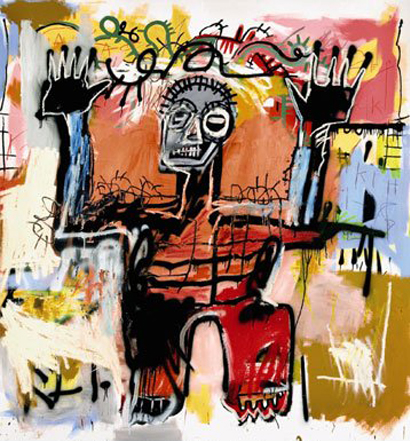
I wonder how Basquiat would have seen all this suffering in his fatherland; he painted some prescient images in 1980′s…
Damon Winter has taken striking pictures of the inconsolable Haiti.
The most beautiful Persian woman
July 27th, 2009
I always thought that a woman out of a Persian Miniature will be known as the Iranian Marianne—maybe something like this dreamy painting by Farah Ossouli:
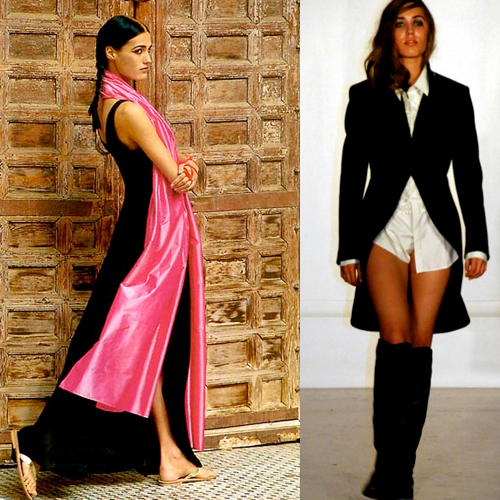
or the ageless super model, Yasmin Parvaneh (picture on the left) or her daughter Amber Le Bon (on the right):
It could have been one of the young beautiful movie stars or myriads of miscellaneous beauty queens or even one of these two who represent the separate worlds of today’s Iranian women:
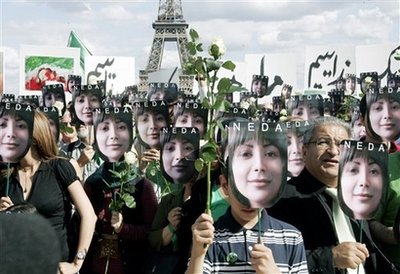
Little did we know that an unknown young woman, Neda Agha Soltan, killed ruthlessly in the Iranian election protests last month would be the face of the Persian woman to the world…
Neda was a “casualty” of the conflict; she gave a face to the faceless victims. May she not have been killed in vain…
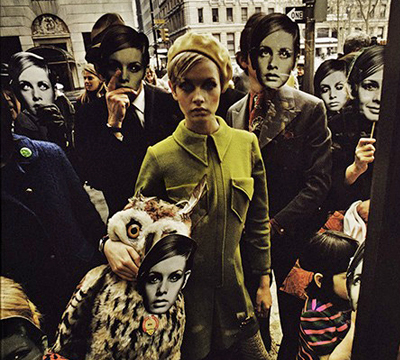
I am sure Melvin Sokolsky doesn’t mind the great Reza being inspired by him in making the Neda masks.
A weekend in New York city
May 25th, 2009
A NY weekend —short and sweet just the way I like it.
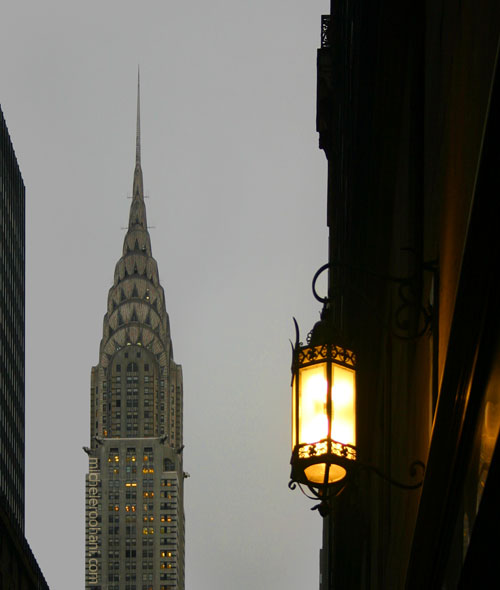
The Chrysler building is still magnificent—I like the upper east side best.
sometimes photographers have to take some risks,
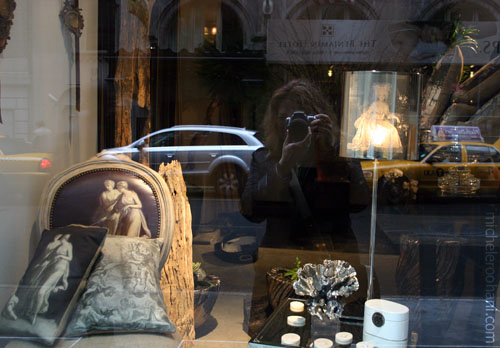
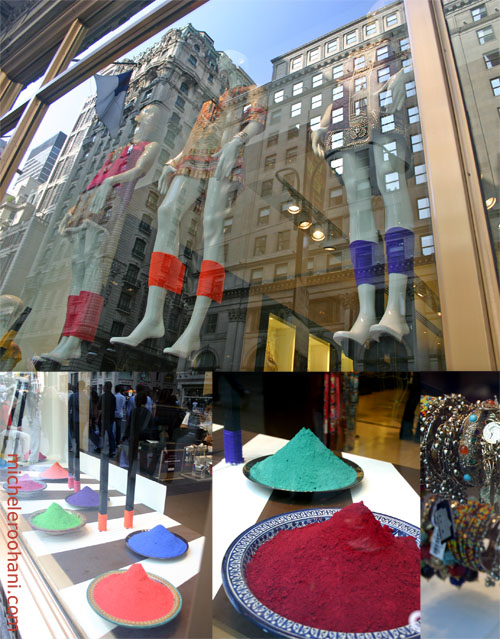
New York is a walking city and the shop windows are fabulous—I have dedicated an entire future post to it—Bergdorf Goodman’s window displays are so sophisticated, they are like mini-exhibitions.
India is big on Fifth Avenue:
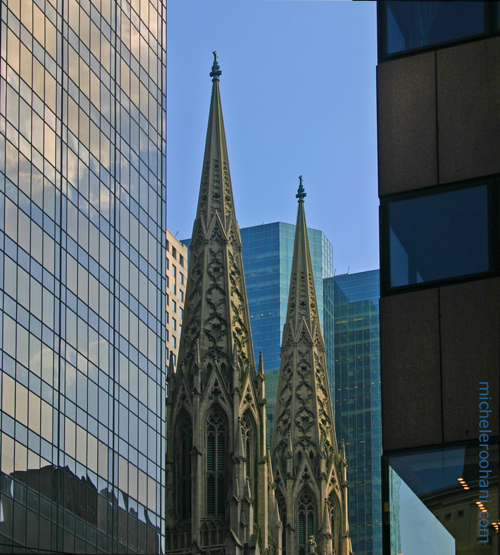
so is the cathedral…
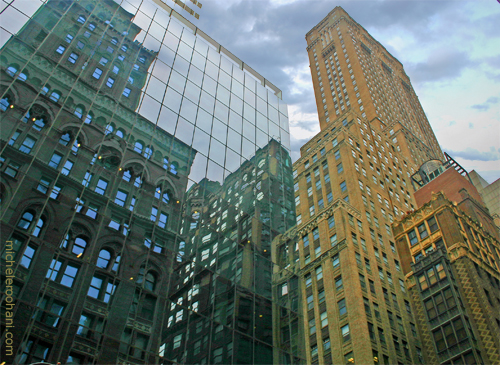
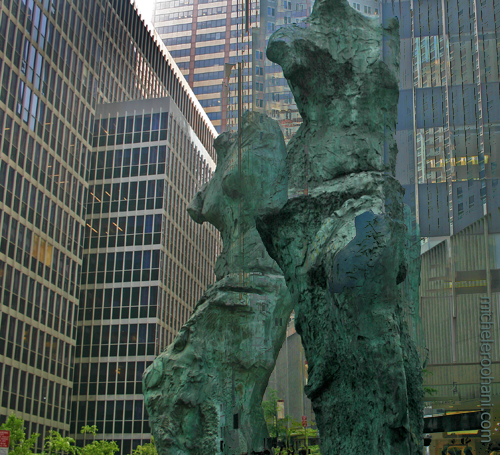
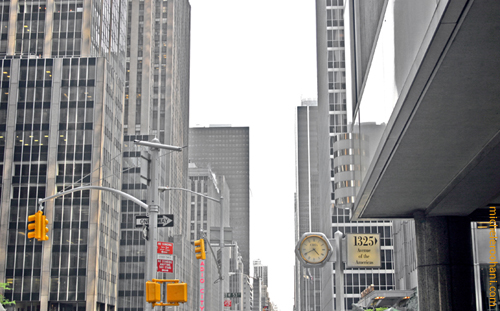
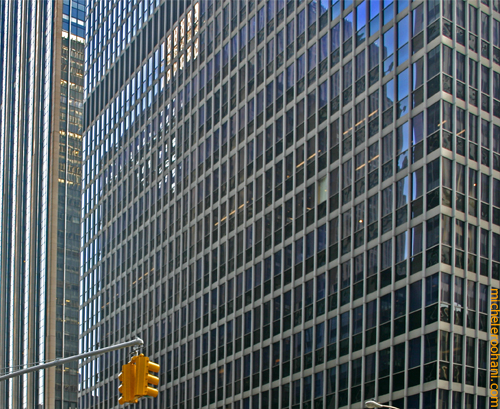
Manhattan is a “hall of mirrors” with a maze of old and new architecture to dazzle you:
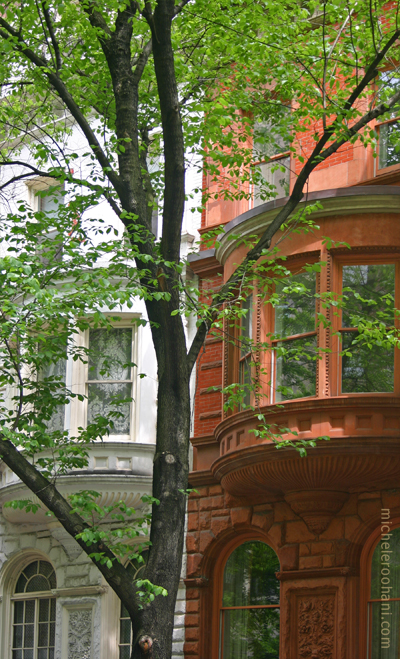
Brownstones are beautiful in springtime,
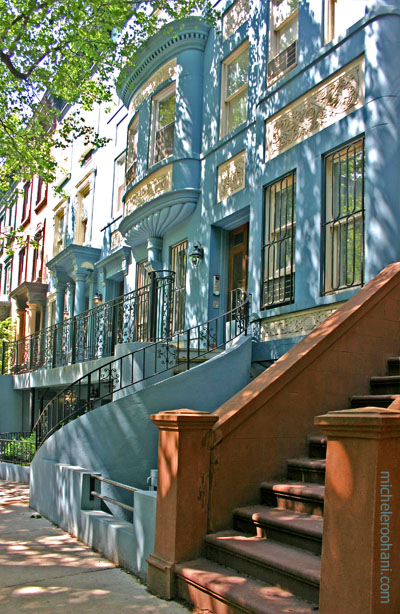
so are bluestones!
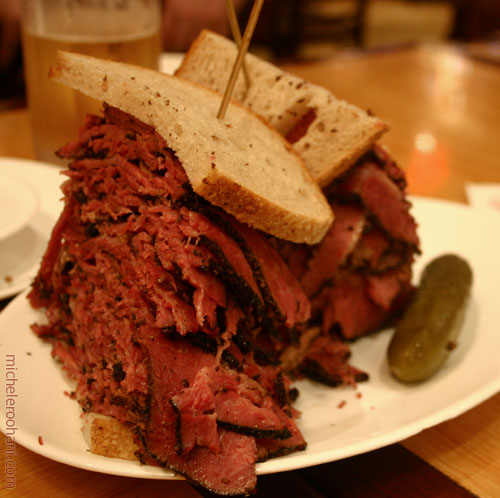
Prepare yourself to eat half a cow at Carnegie Deli,
and then the other half:
Jim Dine’s Venus on the 6th avenue,
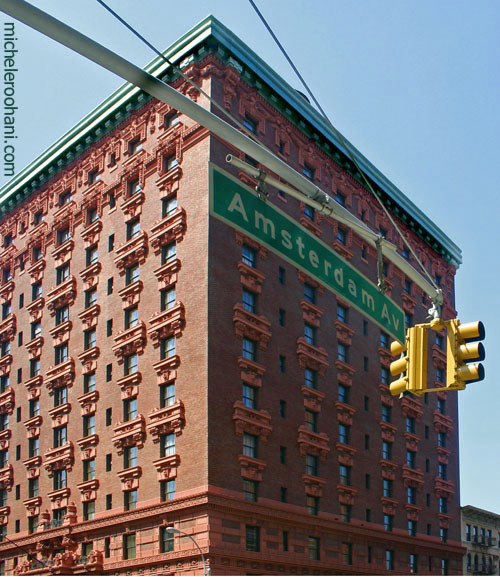
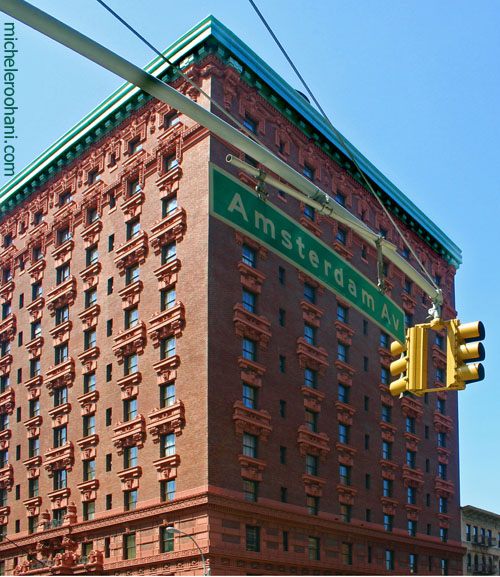
The upper west side is younger and hipper—Amsterdam avenue leads you to a little gem of a café, good enough to eat.
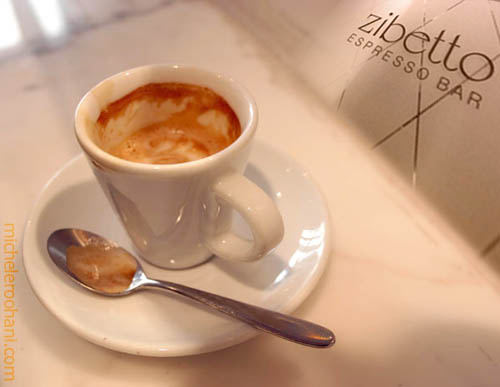
A hole in the wall, Zibetto espresso bar, is an ideal place to get you going again,
to see some more of this beautiful city:
its buildings,
and its skyline.
I visited the Metropolitan museum and the Frick Collection as my usual pilgrimage but the most exciting show was at the New York Public Library. I have two great exhibitions to tell you about but that’s got to be in the next post.
Related and Suggested Posts and Resources
Babooshka dolls and Franz Kafka in Prague
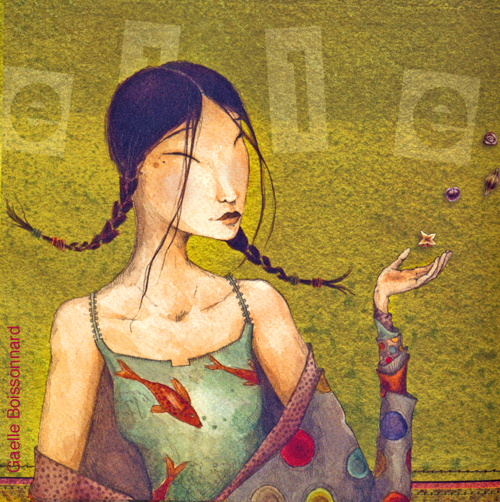
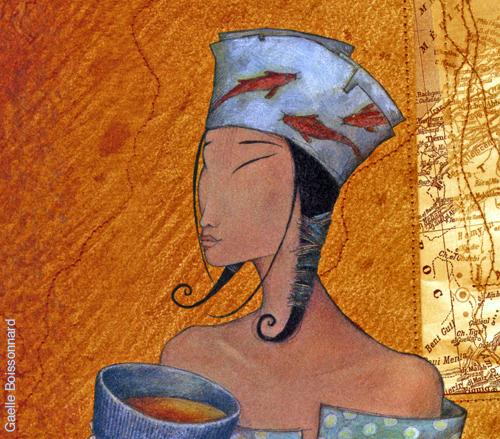
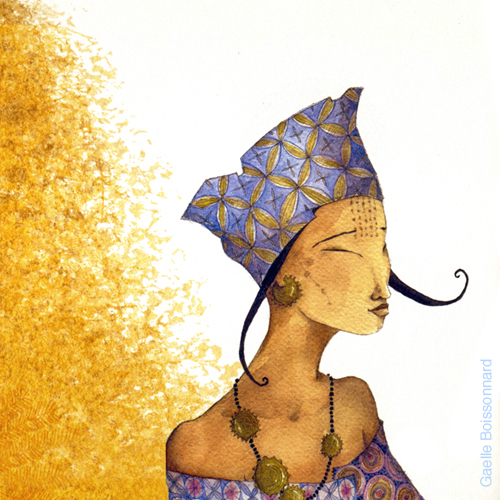
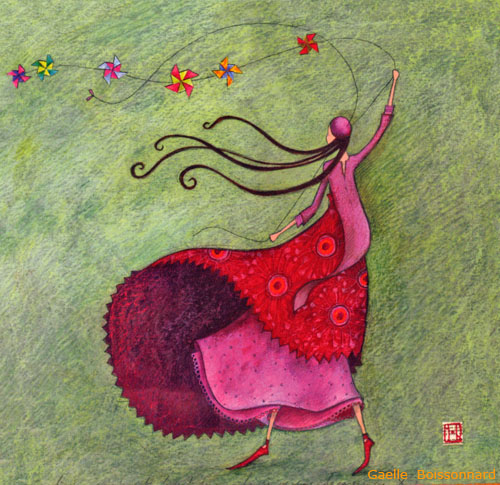
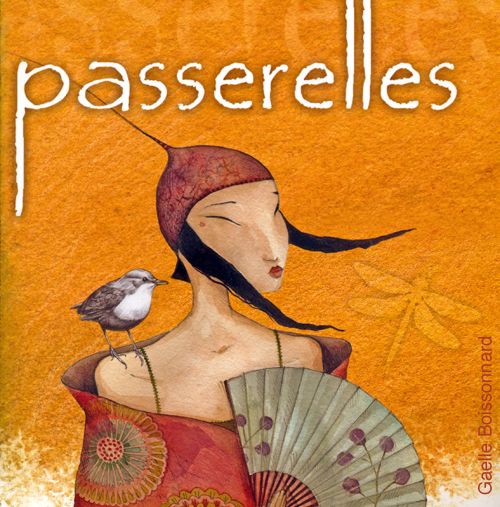
A night with George Steiner and Gaelle Boissonnard
January 26th, 2009
A night with George Steiner and Gaelle Boissonnard—now that’s a curious ménage! Late caffeine kept me up until 6:30 this morning and I spent the night with these two.
Steiner took me from an old Transfuge to wikiquotes and Cornel West; there goes 3 hours pf precious sleep and when my mind was too tired to absorb anything more, Boissonnard’s images were there to help with their delicate originality.
“There is something terribly wrong with a culture inebriated by noise and gregariousness.” Steiner
Boissonnard is everything our “noisy” culture isn’t—serene, quiet, tranquil…
She has started working with a new company; I hope this move makes her work more available to international markets. Just found out that my friends in Paris, La Banque de l’Image, mention her in their company’s blog!
I love this quote of Steiner: “the most important tribute any human being can pay to a poem or a piece of prose he or she really loves is to learn it by heart. Not by brain, by heart; the expression is vital.” This is what I have learned by heart long ago:
“Le tout est de tout dire, et je manque de mots
Et je manque de temps, et je manque d’audace
Je rêve et je dévide au hasard mes images
J’ai mal vécu, et mal appris à parler clair.” Eluard
دلم گرفته است
دلم گرفته است
به ايوان مي روم و انگشتانم را
بر پوست كشيده شب مي كشم
چراغهاي رابطه تاريكند
كسي مرا به آفتاب
معرفي نخواهد كرد
كسي مرا به ميهماني گنجشكها نخواهد برد
پرواز را به خاطر بسپار
پرنده مردني است
I feel sad,
I feel blue.
I go outside and rub my fingers
on the sleek shell of the night.
“I see that lights of contact are blocked,
All lights of contact are blocked.”
“Nobody will introduce me to the sun,
Nobody will take me to the gathering of doves.”
Keep the flight in mind,
The bird may die.
This post is in the loving memory of the 3 sisters my friend, Marie, has lost in the past few years (the last one two days ago)—all young, all from heart problems…
To see Boissonnard’s blog go here.
Claude Verlinde and Jacques Poirier, mirage makers.
April 27th, 2008
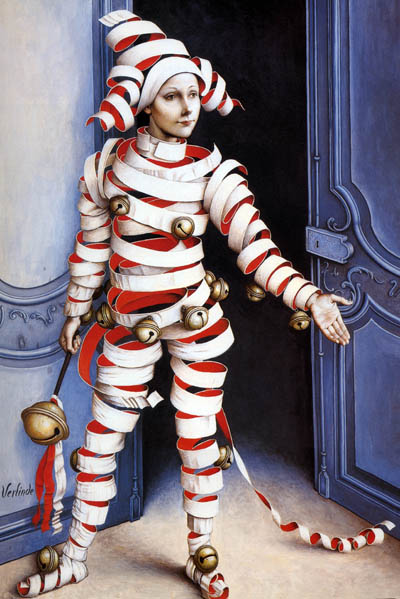
Claude Verlinde and Jacques Poirier are two underrepresented French painters. They are both master illusionists/image makers/mirage makers.
I fell in love with the above painting when I first got introduced to Verlinde’s work in Paris. We all know hollow people, lacking in real value, sincerity, or substance – we have all met shallow people lacking in depth of thought, or feeling. In Persian we call them “hollow drums”: noisy but empty.
Thanks to the internet we can know of something without really knowing about it. We used to have to read, to see, to hear something in order to be able to talk about it but not anymore folks! everybody’s an expert.
I’ve been wanting to talk about V.S. Naipaul for the longest time. Every time that somebody tries to eat up my life/time, I remember the writer’s fabulous statement reported on BBC: “my life is too short, I can’t listen to banality”.
Staying with the trompe l’oeil of Verlinde and Poirier, take a look at this very clever ad:
You can see the rest of these very funny ads here.
Today is my blog’s first anniversary! If you like what you see, please subscribe.
Subscribe
Main
Home
About me
Contact


compositions
cities
flowers
objects
portraits
sepia tones
best sellers