Port-au-Prince: Capital of Pain
January 19th, 2010
ca·lam·i·tiy:
1 : a state of deep distress or misery caused by major misfortune or loss
2 : a disastrous event marked by great loss and lasting distress and suffering
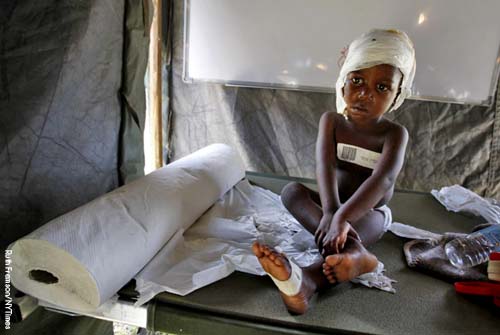
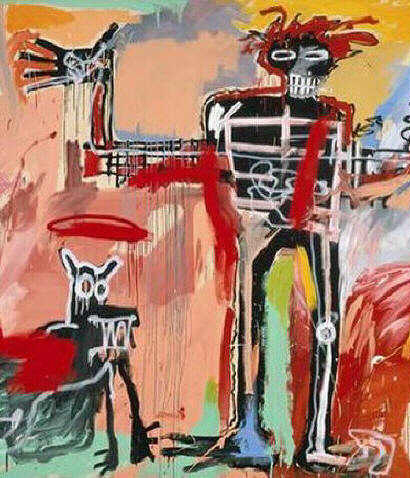
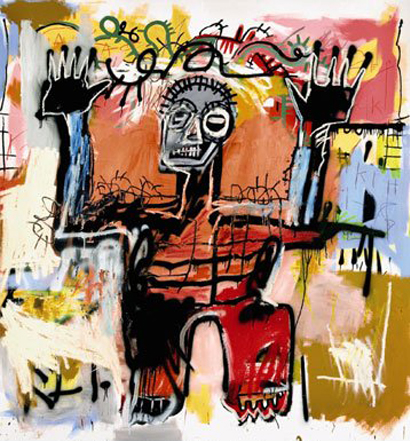
This “bar-coded” child is the symbol of the total helplessness of people in Port-au-Prince.
I am heartbroken by the utter distress/despair of Haiti. So much misery and suffering caused by a few seconds of random natural violence…
“Tout est enfin divisé
Tout se deforme et se perd
Tout se brise et disparait
La mort sans conséquences”
“Everything is finally divided
Everything is deformed and lost
All breaks and disappears
Death without consequences” Eluard
I wonder how Basquiat would have seen all this suffering in his fatherland; he painted some prescient images in 1980’s…
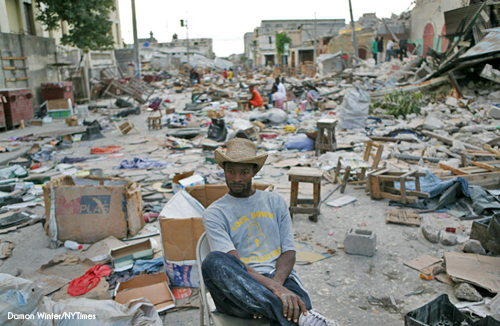
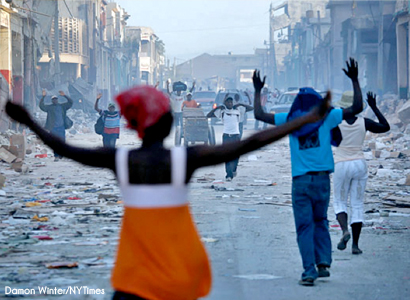
Damon Winter has taken striking pictures of the inconsolable Haiti.
Iran, better days will come—though not yet
June 16th, 2009
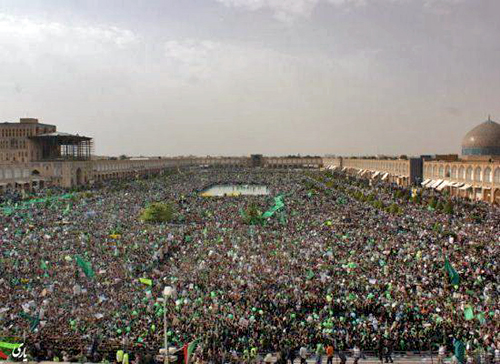
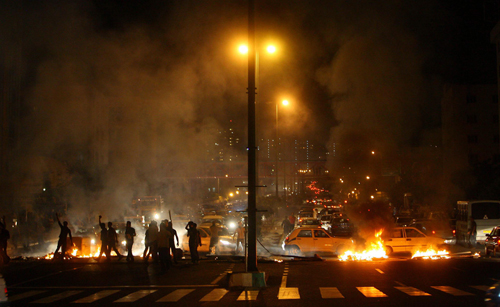
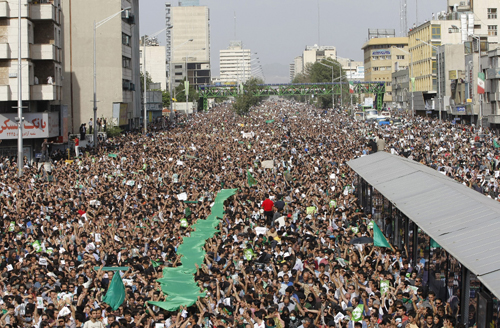
These are startling moments in recent Iranian history. Breathtaking is the word that comes to mind with every new image out of Iran’s protests. A new tale of Zahhak and Kaveh. “It is as if someone had opened a door and an entire country had spilled out.”
The difference between Mousavi and Ahmadinejad is one of degree and not of kind but it’s obvious that the islamic republic has been constrained to deny its own convictions—if Rafsanjani is not the regime’s legitimate overlord, who is? Mousavi seems to be running along after the crowd, not leading it…
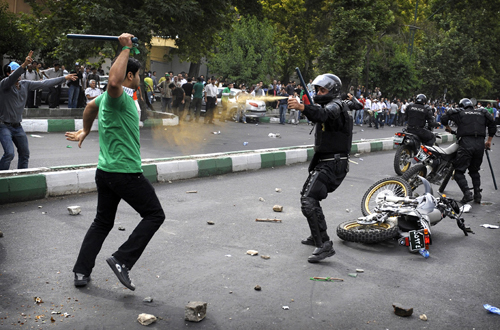
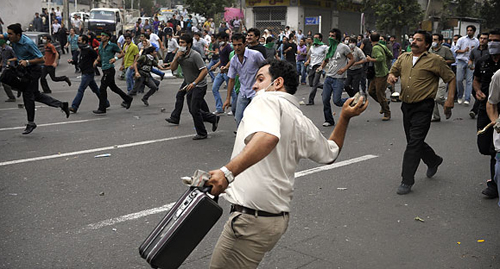
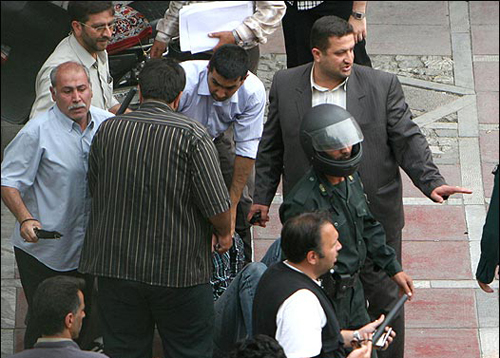
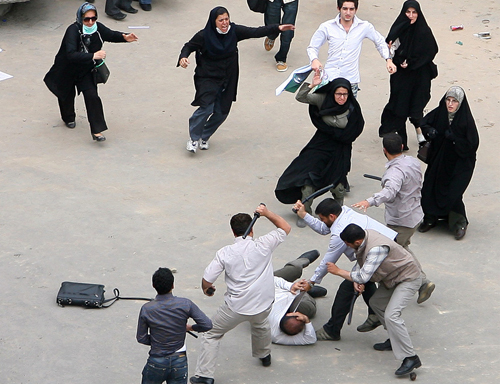
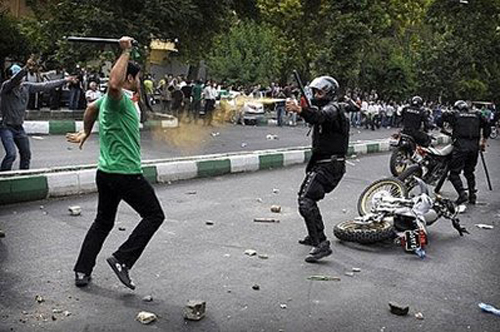
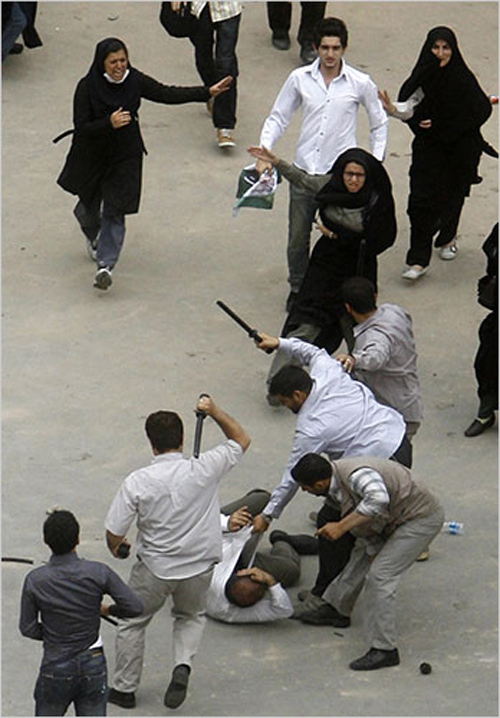
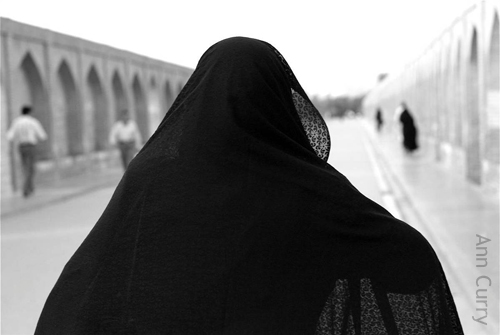
The crackdown on the protesters has been way harsher in cities like Isfahan (above) where there are less foreign journalists to report it.
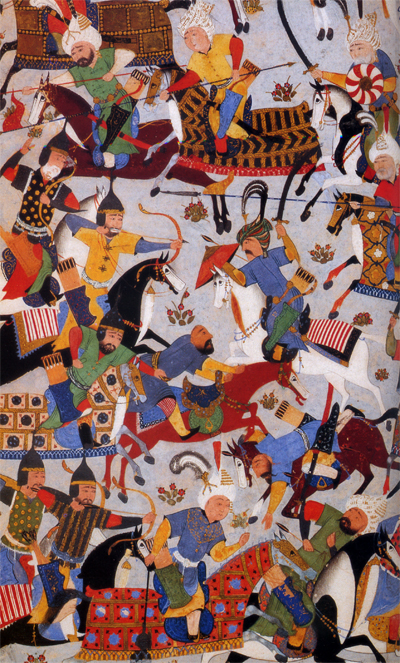
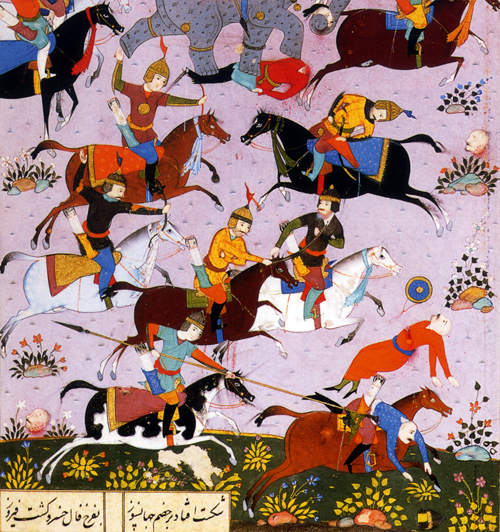
I would love to believe that Iranians are showing the same spirit of resistance they’ve had towards the invaders throughout their long history against the Arabs, the Mongols and Turks.
The Islamic Republic has believed its own myth of invincibility and now its legitimate children are fighting each other in front of the whole world. If they had simply arranged for Ahmadinejad to win by an at least believable slim margin! What we are witnessing is the clash of the Titans in a perfect storm.
If the Bazaar turns against Ahmadinejad, it would be the end of him. It is a matter of time before the regime rolls in the tanks. I highly recommend Muhammad Sahimi’s great article on the power struggle in Iran. It is a must read for anyone interested in understanding Iran’s recent history, and how it has led us to the present situation.
Abbas Milani discusses Khamenei’s amazing miscalculation in this article.
“Count our votes: the modesty of this demand is particularly moving, set against the majesty of the demonstrations.”
It’s hard to make any deeply intelligent prediction about Iran’s political future right now but I would like to hope that better days will come—though not yet…
1979 all over again? First flickers of Resistance in Iran
June 13th, 2009
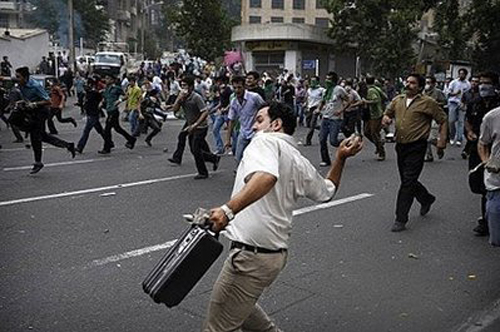
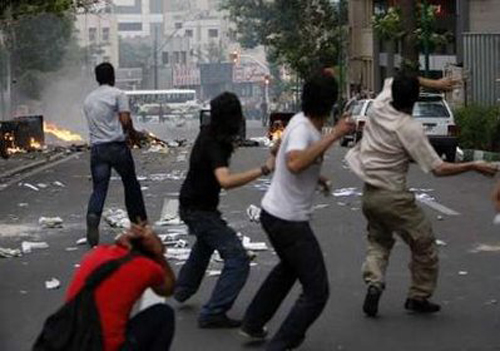
1979 all over again? I doubt it. Call me a pessimist but I never thought I will live to see these scenes in Iran again:
The mullahs are fighting each other (don’t mistake Mousavi for a secular iranian please—scratch any Mousavi and you will find the true face of a muslim revolutionist underneath) and the youth’s hope and badly bruised courage is being sacrificed.
I’ve been glued to my computer and the TV to follow what is happening—I am amazed by the Iranian government’s audacity (read stupidity) of forging the election results. Read a great analysis here.
Could this be that wishful thinking got the better of credible reporting?
In spite of being a cynic, I am hopeful that a new era is starting in Iran—I just can’t deny the enormity of what is happening in Iran; I have a worried enthusiasm of maybe being able to join the rest of the world after 30 years of being punished and sent to the corner of the classroom.
The big difference between now and 1979 is that Iran doesn’t have a powerful leader (like Khomeini of 30 years ago); the effectiveness of these protests has yet to be put to the acid test of fighting the black-clad police.
Roger Cohen summarizes these events in this clip from a rooftop in Tehran.
Read Reza Aslan’s article here to know a bit more about the real power behind Ahmadinejad.
Now events are rushing ahead and the ayatollahs are blinking…
Who knew that Hossein will be such a popular name in the world? Everywhere I turn, there is a Hossein (Hussain) waiting for me: Hussein Obama, Mir Hossein Mousavi, Hussain (Usain) Bolt, etc…
The Iranian presidential elections will be held on June 12th and the future of the Middle East is depending on the outcome. The reformist, Mir Hossein Mousavi, is the only serious contender against Ahmadinejad; It’s funny that an architect/painter can be a threat to the incumbent president of the islamic republic of Iran. In my native country, thorns have roses…
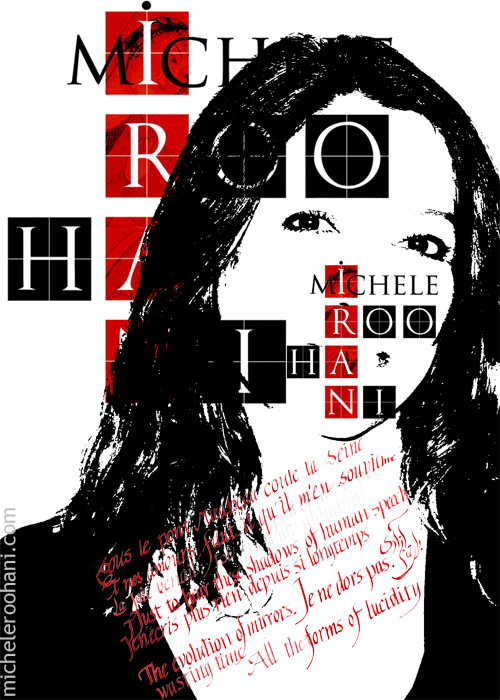
I made the above images on a bout of “latent nationalism” while reading about how these elections can alter the future of the region—from Morocco to Lahore. I had time to appreciate Obama’s eloquent (and super pragmatic) speech in Cairo but Iranians didn’t—they were too busy with their own explosive presidential debates!
It’s hard to get excited about any of the four candidates (the two other candidates are basically collecting votes for Mousavi) who are all deeply connected to the islamic republic. Ready for an American embassy opening in Tehran by next year?
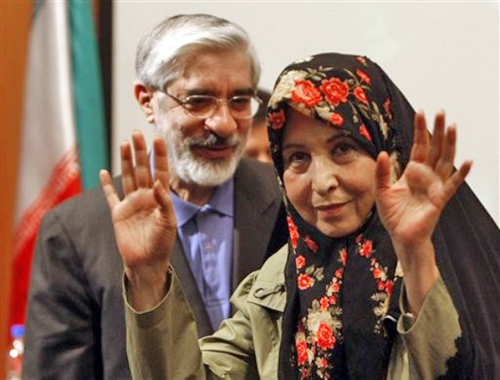
How strange that we, Persian women, have to be happy about Mousavi pulling a Michelle Obama by bringing his wife, Zahra Rahnavard (an artist and political scientist) to his side on political rallies! Just shoot me but I have to be content that this lady is wearing a “liberal” scarf under her chador…
This reminds me of this image of Iran in a chador (the face of this woman is the map of Iran) and the beautiful poem by Parvin Etesami:
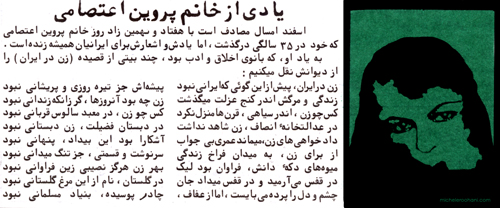
She wrote it in 1935 lamenting the life of Iranian women before Reza Shah did away (sometimes by force) with their chadors (1928) and opened the schools’ doors to them. Etesami and the Shah must be spinning in their graves…
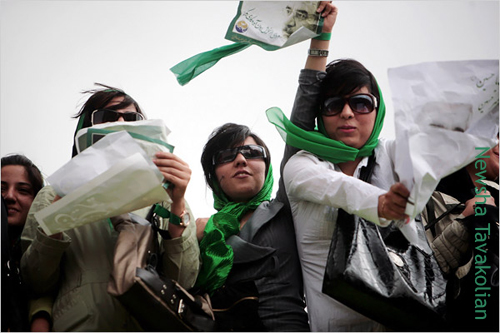
New York Times has some cool pictures like this one from my favorite Iranian photographer, Newsha Tavakolian.
I just found out that this dude, Mousavi, has “Khameneh” at the end of his last name—yet another unfortunate KH for all of you non-persians. To see the funny side of it click here.
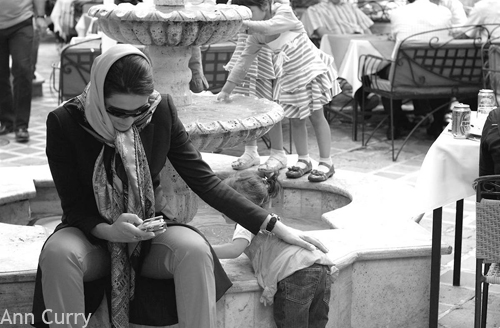
NBC’s Ann Curry took these pictures to show the divide:
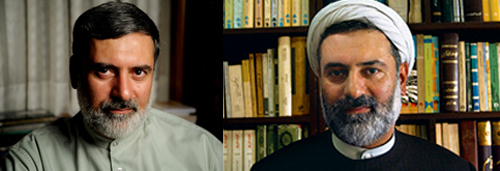
Yesterday, I attended a lecture by Mohsen Kadivar (aka the critical cleric) at UCLA that didn’t alter my view about religion; even the progressive mullahs (the picture is Dr. Kadivar in his full mojtahed regalia and “sans”) can only whitewash the problems of mixing religion with the state.
Hezbollah just lost the Lebanese parliamentary elections—the West is breathing a sigh of relief.
Related and Suggested Posts and Resources:
a short CNN clip about the Iranian Michelle Obama here.
the New York Times article here.
Parvin Etesami here.
to read her poem in Persian in its entirety here.
Iranian Elections here.
Zahra Rahnavard here.
Mir-Hossein Mousavi go here.
Struggles of Iranian women, check out Rakhshan Bani Etemad’s clips here.
Parviz Tanavoli’s (the great Iranian sculptor who taught Ms. Rahnavard) interview with Ann Curry here.
p.s. I did the calligraphy on the first image using one of my favorite poems by Hamid Mosadegh.
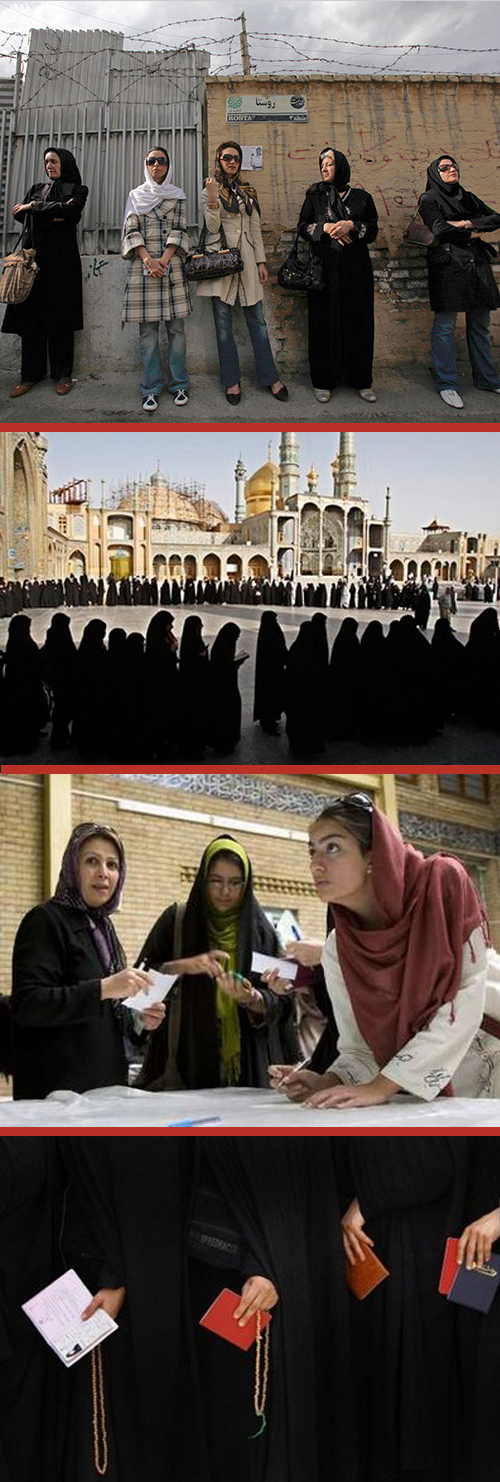
updated on 6/13/09:
There’s been unrest since yesterday in Iran after the results of the presidential elections were made public: Ahmadinejad won with over 62% of the votes. I am amazed at the arrogance of this regime; the images seen on BBC, CNN and NY Times remind me of Iran i left in 1978/79.
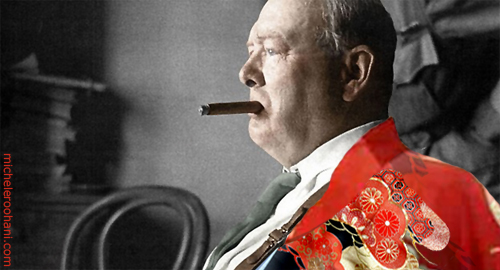
Churchill in a red Kimono
June 1st, 2009
Churchill in a red Kimono…
I just can’t get this image out of my mind since I read about it so I had to make it!
Looking for Churchill in a red kimono, I found the following on the TIME archives:
“Two French officers were breakfasting quietly in a French conference room when they suddenly “beheld an astonishing sight.” The double doors burst open and “an apparition which they said resembled an angry Japanese genie, in long, flowing red silk kimono . . . girdled with a white belt . . . stood there, sparse hair on end, and said with every sign of anger: ‘Uh ay ma bain?’”(where is my bath?)
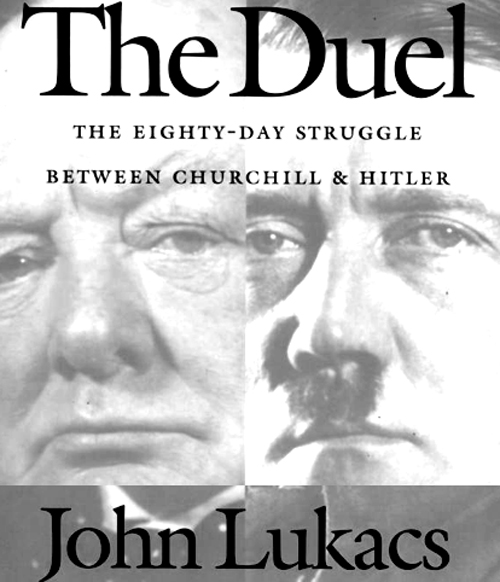
I first read about it in these wonderful books that give an insight into the minds of Churchill, Hitler and Stalin during the crucial years of 1940 and 1941.
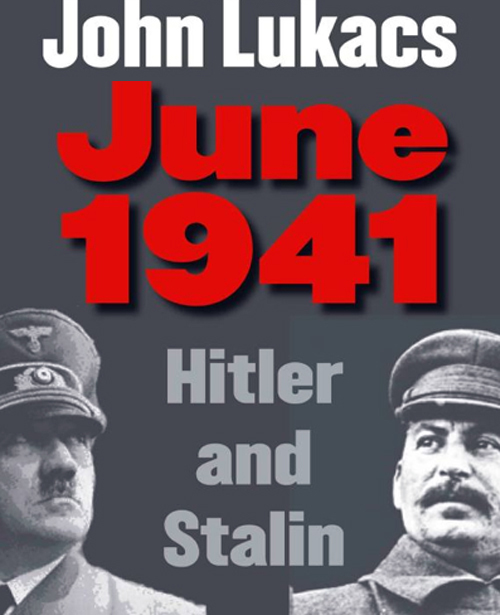
Another great little gem by John Lukacs is “June 1941″ where he describes Hitler and Stalin’s relationship before the German invasion of Russia.
The D Day or the 65th anniversary of the 1944 Allied invasion at Normandy is almost here (and the French government snubbed Queen Elizabeth by not inviting her to the big celebrations on June 6th). Churchill is spinning in his grave.
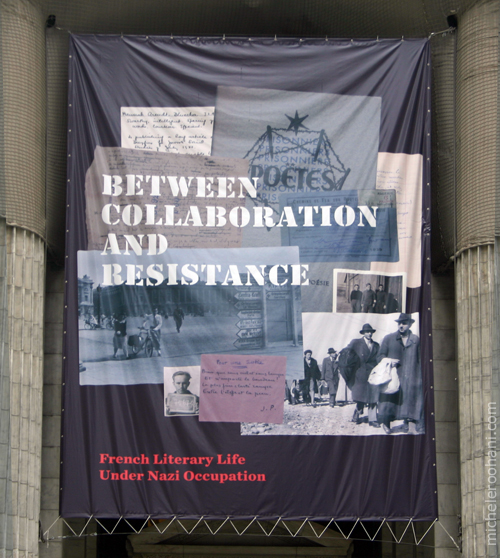
In my last trip to New York, I went to this great exhibition in NY Public Library called: “Between Collaboration and Resistance: French Literary Life Under Nazi Occupation”. Reading Lukacs’ books about the same period, made the exhibition particularly interesting to me—I am a history buff and the two world wars have always fascinated me.
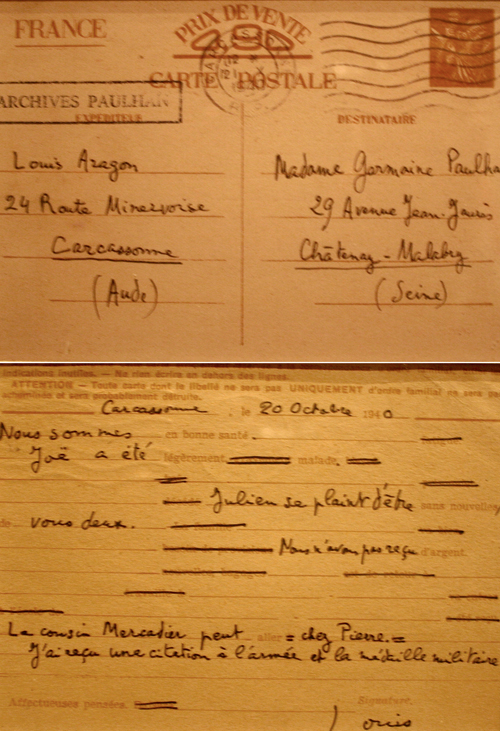
It was interesting to see my favorite poets’ letters and postcards during the Nazi occupation of France—the above postcard was sent by Louis Aragon to Paulhan’s wife on a pre-printed postcard (easier to censure!)
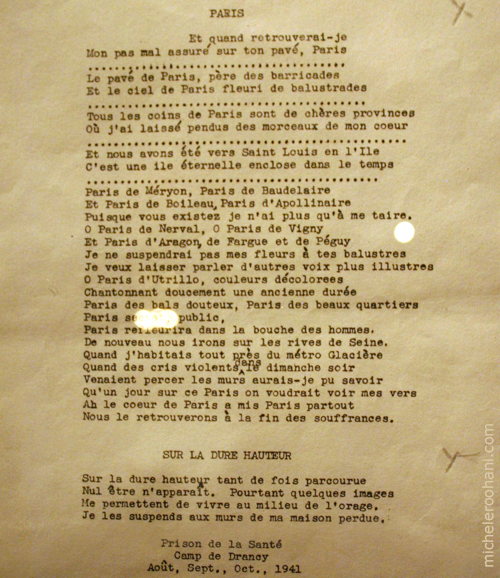
Poems sent from prison camps and manuscripts smuggled out written on the back of wallpapers…
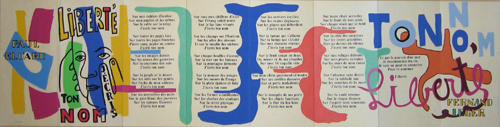
I loved Eluard’s poem, Liberté (freedom), illustrated by Fernand Leger:
65 years after the second world war, the world is not a safer place and human beings have forgotten the hard learned/earned lessons; the middle east is as volatile as always, Sri Lanka just ended a bloody civil war, Pakistan is agonizing under the threat of the Talibans, Africa is struggling with its different identities and abortion doctors are being assassinated in America…
It’s harder today to make blanket predictions about the direction history is taking—fast computing and the internet have changed the old orders that were in place since our written history began.
Here are a couple of Churchill’s quotes to finish this post:
“Although prepared for martyrdom, I preferred that it be postponed.”
“An appeaser is one who feeds a crocodile, hoping it will eat him last.”
“A lie gets halfway around the world before the truth has a chance to get its pants on.”
Other things you might not have seen:
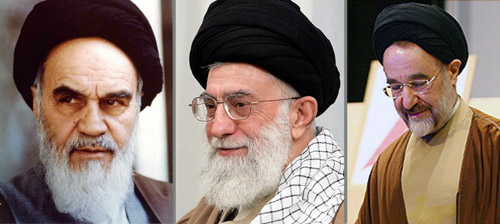
Hillary Clinton in chador and the three KH’s—Khomeini, Khamenei, Khatami
February 21st, 2009
Hillary Clinton in chador is not as far-fetched as we may imagine! Ahmadinejad is already calling for a mutually respectful dialog and the white house is more than eager to oblige…
It took a Nixon to go to China and it will take a Clinton to go to Iran. Only the one who threatened to “obliterate” Iran can now go and mend the thirty year wound between the Great Satan and the Angelic mullahs…
The United States needs Iran’s cooperation to take care of its problems in Iraq, Palestine (read Hamas and Hezbollah), Afghanistan and now Pakistan. To understand a bit better I suggest reading Roger Cohen’s articles from Tehran.
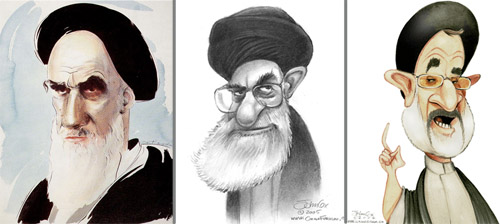
Now I would like to clarify once and for all, the mystery of three KH’s for my foreign friends— it’s been unfortunate and confusing that the three important leaders of the islamic republic have last names starting with a KH.
These are not the same person even though they do look alike with that black turban but let’s remember the actual ranking:
Khomeini (the leader of the islamic revolution who—20 years after his death—still induces nightmares for the foreign leaders),
Khamenei (today’s supreme leader since Khomeini’s death)
and Khatami (twice president of the islamic republic).
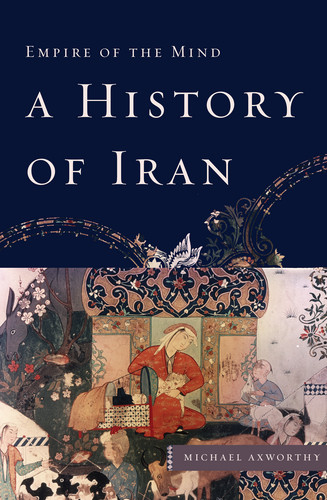
On a less depressing note, I recommend reading Michael Axworthy’s book about “the remarkable perseverance of Iran’s cultural identity”—in spite of the turbans and the KH’s…
I am a big “Law & Order” fan; who knew that Ahmadinejad will be mentioned in one of the episodes. If this is not a sign of things to come people I don’t know what is! It’s amazing all the positive coverage Iran is getting; maybe they have hired a PR firm…
Mumbai Carnage
November 30th, 2008
It’s 3:30 am Mumbai time on November 27th and I am wondering if it’s a bad time to call my friend Ajay in India; I am watching Mumbai burning on CNN and my heart’s sinking—can’t have even one satisfying answer to why people decide to go on a rampage like this.
It’s interesting how knowing even one person makes a difference in our relative desensitization towards systematic acts of violence. What causes this rage and brutal frustration?
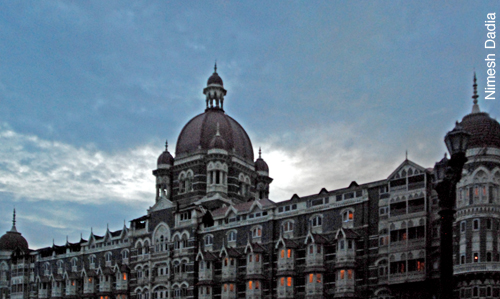
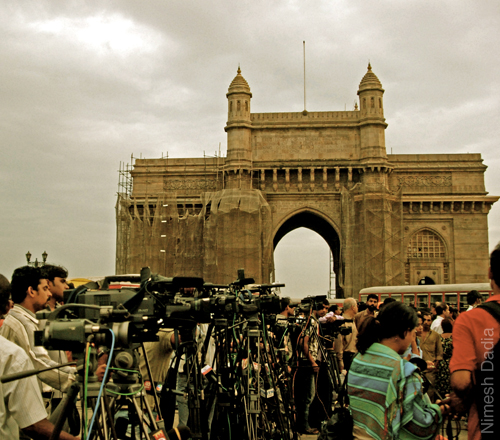
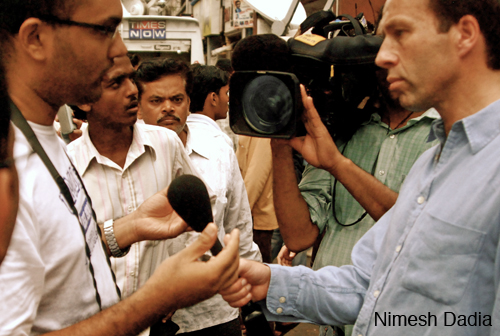
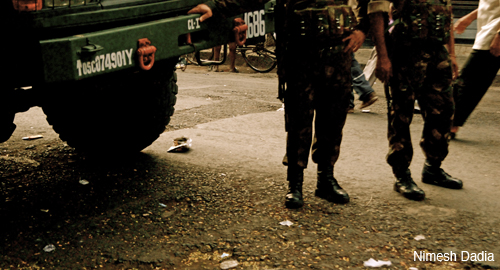
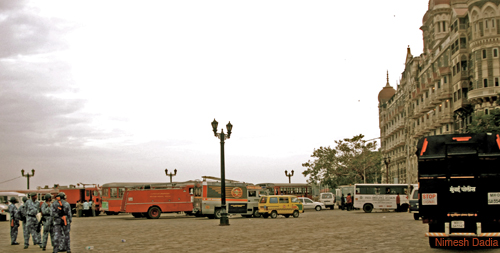
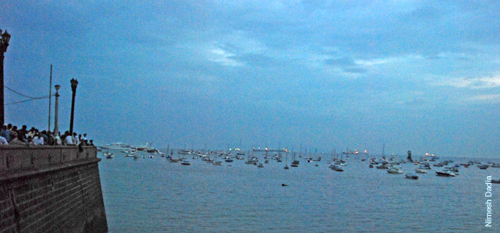
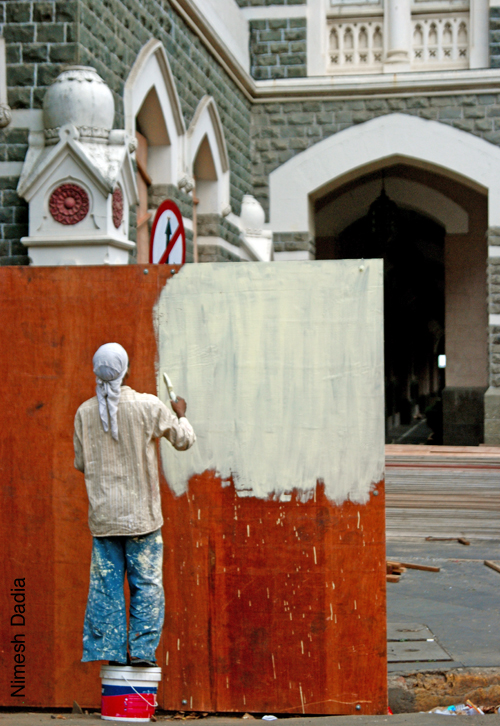
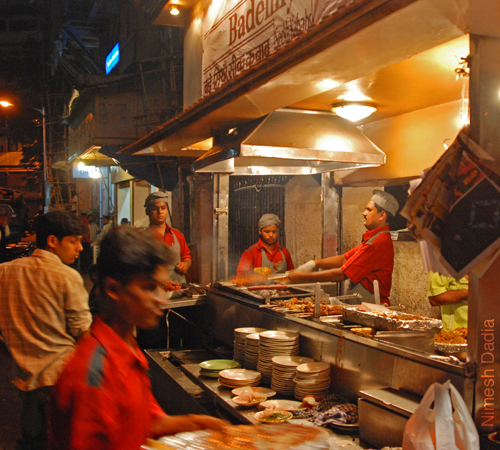
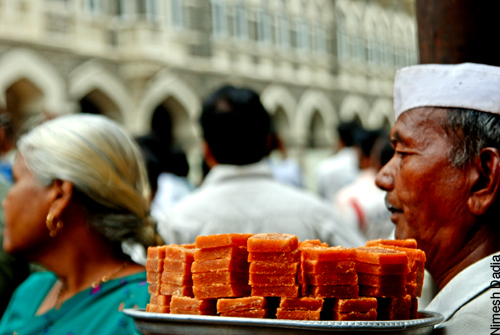
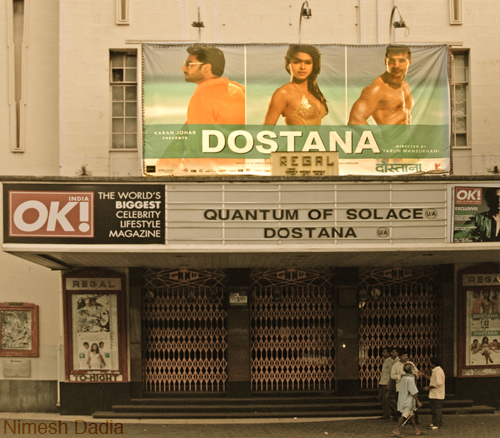
I asked my friend, Nimesh Didia, to just go out and take some random pictures of the area and people; I was grateful to receive all of these images from him yesterday.
Regular Mumbaikars are replaced by soldiers and the world press; it’s an exercise in futility to try to make some sense of the incomprehensible…
The Taj Mahal hotel survived the fire but at least 170 people didn’t. To see excellent pictures click here.
Maybe great solidarity and large-heartedness in times of peril will save the city. India and Pakistan have a bloody history since the partition in 1947 and these incidents are not helping.
Even James Bond couldn’t keep the Regal movie theater open on the first days of attack:
but the clean up work has started:
The best article I read is Suketu Mehta’s in NY Times— he eloquently describes the feelings of many of the 18 million people pf Mumbai. Read it here.
As you can see, life continues (it always does) in spite of the recent calamity:
May it be sweeter from now on for India.
“Partition’s people stitched
Shrouds from a flag, gentlemen scissored Sind.
An opened people, fraying across the cut
country reknotted themselves on this island.”
Apocalypse in Paradise
November 17th, 2008
Southern California fires are pretty democratic, they hit the mansions and trailer parks and everything in between with the same cruelty… The current definition of a Californian is still “did or did not escape the fires?”
“Devil winds, hill-hopping infernos, smoked mansions, torched trailers, barren freeways, and brilliant sunsets lingering in low-hanging canopies of burnt dreams.” That’s how Steve Lopez describes all hell breaking loose in California.
Last year in october I wrote:”wildfires, burning out of control, are continuing to threaten thousands of homes in California. You can’t help but to have this incredible sense of the fragility of everything. As human beings we are wired to think that everything will stay the way it is, safe from sudden and intense changes…” My childhood home burnt down in 1970—my barbie collection got charred along with the rest of the house…
Palm trees help spread fire—I’ve never liked them much—to see an amazing photo essay click here.
It’s amazing how fire spares a house or two in the middle of a whole burnt neighborhood—my friend’s house in Anaheim hills stayed intact when his neighbor’s got completely destroyed; his daughter, Kimiya, has sent me these pictures of their street:
and this one:
The chimneys are the only things standing in most burnt houses.
To watch a powerful clip from BBC, click here.
“Often it takes some calamity to make us live in the present.” Bill Watterson
A Prince finishing what a King began? I sure hope so…
November 9th, 2008
Yes he did it! What a collective sigh of relief, what a huge smile on the face of the earth and how very scary to be President Obama in today’s world…
I had fun with Sky Gilbar’s beautiful photos of Obama (above and below).
These are some of the pictures of Obama that I like best.
I teared up reading Nancy Gibbs’ article: “Some Princes are born in palaces. Some are born in mangers. But a few are born in the imagination, out of scraps of history and hope. Barack Obama never talks about how people see him: I’m not the one making history, he said every chance he got. You are. Yet as he looked out Tuesday night through the bulletproof glass, in a park named for a Civil War general, he had to see the truth on people’s faces. We are the ones we’ve been waiting for, he liked to say, but people were waiting for him, waiting for someone to finish what a King began.”
Writers say it so much better than us mere mortals; take a look at Judith Warner’s piece here and Frank Rich’s here. Come on people, don’t be lazy! These are exciting times—good and bad—and history doesn’t forgive apathy…
I took this picture of my TV while watching the biography of my favorite American President, John Adams who said: “Democracy never lasts long. It soon wastes, exhausts and murders itself. There was never a democracy that did not commit suicide.”
Obama’s election made me forget my agreement with Plato’s view on Democracy…
President Obama, the world is smiling…
November 5th, 2008
This is a collective smile, thousands of miles long…
Take a look at these pictures of the big smile here and read about it from Christiane Amanpour here.
A paradigm shift my friends, a paradigm shift of biblical proportions…Read Thomas Friedman’s excellent article here and Judith Warner’s amazing piece here.
“We’ve been warned against offering the people of this nation false hope. But in the unlikely story that is America, there has never been anything false about hope.” Barack Obama
Subscribe
Main
Home
About me
Contact
Art, ...


compositions
cities
flowers
objects
portraits
sepia tones
best sellers