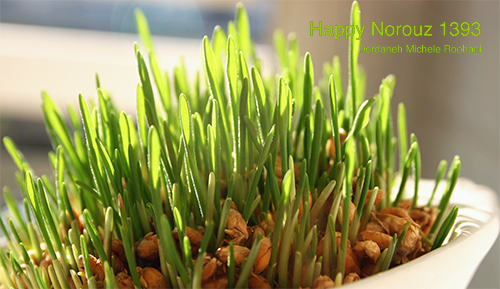
Happy Spring Happy Norouz 1393
3
In spite of commercialism of this day, it’s always a good idea to let people you love, know it.
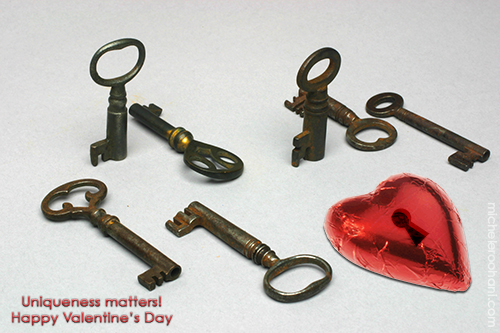
“Today we are obliged to be romantic
And think of yet another valentine.
We know the rules and we are both pedantic:
Today’s the day we have to be romantic.
Our love is old and sure, not new and frantic.
You know I’m yours and I know you are mine.
And saying that has made me feel romantic,
My dearest love, my darling valentine.”
by Wendy Cope (1945 – )
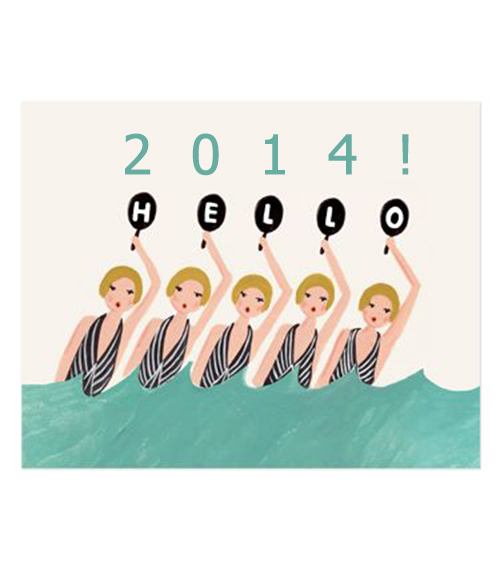
Or as Oprah says “Cheers to a new year and another chance for us to get it right!”

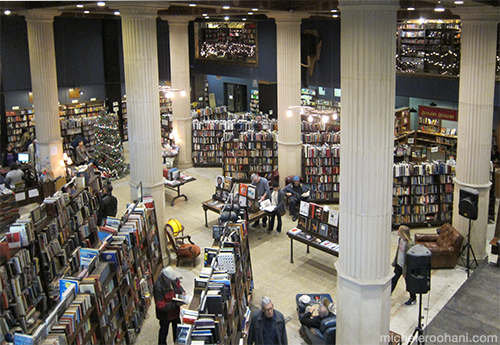
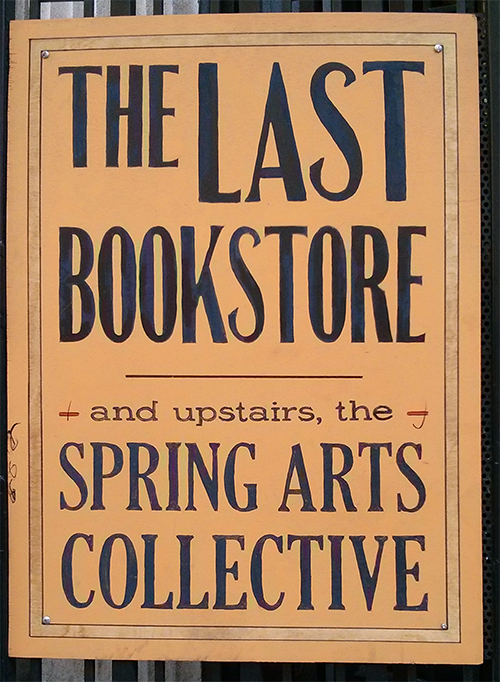
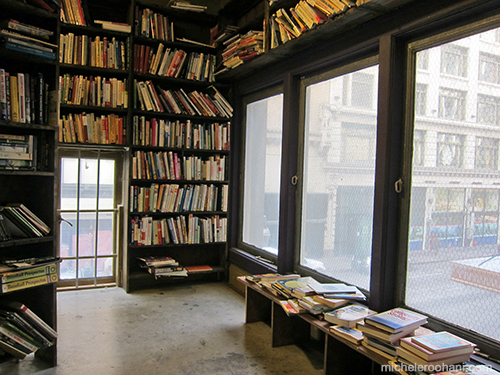
I went to “The Last Bookstore” in downtown L.A. and came out happy after seeing thousands of books in this quirky place!
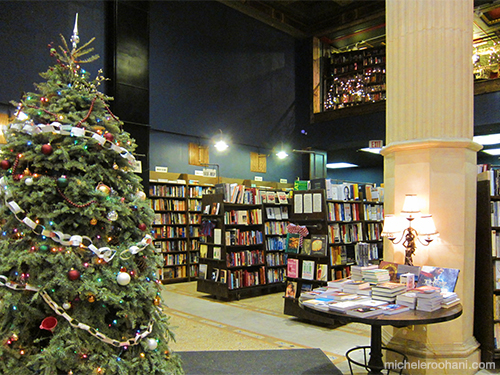
Last time I was in Los Angeles I bought a bunch of used books about wine and took them back to Paris; the books were great and I like the bookstore’s sense of humor:
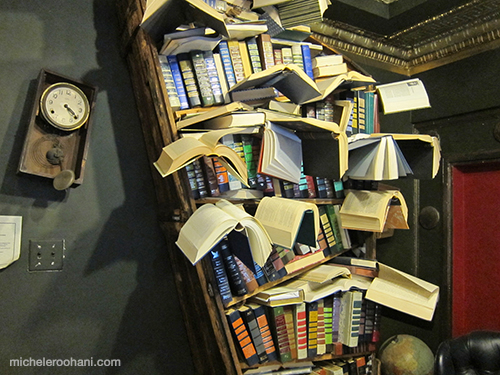
Even funnier are their section of “books by color”!
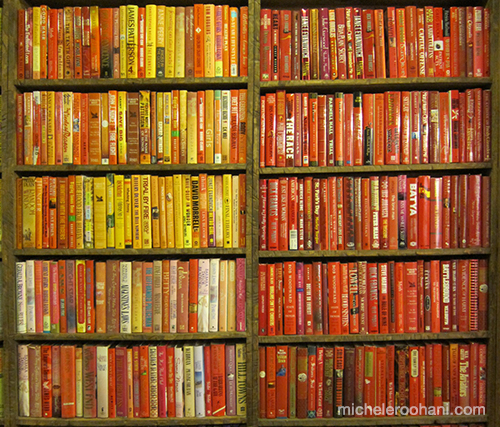
They have taken this idiocy to the max:
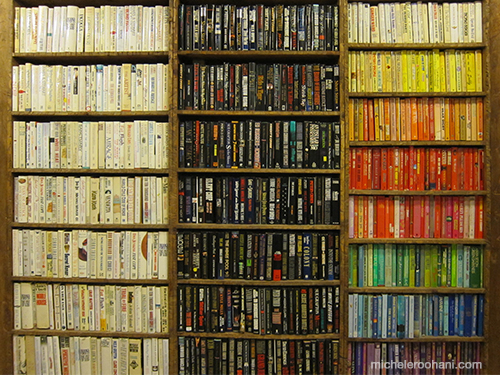
Only people who love books can laugh at them like this by arranging them by color!
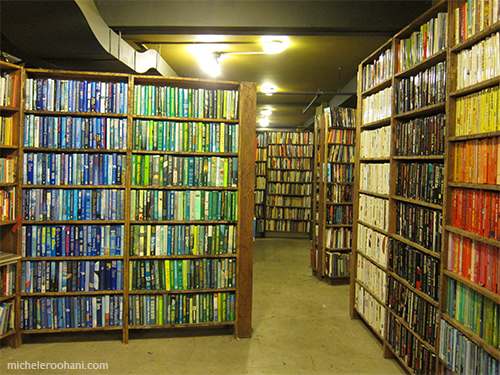
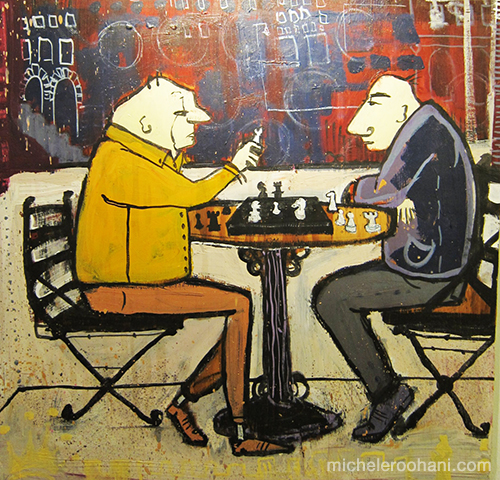
Some people play chess,
some chat,
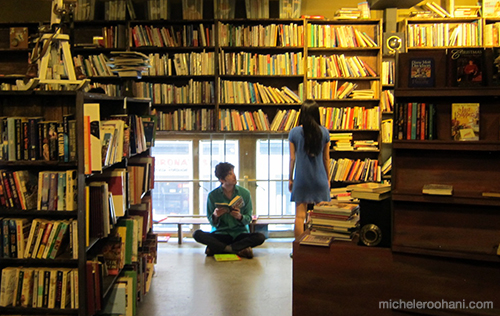
but they mainly read…
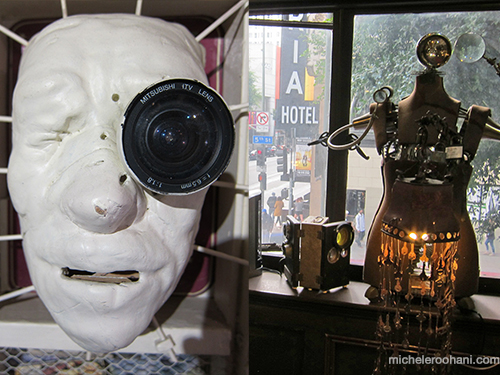
They have a little art gallery :
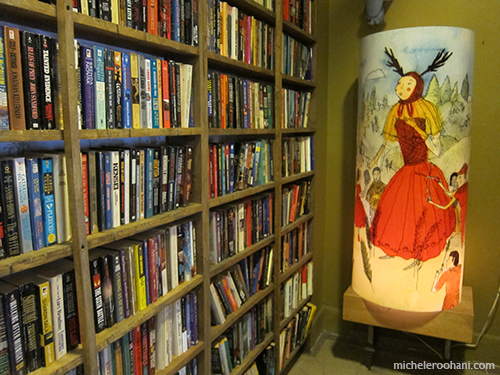
There is a Borg section,

that I liked a lot:
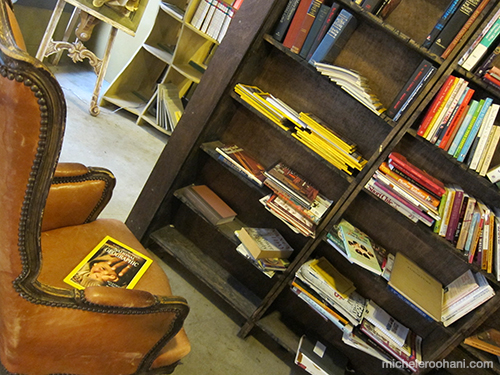
I was even able to find one of my favorite issues of National Geographic magazine about Suleiman the Magnificent from 1987!
Just some snow outside and it would have been a perfect christmas scene…
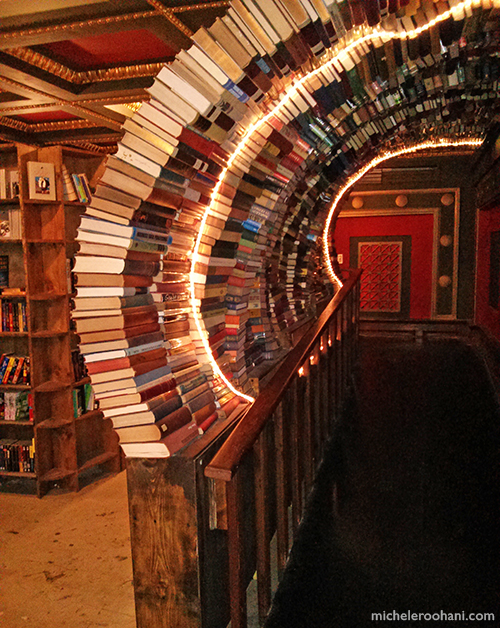
No snow but they have this amazing labyrinth made out of books that starts with a funny tunnel:
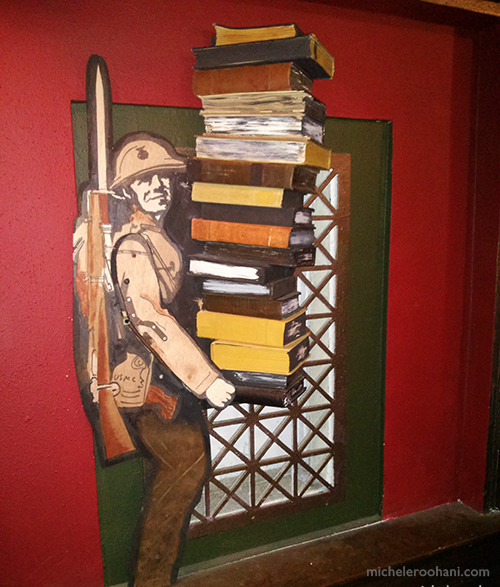
with a soldier standing guard outside…
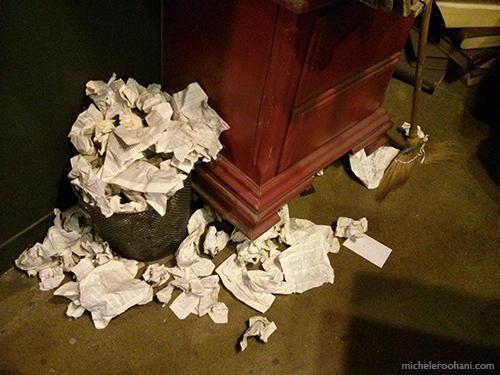
If you don’t like what you read, you know what to do:
But when you get over your anger, you can sit down quietly and read again,

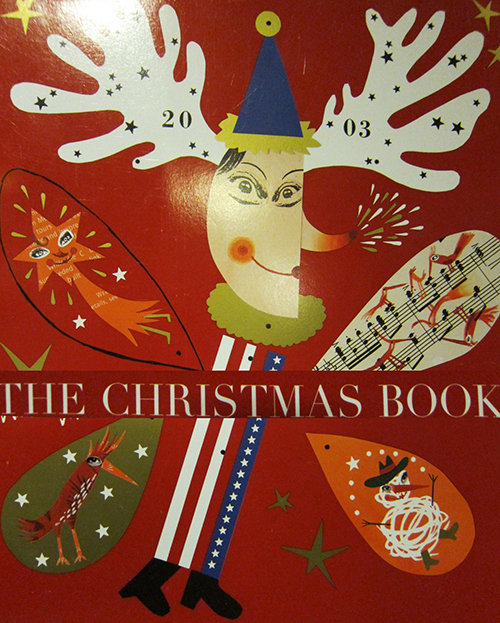
A nice book about Christmas,
before these ladies get angry at you…
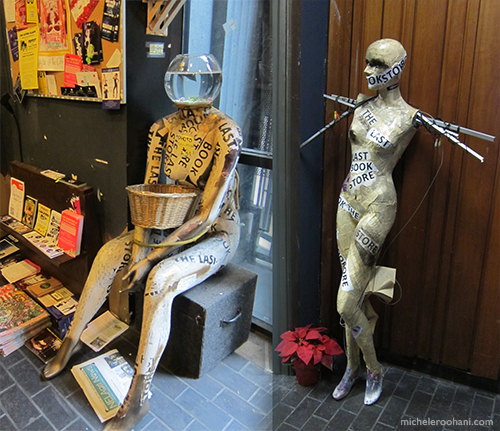
And throw you out of…
Merry Christmas everybody!
See my 2007 Christmas in Beverly hills here.
See my 2009 Christmas in Strasbourg here.
So I am crazy about my new Pantone app; it helps me find the colors that make me happy like these red/tangerine/persimmons on this sexy koi:
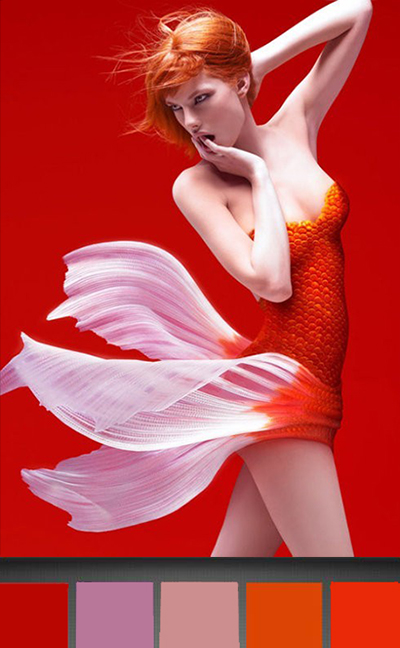
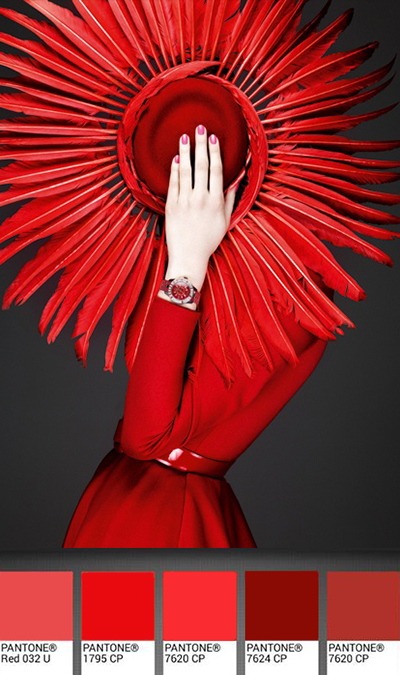
This gorgeous Dior hat is in my favorite color, RED!
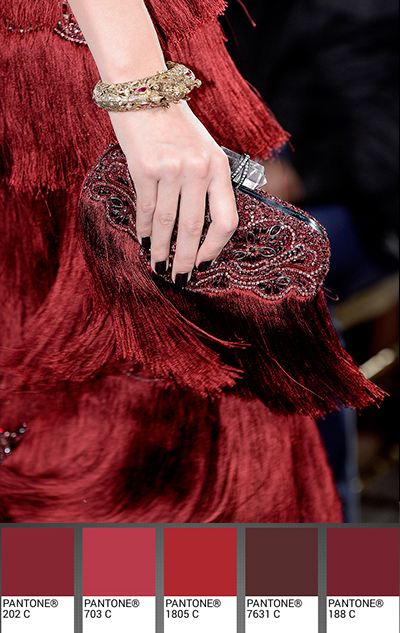
And this wine palette has all the colors of your favorite Bordeaux and Bourgogne:
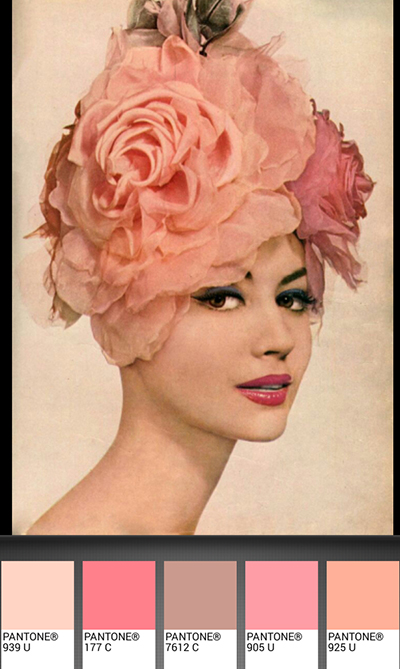
Let’s go to the pinks now with this “femme rose” from 1959:
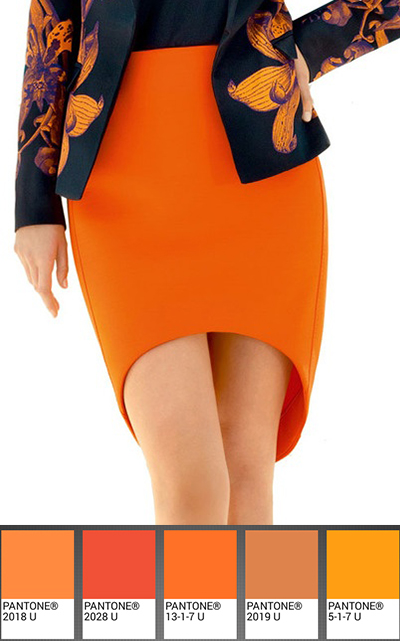
or this tangerine/ochre skirt that reminds me of Veuve Clicquot, my favorite champagne:
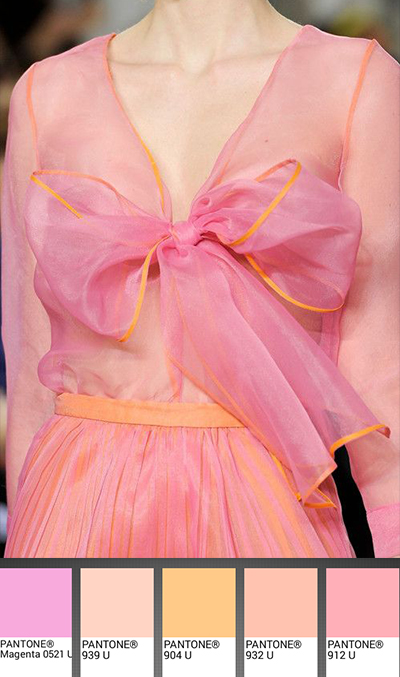
I love the combination of pink and orange like a romantic sunset:
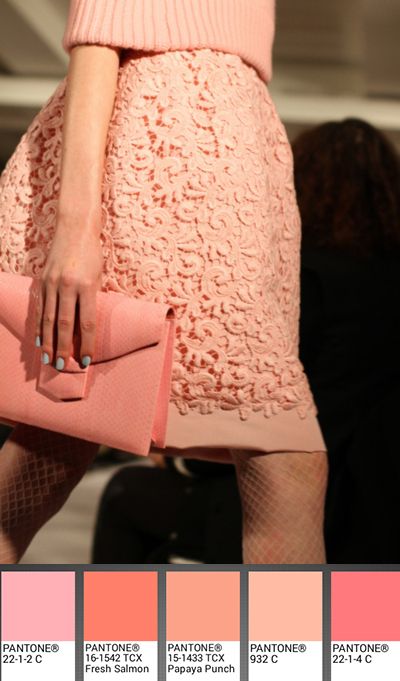
and all shades of soft peach puffs,
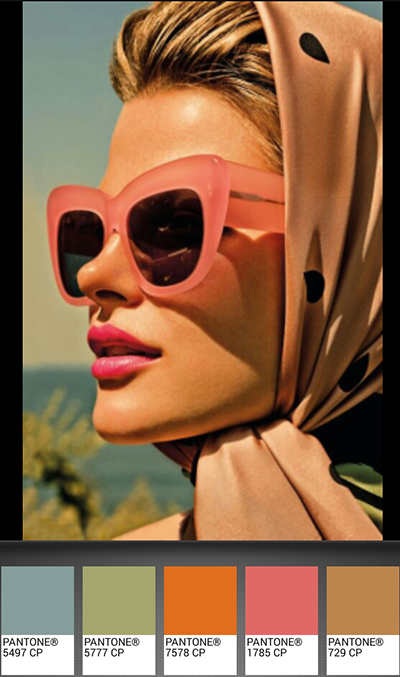
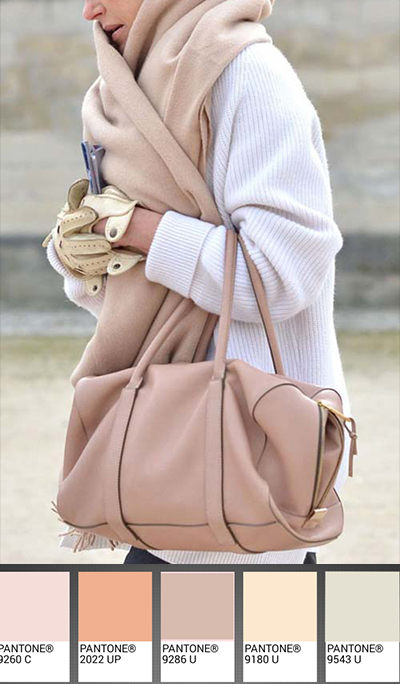
and this pretty tan/rose:
with its paler pastel cousin, rose smoke:
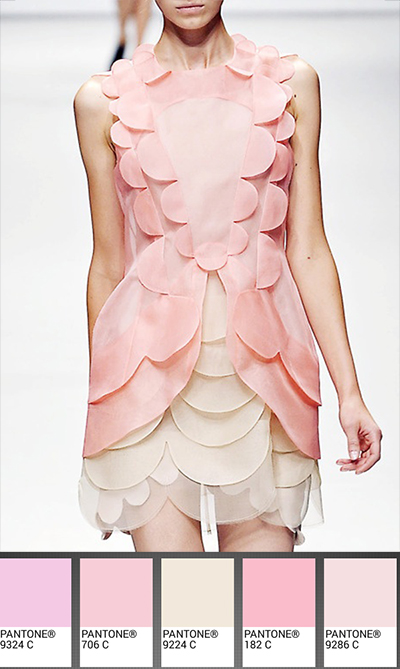
But let’s go back to happy cherry blossoms from Christopher Kane,
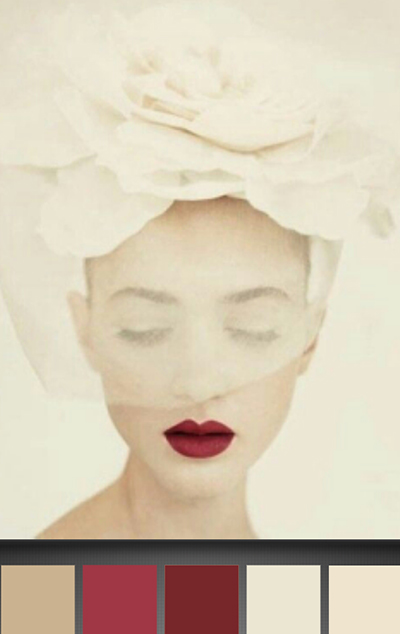
or these crimson cherry lips from 1950:
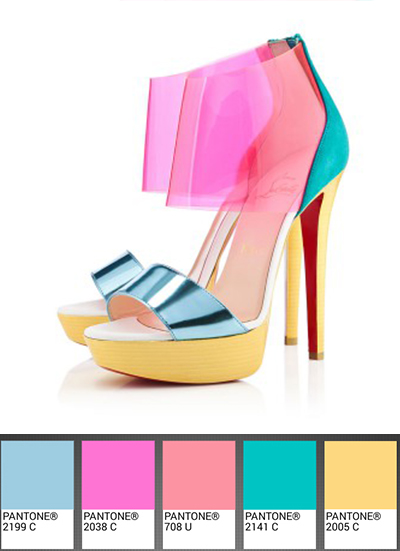
or these irreverent Louboutin shoes in pink flambé,
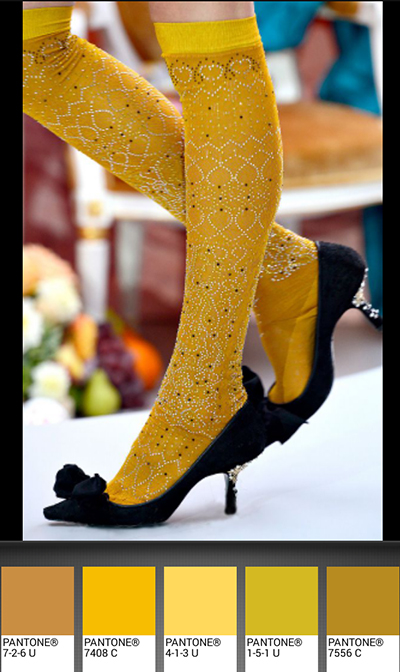
stunning mimosa socks, from Meadham Kirchhoff:
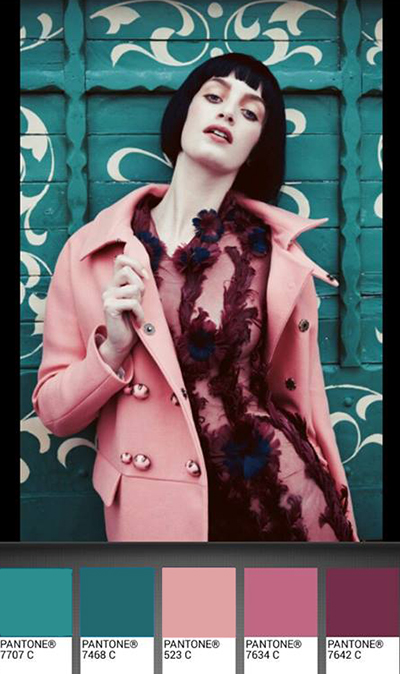
or this ultramarine green and pink combo. (All of these pictures and their sources are on my Pinterest page)
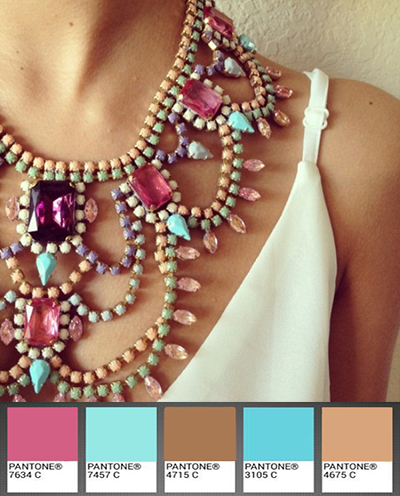
Funny but only after I made this following palette, I came to appreciate the necklace and its moca/turquoise/rose palette:
Now let’s explore the realm of moss/sage in this apparitioin by Elie Saab:
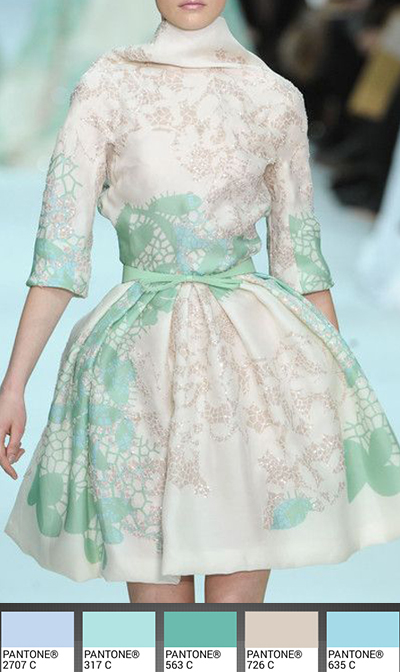
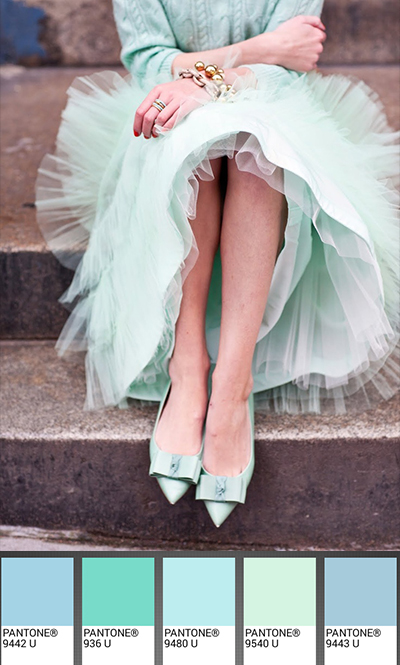
Look at this mint princess here:
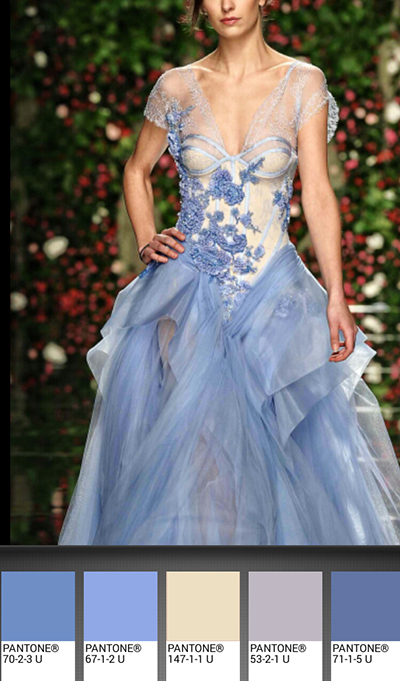
The periwinkle fairy:
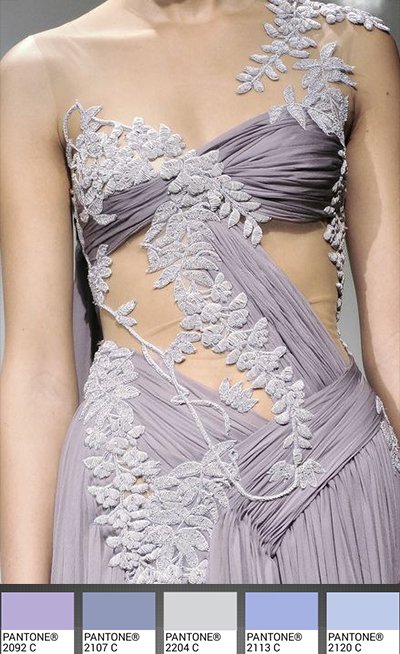
and the wisteria goddess from Marchesa:
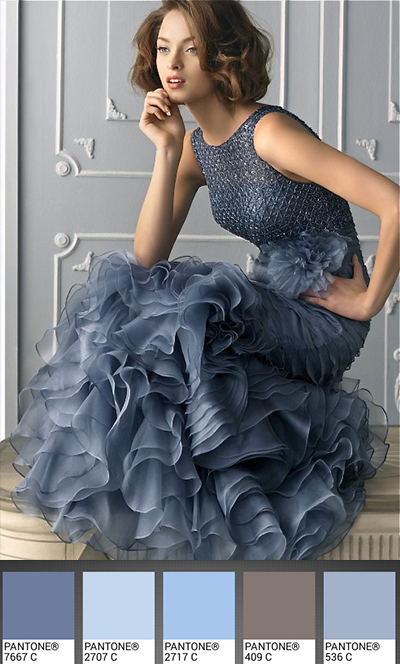
I love the steel blue on her,
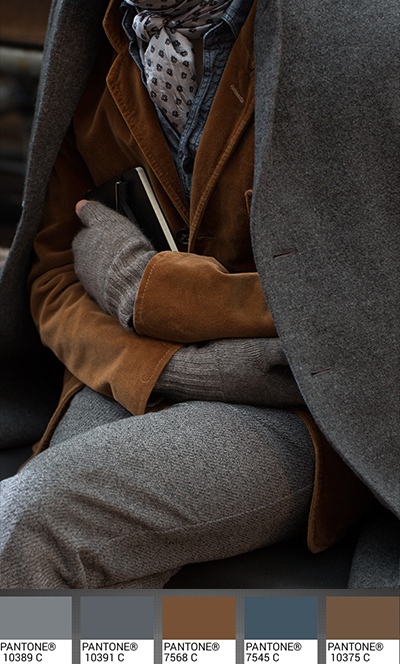
A little detour into more serious and warmer colors:
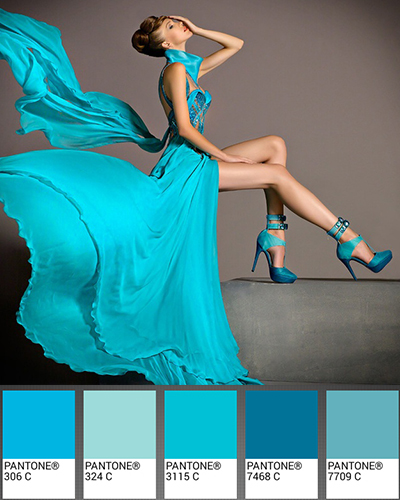
and back again into the flashy seafoams from Blanka Matragi:
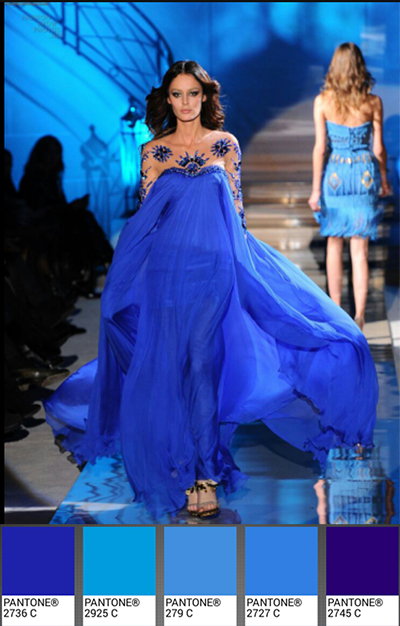
and royal blues:
Blue being my other favorite color, I end this post with this quiet blue palette on a rainy afternoon in China photographed by Eric Lafforgue:
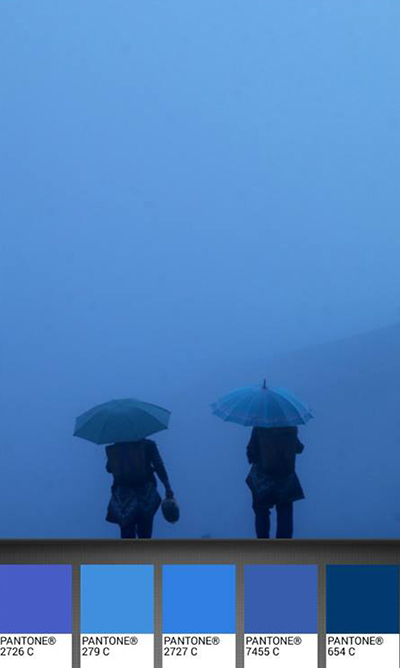
“Blue makes no noise.
It is a timid color, without ulterior motives, forewarning or plan; it does not leap out at the eye like yellow or red do, but rather draws it in, taming it little by little, letting it come unhurriedly, so that it sinks in and drowns in it, unaware.”
“Le bleu ne fait pas de bruit.
C’est une couleur timide, sans arrière-pensée, présage, ni projet, qui ne se jette pas brusquement sur le regard comme le jaune ou le rouge, mais qui l’attire à soi, l’apprivoise peu à peu, le laisse venir sans le presser, de sorte qu’en elle il s’enfonce et se noie sans se rendre compte de rien.” Jean Michel Maulpoix
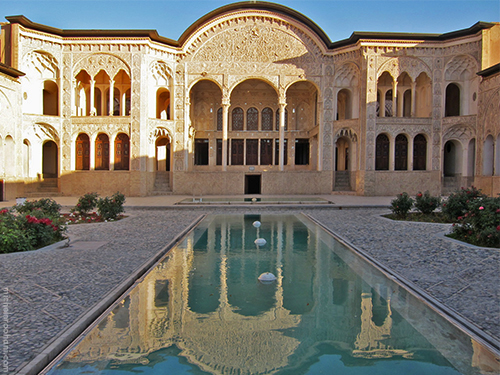
Kashan…A jewel of a city in the semi-arid center of Iran. I went back to Iran after 20 years. I visited several historical houses in Kashan and enjoyed my first visit to this region. This is one of them, built around 1880 with exquisite mirror and stained-glass work:
A much smaller example is the hotel we stayed in; this amazing boutique hotel (below), the “Manouchehri House“, revived from its ruin by the good taste of its owner, Saba Manouchehri, her super talented designer, Shanhnaz Nader Esphanahi, and Akbar Helli the traditional architect and master repairer of historic houses. Going from this (picture not mine):
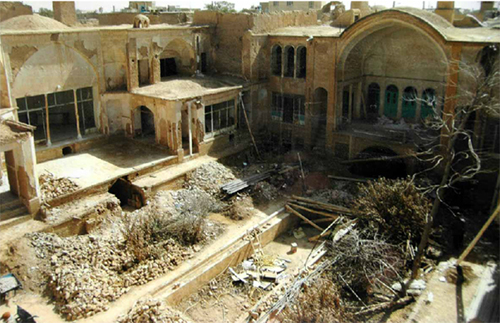
to this:
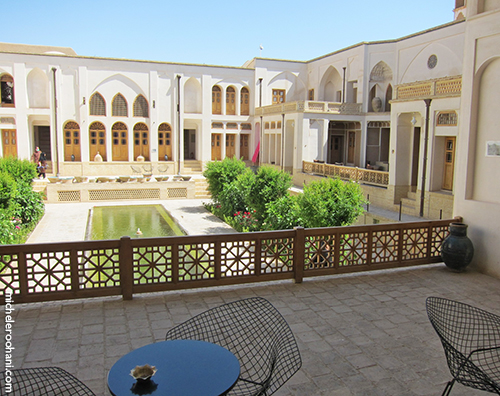
and this:
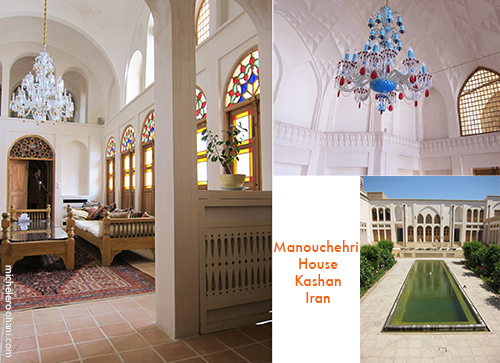
This is the view from my room:
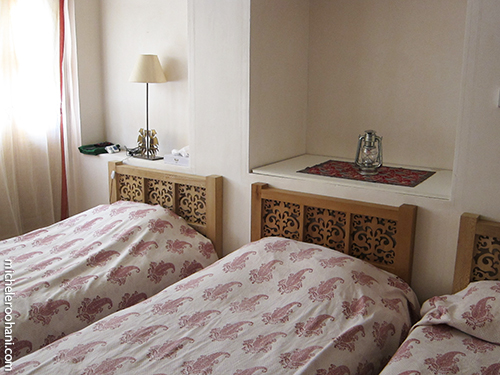
A first floor room with three beds for my parents and myself. Even the bed covers (designed by Shahnaz Nader Esfahani) are custom made for the hotel and purely Iranian:
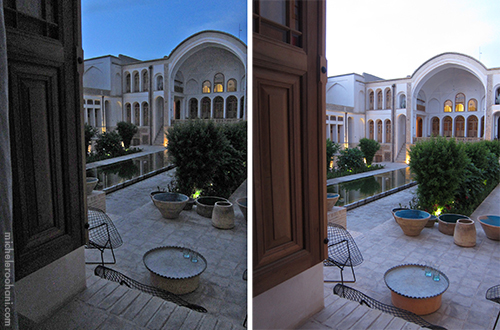
Still jet-lagged, I could’t sleep well the first night and I saw the sun rise after having stared in delight for a couple of hours at the moonlit garden:
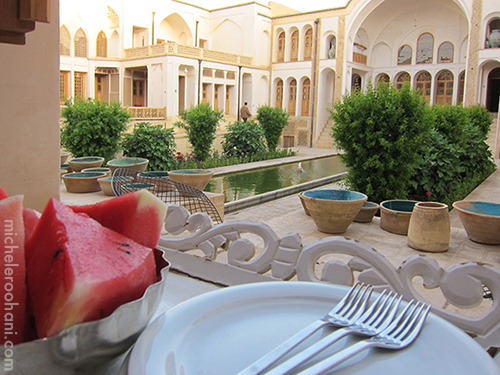
We had to take advantage of our short trip and a knowledgeable guide so we hurried to the breakfast area,
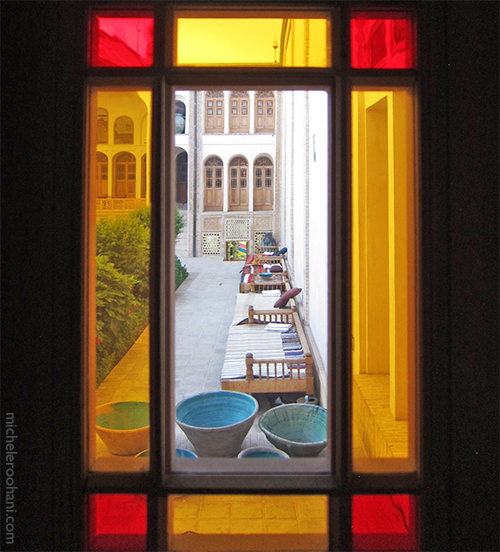
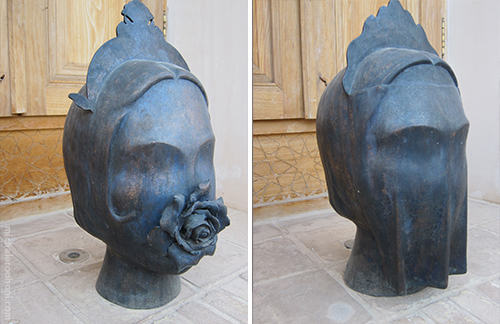
and tried to remember to take a look at these cute garden sculptures upon our return to the hotel!
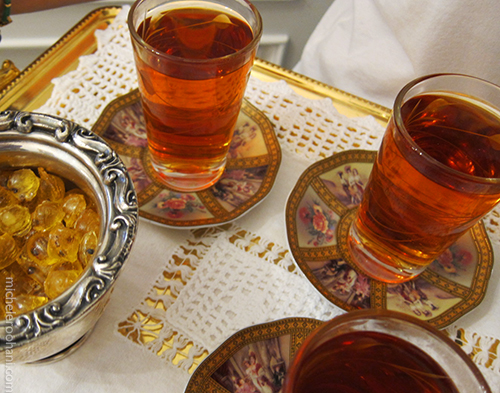
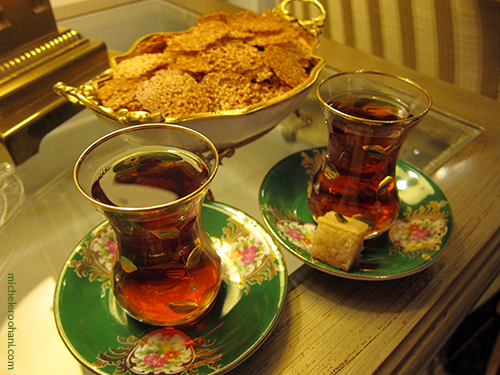
We had our Persian tea and out the door:
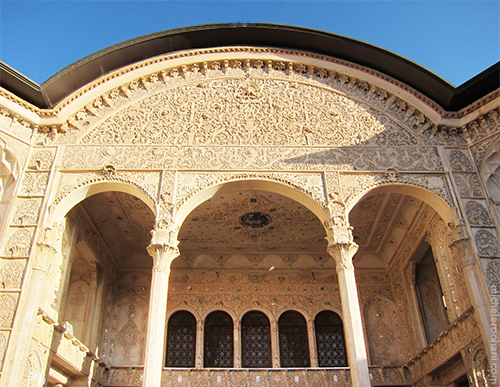
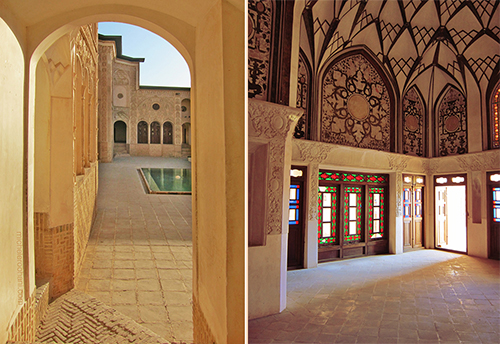
Our first stop was at the Tabatabaei House. This splendid house was built in the 1840s for the affluent Tabatabaei family. It was designed by Master Ali Maryam. It has 40 rooms and more than 200 doors:
It is the same house that you see at the beginning of the blog post. I was amazed at this majestic balcony and its ceiling that looks like a traditional Persian rug (below).
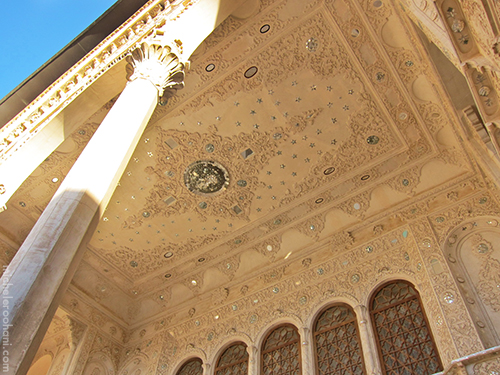
Kashan is world famous for its beautiful rug weaving tradition,
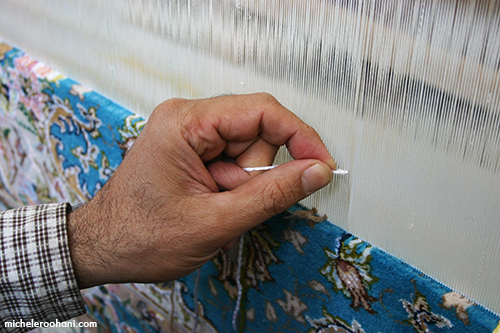
and I can very well imagine Mr. Tabatabaei asking his architect to create a rug on his ceiling like the rug he must have had at his feet:
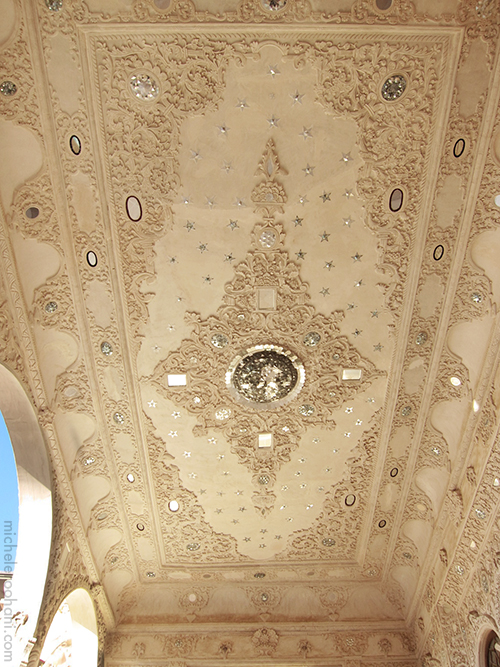
It doesn’t happen often for me to be overwhelmed by what I see and hesitate about what to shoot but I was taking pictures left and right and no time to take notes… 😉
But I remembered to take a picture of myself!
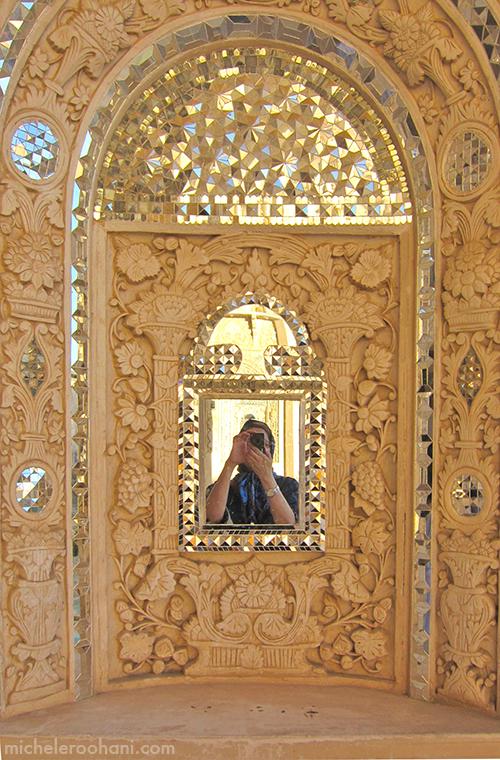
The colors on these pictures have not been processed — the golden glow that you see everywhere is real:
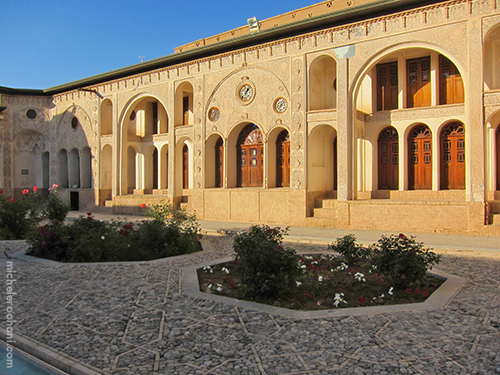
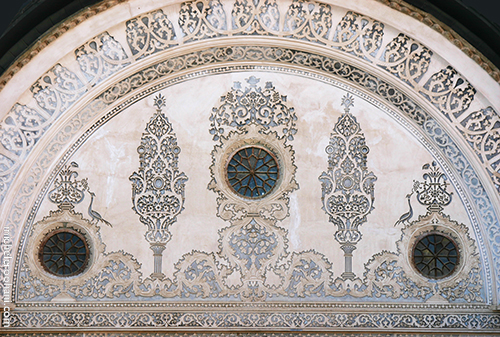
The intricate stucco work on the walls is even more beautiful in the midday golden light:
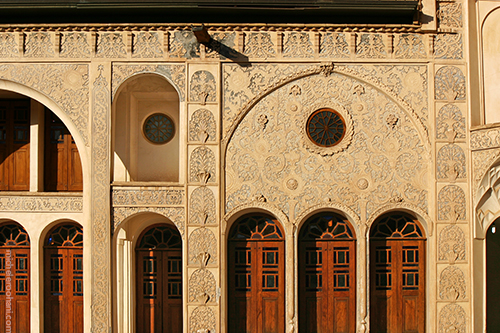
The persians are historically known in the art of plastering:
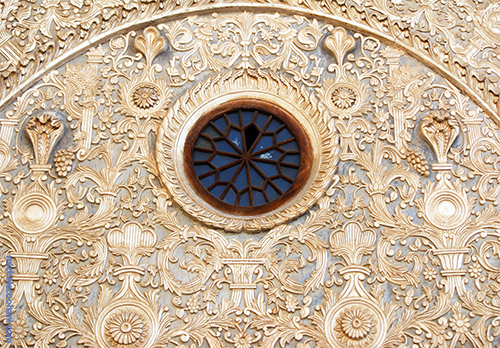
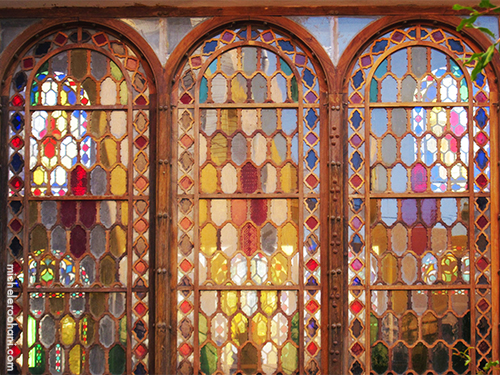
The stained glass is omnipresent in all of these old houses,
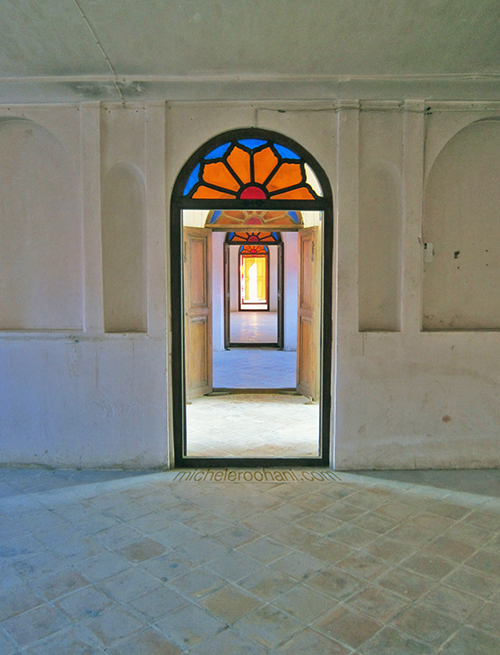
Some are exquisite!
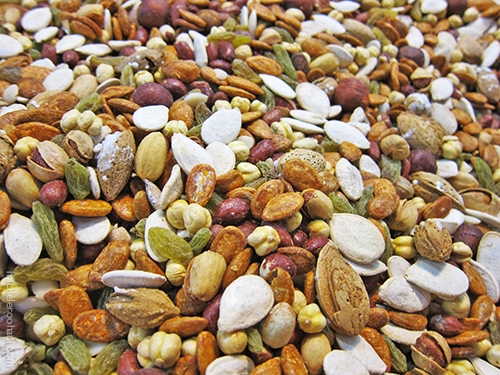
We decided to go to the bazaar for lunch. Iran, the pistachio capital of the world is a heaven for nut lovers:
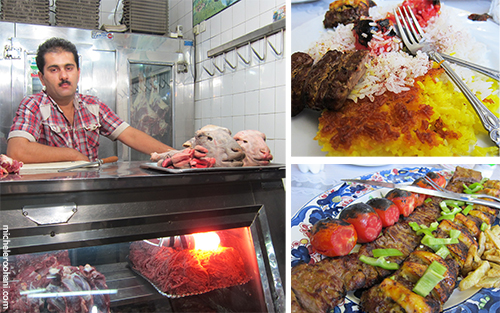
I found this guy’s expression in front of the sheep’s heads hilarious! The local Chelo-Kabab, the only thing that Shahs and Mullahs equally love and agree upon, didn’t disappoint us. Chelo-Kabab is the national dish of Iran consisting of steamed basmati rice and lamb kabab.
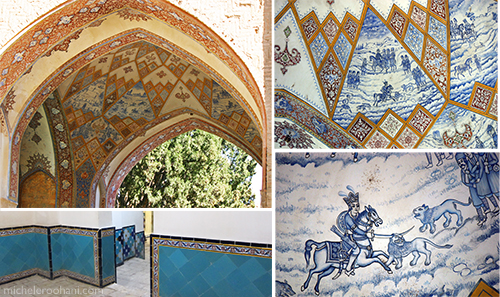
After lunch we headed to the Fin Garden. A Unesco world heritage site, it is a historical Persian Garden that symbolizes the earthly paradise. Designed for Shah Abbas I and completed in 1590, it is the oldest garden in Iran still in existence.
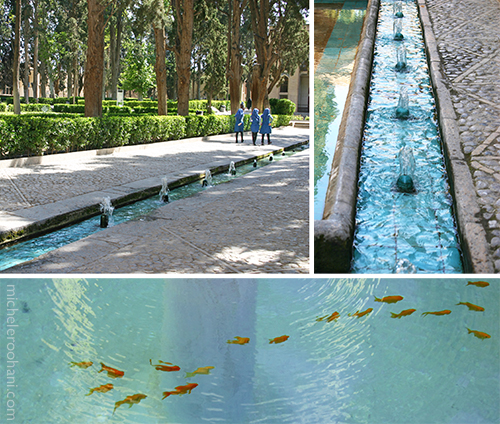
Water runs through it (it houses Kashan’s Fin Bath) and beautiful trees and flowers and water sources everywhere have a heavenly effect on people.
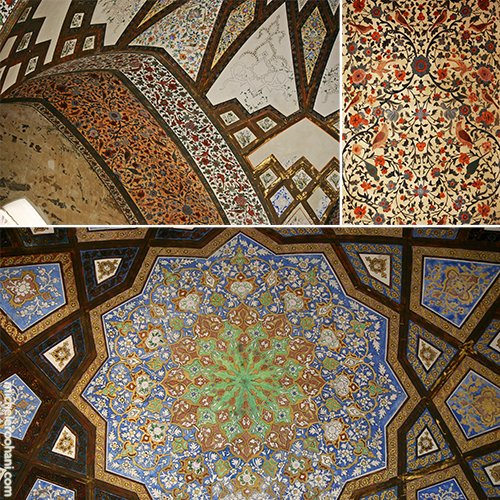
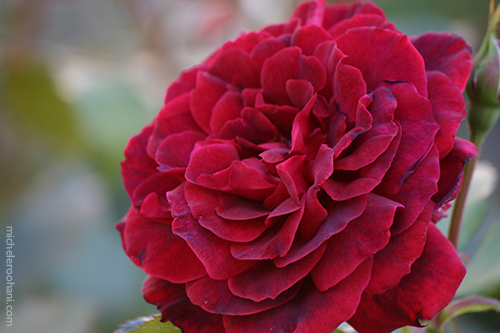
Flowers are everywhere on the ceilings and walls (above) and outside like the omnipresent pomegranate and roses:
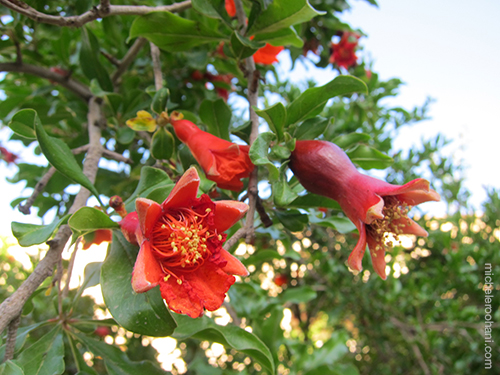
Kashan is like Grasse in France, the capital of rose essence, Gol-Aab:
and some more ceilings:
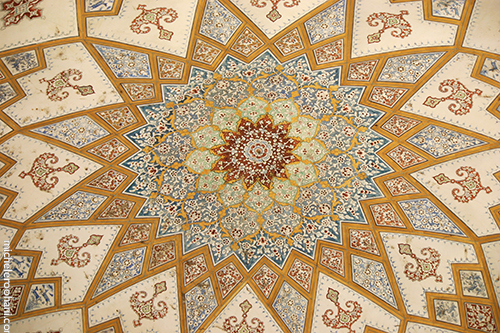
and more gorgeous frescos:
I loved this image of this tired chador clad lady:

The next day took us to a famous bath or hammam: Sultan Amir Ahmad Bathhouse. I want to take you first to the roof—very typical of the ones in this region, it lets the sunlight in. You will see these roof domes again from inside.
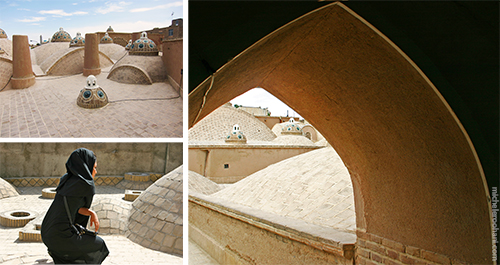
Thes multiple domes contain convex glasses to provide sufficient lighting to the bathhouse while concealing it from the outside:
The bathhouse is a traditional Iranian bathhouse from the 16th century. It has two main parts: Sarbineh (the dressing hall) and Garmkhaneh (the hot bathing hall). The following image is of Sarbineh with its octagonal pool and its 8 columns.
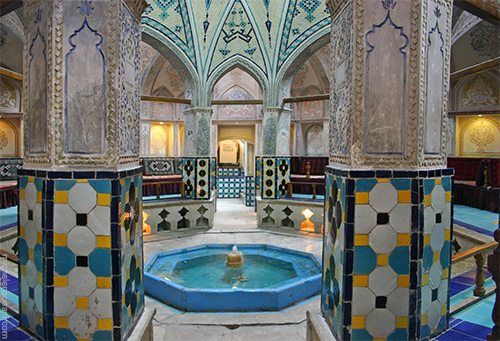
The interior of the bathhouse is decorated with turquoise and gold tile work, brickwork and amazing plasterwork:

A symphony in gold and turquoise…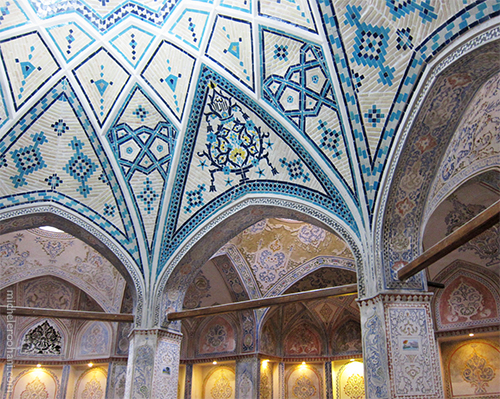
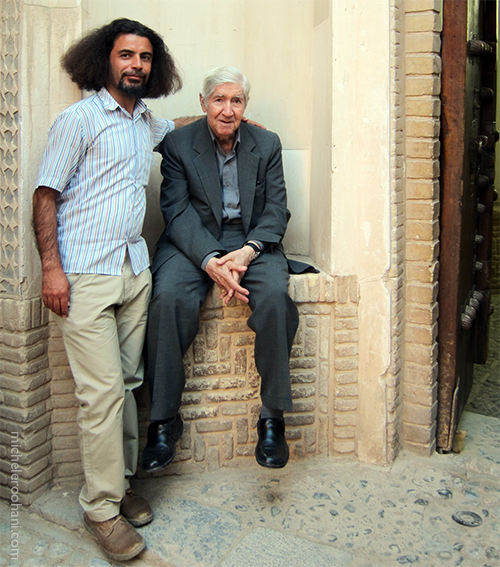
Me being a Roohani (religious in Persian and a common last name like Smith) and the new president being a Roohani, you would think this dude could be my dad or an uncle:

My dad—Morteza Rouhani— a retired pediatrician and not a mollah (here with our kind guide, Abbas Ghamkhar), was tired of following my mother and me around . Everybody asks me but my father has no connection to the Iranian President!
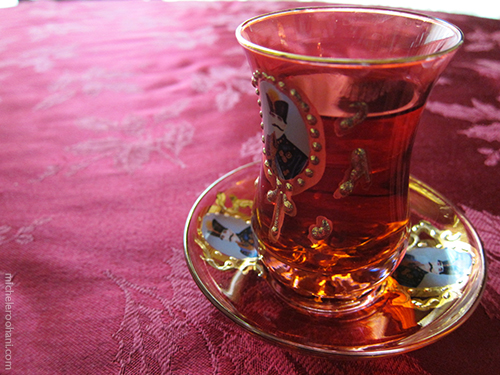
Another great tea (I call it paradise in a glass) and we were ready to head to another historical house.
The same person who built the Tabatabaei’s House later built this one, the Boroujerdis House for Mr. Tabatabaei’s newly married daughter. It is considered a true masterpiece of Persian traditional residential architecture. It has a funny story:
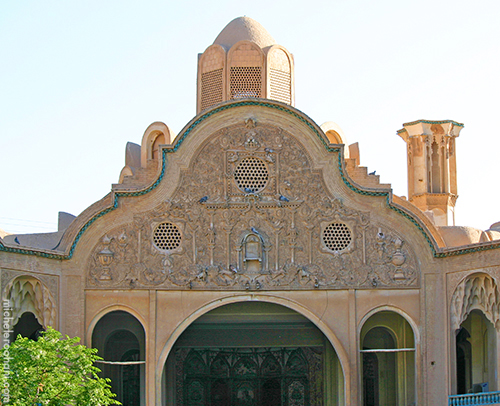
The groom not being from Kashan, was not accepted first as a good suitor (he was in the tea making business) and to show his wealth in spite of not being one of the Kashan nobility, he asks the same architect to build his home with samovars and teapots in the exterior wall carvings! I was laughing taking these pictures:
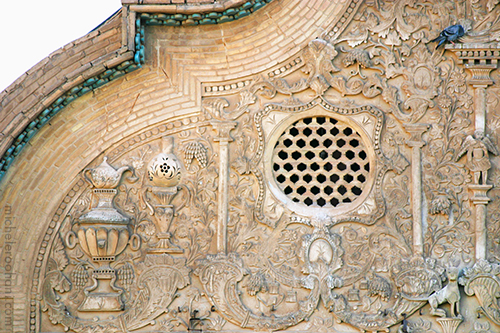
There are great plaster and stucco works of fruits and flowers and wall paintings by the royal painter Kamal-ol-molk, and three 40 meter tall windcatchers which help cool the house to unusually cool temperatures.
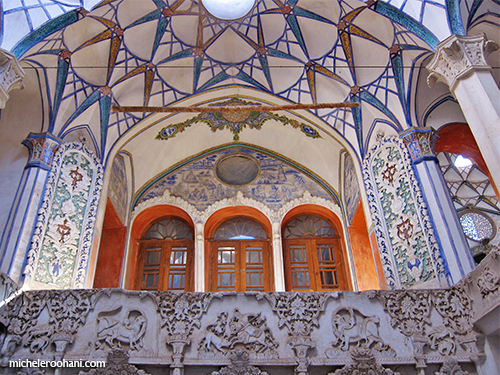
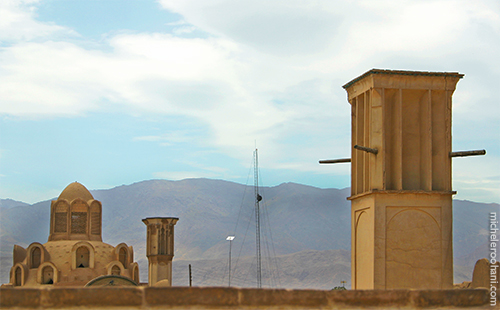
A windcatcher (below) is a traditional Persian architectural element to create natural ventilation in buildings:
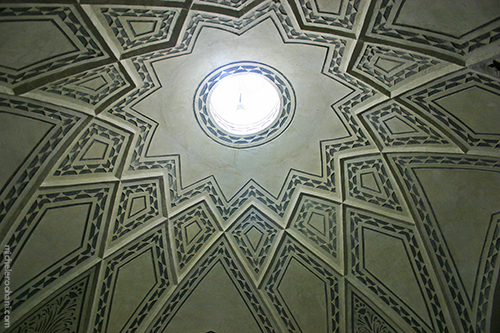
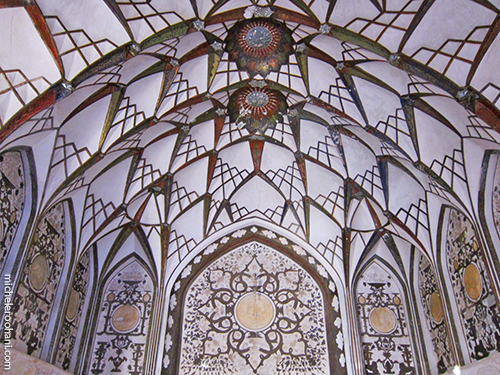
and this is what’s happening inside the dome, magnificent ceiling,
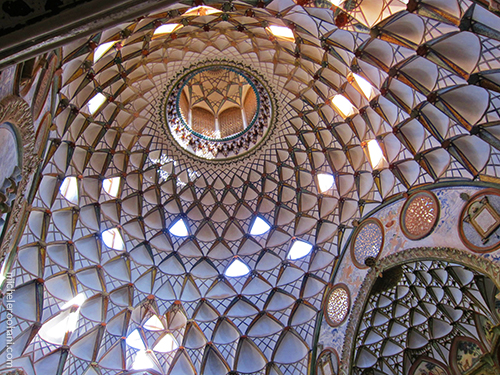
after magnificent ceiling…
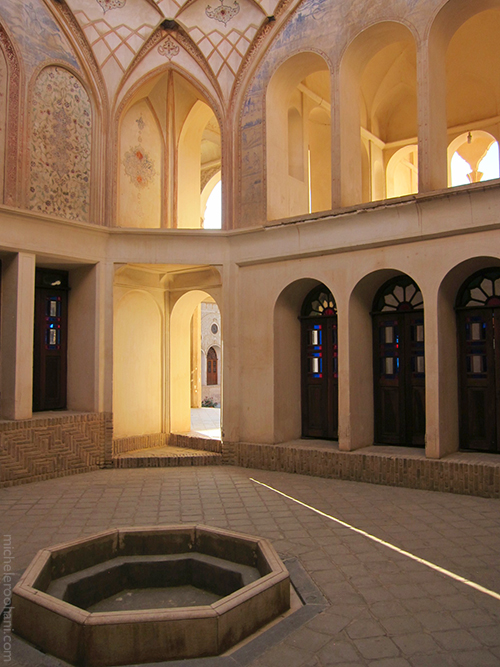
I wished I could have made a better travel log about this mystical place:
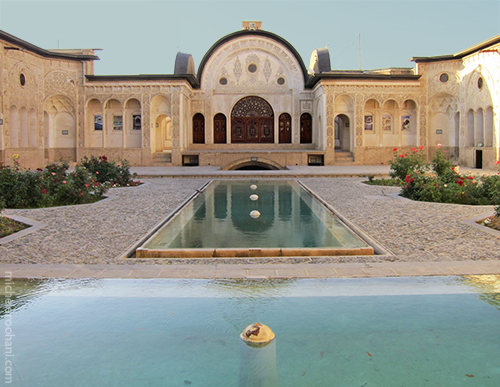
One last image from the other side of Tabatabaei House—after all we started the blog with it:
Ok one more:
We went back to Tehran, tired but happy. Guess what we drank the minute we got home?
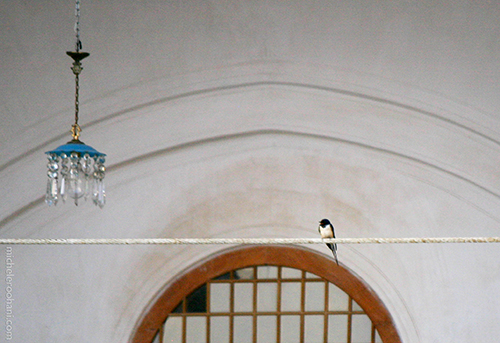
I will keep a great memory of this beautiful city—home to my favorite poet, Sohrab Sepehri. This swallow kept us company at our hotel, the Manouchehri House:
A poem of Sepehri in English:
“I am a native of Kashan
Time is not so bad to me
I own a loaf of bread, a bit of intelligence, a tiny amount of taste!
I possess a mother better than the leaf
Friends, better than the running brook
I am a Muslim
The rose is my Mecca
The spring my prayer-carpet
The light, my prayer stone
The field my prostrate place
I take ablution with the heartbeat of windows…”
in French:
“Je viens de la contrée de Kashan.
Ma vie somme toute n’est pas trop difficile.
J’ai de quoi vivre, un brin d’intelligence, un minuscule talent.
J’ai une mère plus douce que les feuilles de l’arbre.
Des amis plus limpides que l’eau courante.
Et un Dieu présent quelque part, tout proche:
Parmi les feuilles de giroflées,
Au pied de ce pin élevé,
Sur la face consciente des eaux,
Dans les lois du monde végétal.
Je suis musulman.
J’ai comme direction de la Mecque une rose.
Comme napperon de prière une source.
Comme sceau de prière la lumière.
La plaine est le tapis de ma prière.
Je fais mes ablutions aux vibrantes fenêtres de la lumière.”
and in Persian:
اهل كاشانم
روزگارم بد نيست.
تكه ناني دارم ، خرده هوشي، سر سوزن ذوقي.
مادري دارم ، بهتر از برگ درخت.
دوستاني ، بهتر از آب روان.
من مسلمانم.
قبله ام يك گل سرخ.
جانمازم چشمه، مهرم نور.
دشت سجاده من.
من وضو با تپش پنجره ها مي گيرم.
So is the new president of Iran a true reformist? Is he Khamenei’s surprise to Iranian people to cleanse himself partially of the catastrophes of the last elections? Ahmadinejad’s 8 year parenthesis is finally closed (with a four year delay) but questions remain amid the euphoria of Iranians.
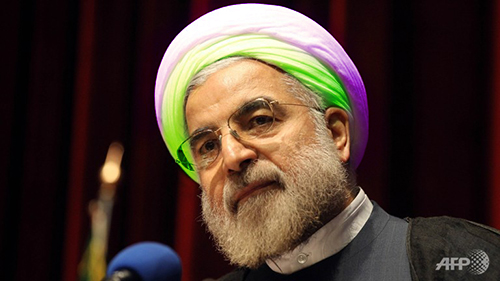
He never even vouched for the green movement yet people voted for him. Can Iranians finally begin to hope for easier times? The world needs a moderate Iran to calm down the chaos of the Middle East. I hope (against my better judgment) that the new president wants and can make a good difference…
“He has three law degrees, including a doctorate from a university in Scotland, and as president of Iran’s strategic research center, he regularly publishes essays. Rouhani is more likely to at least speak more diplomatically to internal and external challengers. And unlike Ahmadinejad, when addressing United States politicians and citizens, he may not need a translator” says Ben Brumfield.
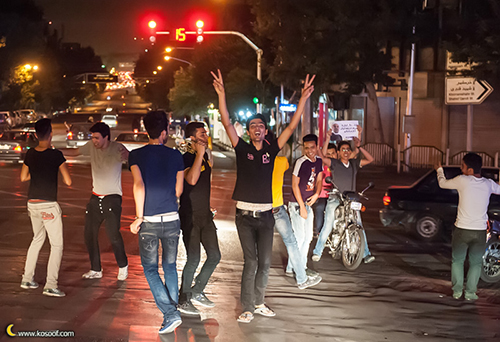
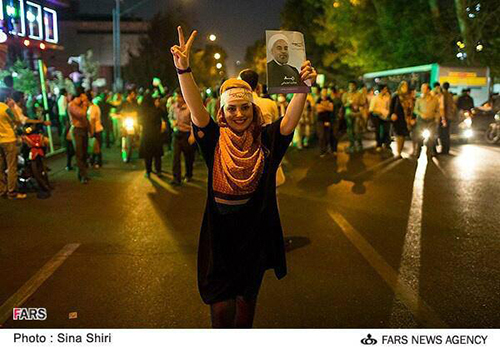
These are some pictures of the spontaneous celebrations in Iran even though “Rouhani has not called for an overall sweeping shift in Iran’s foreign policy. For instance, Rouhani has neither asked Assad to step down from power nor pressed to halt the Islamic Republic of Iran’s military, intelligence, financial, and advisory support to Damascus” says Majid Rafizadeh.
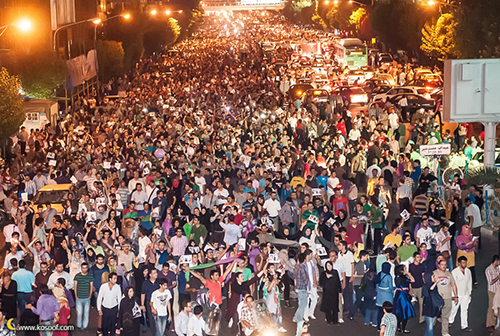
The pictures are from Arash Ashoorinia:
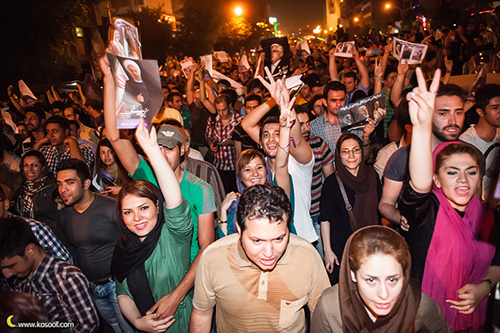
The irony of having a Hassan in Iran and a Hossein in the U.S. as presidents is not lost on us, Iranians, who all grew up with the names of these Shia martyrs… 😉
These young people were happy to oblige and let me take the below picture in a restaurant in Tehran last month (I went back to Iran after 20 years); did they know something was happening?
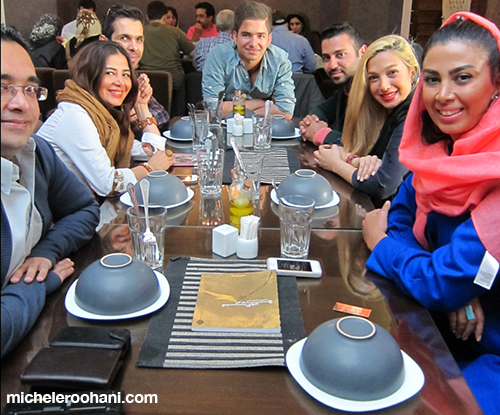
Let’s hope for the change in spite of all our doubts!
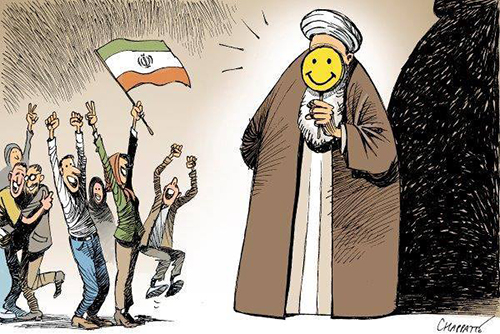
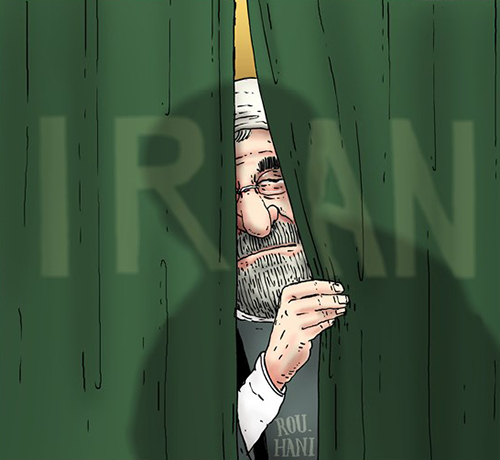
I love these cartoons by Joep Bertrams (below) and Patrick Chappatte (above):
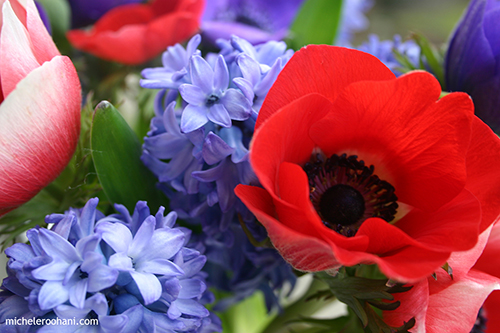
We finally have some Spring in Paris with these Anemones (daughter of the wind)…

“The anemone is one of the earliest flowers in spring, appearing in April, and continuing through May. The name, anemone, or wind-flower, some writers claim, was given because it is so fragile that it withers when the wind blows over it; others say that it only blooms when the wind blows it open.”
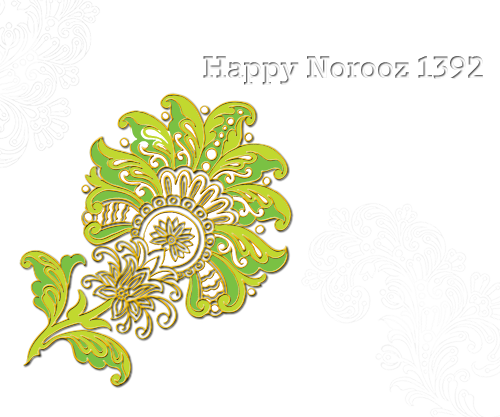
It’s the first day of spring and the Persian new Year of 1392 starts with Noruz (No: new, Ruz: day):
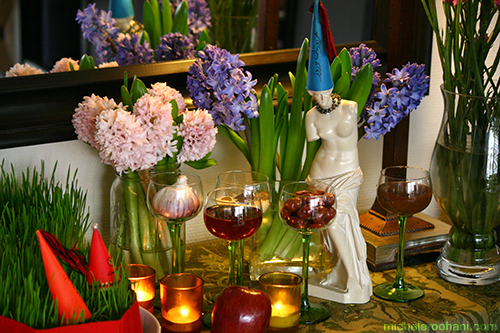
We are celebrating in Paris with a newly converted Venus,
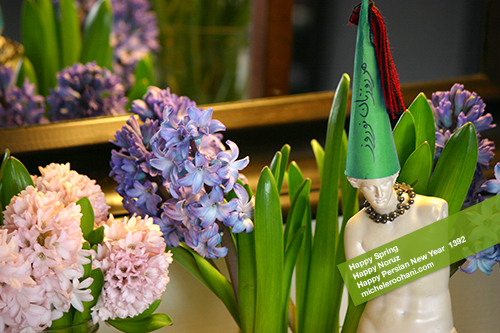
I have extensively written about the Noruz (or Nowruz, Norooz) before in my blog, so if you’ve been with me in the past 4/5 years, you must know all about the items that go on the Noruz spread.
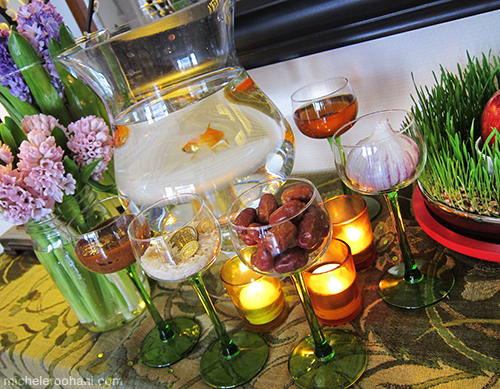
The famous “haft seen” of 7 S’s:
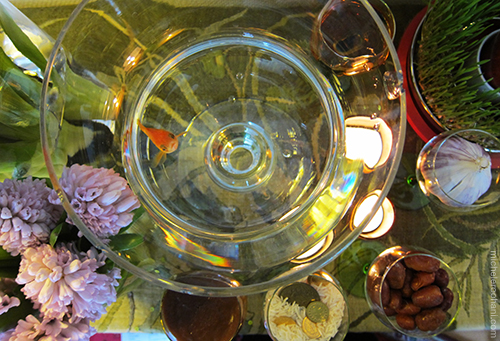
My fish, Samad (his name has nothing to do with the S’s… ;)), has been with us since two Noruz’s ago and he is happy to play his role this year with the famous Haji Firouz , the politically incorrect Persian messenger of the New Year:
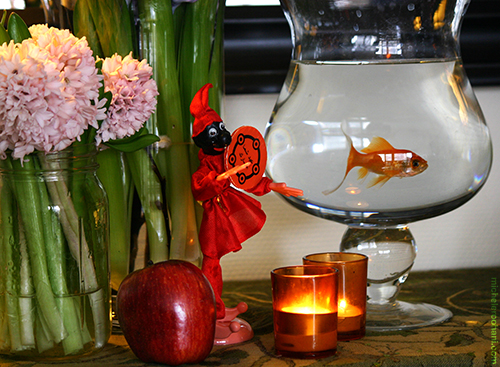
Haji Firouz’s face is covered in soot and he is wearing bright red clothes and hat. People consider it only as a face paint and there is no racial implication.
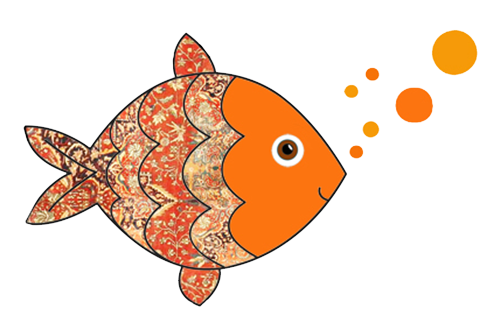
Do you remember Samad on my previous year’s Noruz card?
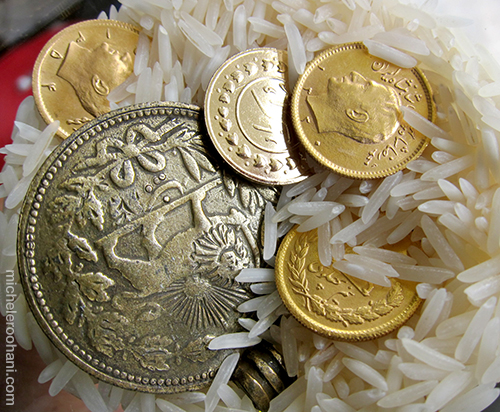
One of the S’s is Sekkeh or coin; the last Shah of Iran is overthrown even in my Haft Seen…
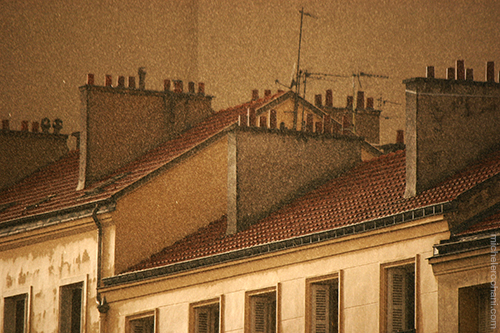
It was raining in Paris on the first day of spring:
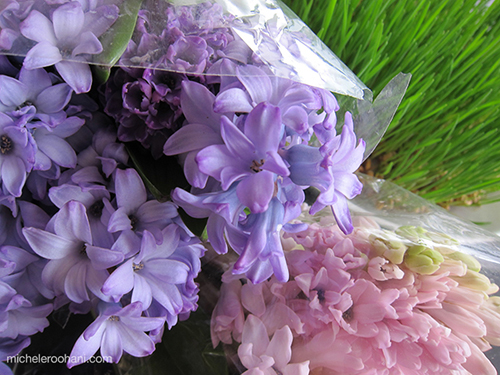
but I didn’t care because a bunch of hyacinths can bring the spring to your room.
Happy Noruz and,
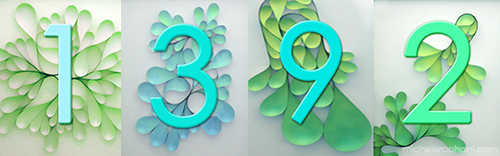
happy 1392 to all of my Persian friends!
Some links to my previous Nowruz posts worth your time (I promise):
Nowruz 1390 here
Nowruz 1389 here
Nowruz 1388 here
My most visited blog post (and most used images without my permission) Haft seen here
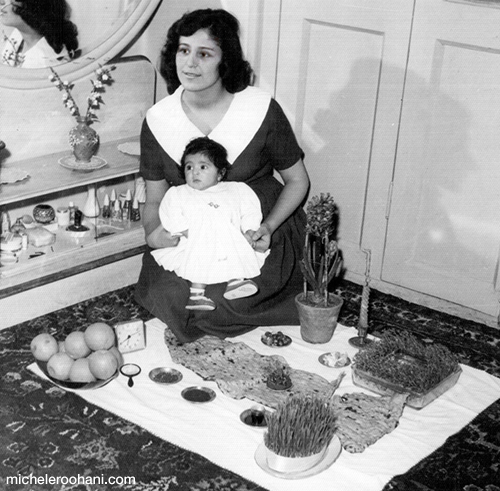
Just decided to add this photo of myself (3 months old) on my mom’s lap having my first Noruz and not terribly impressed…
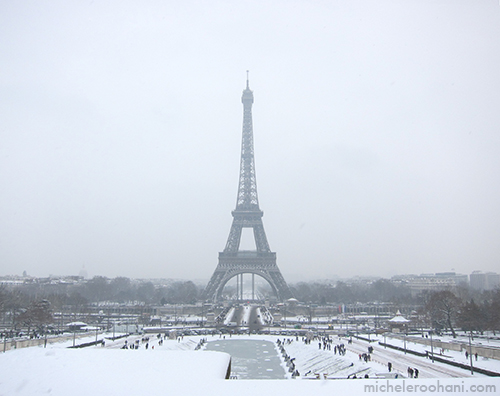
It’s been snowing in Paris and amazingly the snow is staying so the whole city is white white white!
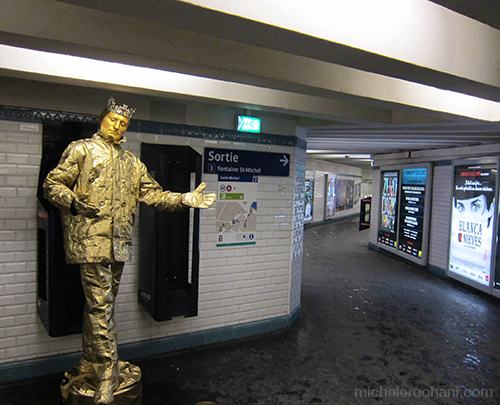
I had to meet a friend for lunch in Montparnasse; no bus was running in Paris yesterday so I had to take the metro which was deserted:
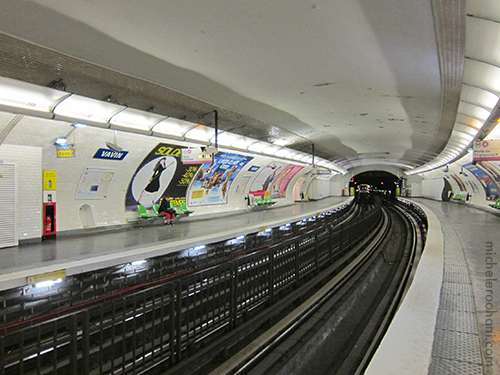
it was me and the live statue of a king…
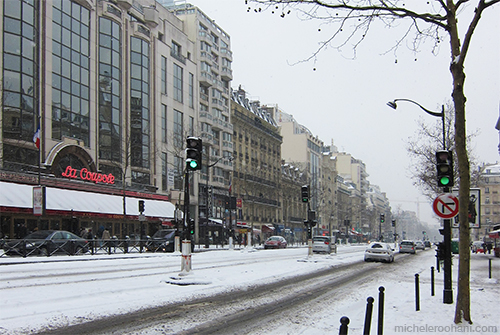
The famous cafés of Montparnasse, like Le Select (once the haunt of Hemingway, Picasso and Henry Miller) were kind of empty,

La Coupole was not much better,
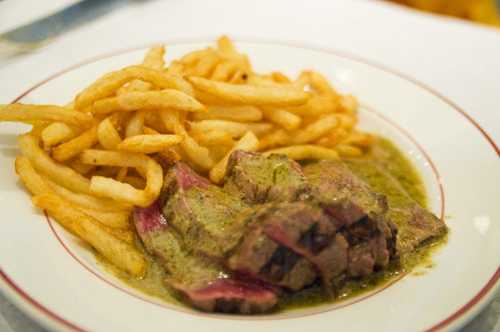
so we settled on some mean steak and frites and Entrecôte:
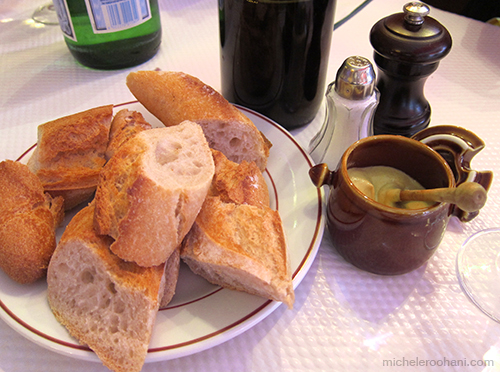
Who can say no to that?
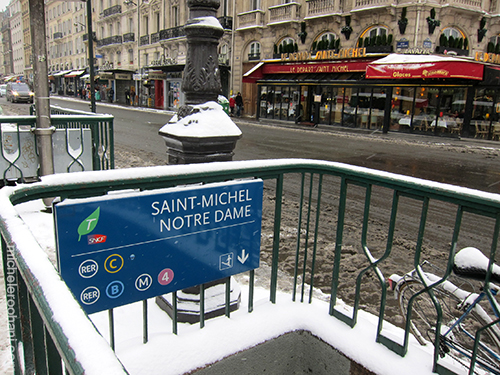
I said goodbye to my friend and decided to go and take some pictures of the city under snow.
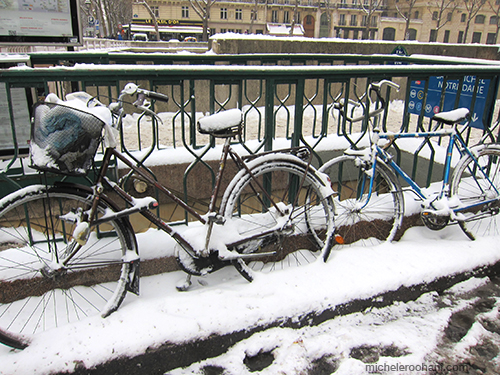
It snowed on bikes,
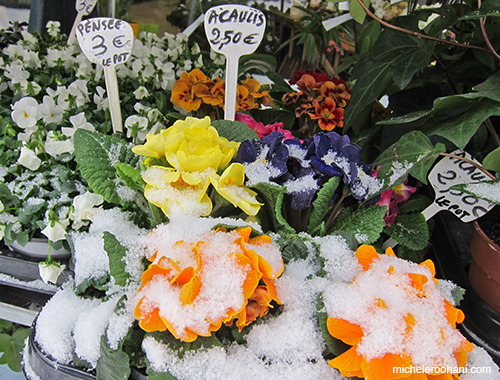
and on flowers,
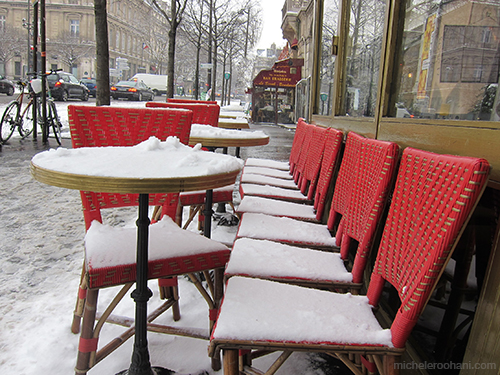
and the café tables:
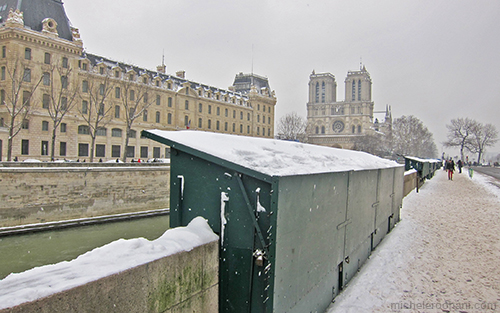
The bouquinistes (booksellers of used and antiquarian books) had stayed home but the Notre Dame cathedral was open to me and others.
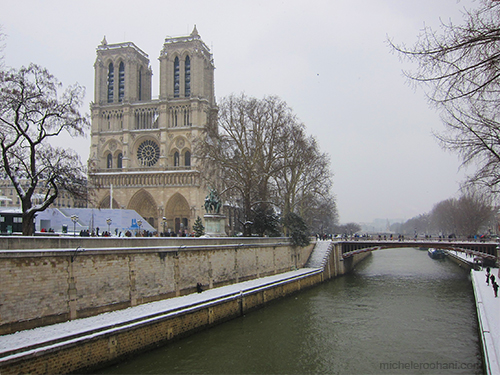
Still majestic after 800 winters!
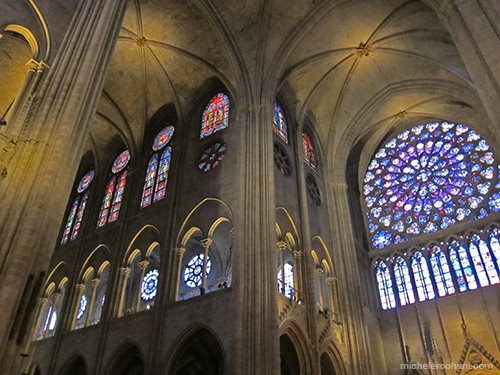
It was glorious inside; I particularly love its three large rosettes. These examples of technical and artistic genius were constructed in the 13th century. The largest two measure 13 metres in diameter:
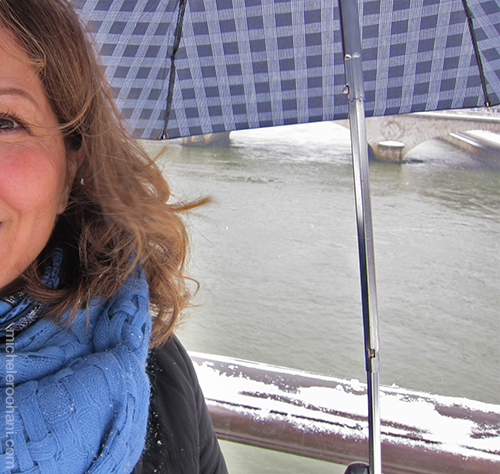
I was giddy by the time I left – snow makes most people like that. It reminds me of my childhood in Tehran and cancelled school days! I took a picture of myself with the Saint Michel bridge behind me.
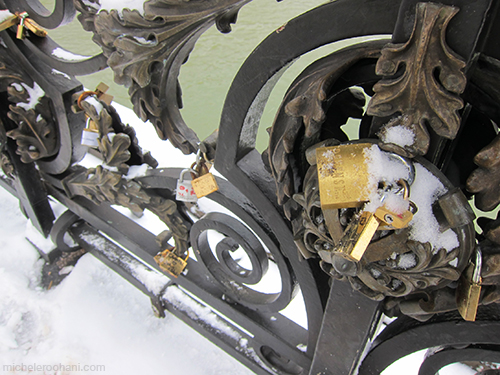
I would have been happier if it wasn’t for the stupid love padlocks! They have invaded the Pont des Arts (Art Bridge) and now it’s all the other bridges’ turn…
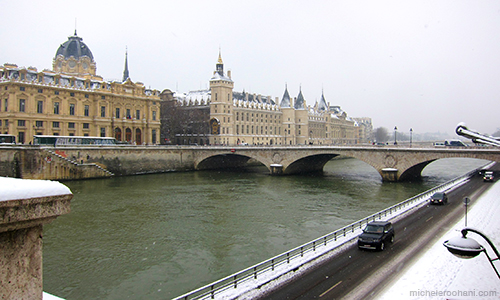
The Conciergerie (where the notorious Marie Antoinette was held before being decapitated in 1793) looked beautiful in spite of the recent Disneyesque cleaning of its façade. I liked it better when it had some of its original grime…
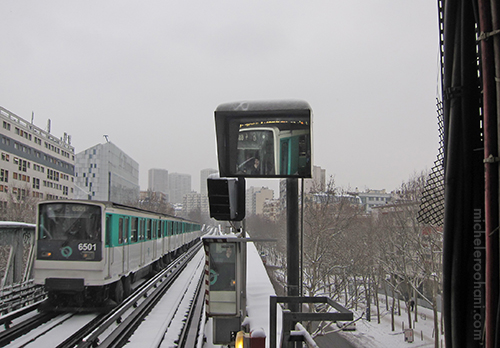
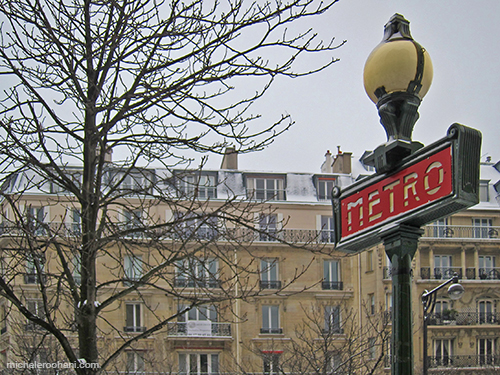
I took the metro again to go to Trocadero:
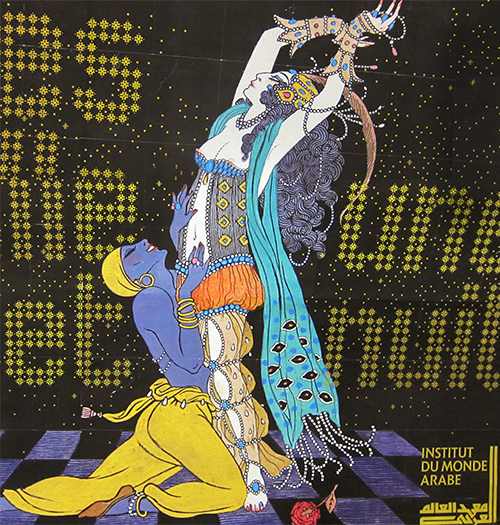
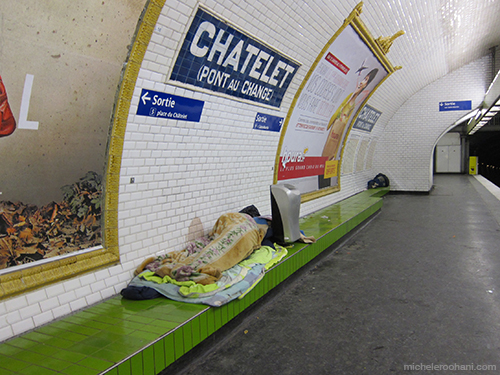
You see many things when taking the Parisian metro – some are very nice like this poster advertising an exhibition about Shahrzad and her ” Thousand and One Nights” at the World Arabe Institute:
and some more realistic ones like these homeless men sleeping…
By the time I got out it had stopped snowing,
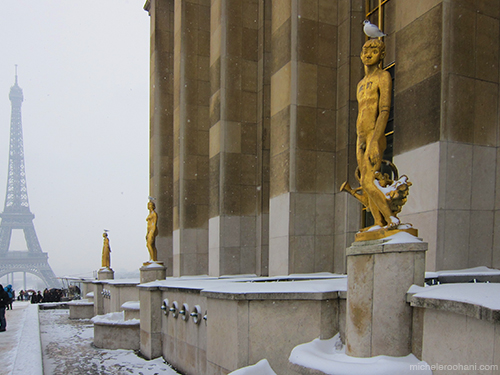
and the beautiful Eiffel tower was on time for her rendez-vous with me:
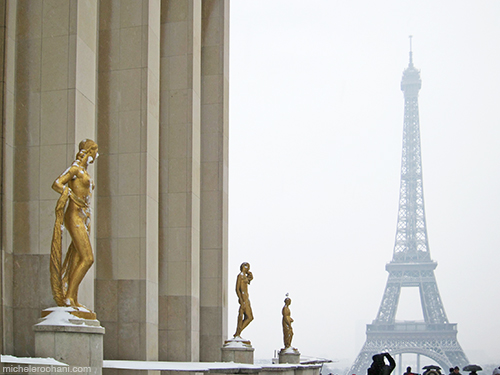
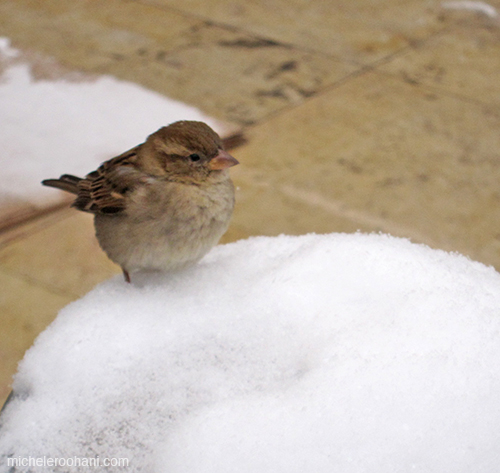
These gilded statues each had a live bird on them:
but the only one close enough for me to take a picture of was this little sparrow:
And of course everybody could take their own tower home:
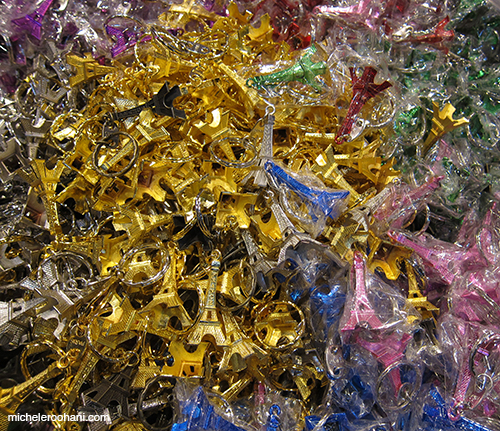
I didn’t buy any but I started writing this blog to share it with you looking out from time to time to the melting snow.